In this biography
Quick facts
- Born
- 25 February 1943
- Birthplace
- Blitar, East Java
- Country
- Indonesia
- Nationality
- Indonesian
- Known for
- Serving as vice president after leading Indonesia’s finance, economic-planning and central-bank institutions
- Office
- Vice president, 2009–2014
- Central bank
- Governor of Bank Indonesia, 2008–2009
- Cabinet role
- Finance minister, 2001–2004
- Education
- PhD in economics, University of Pennsylvania
Why this life matters
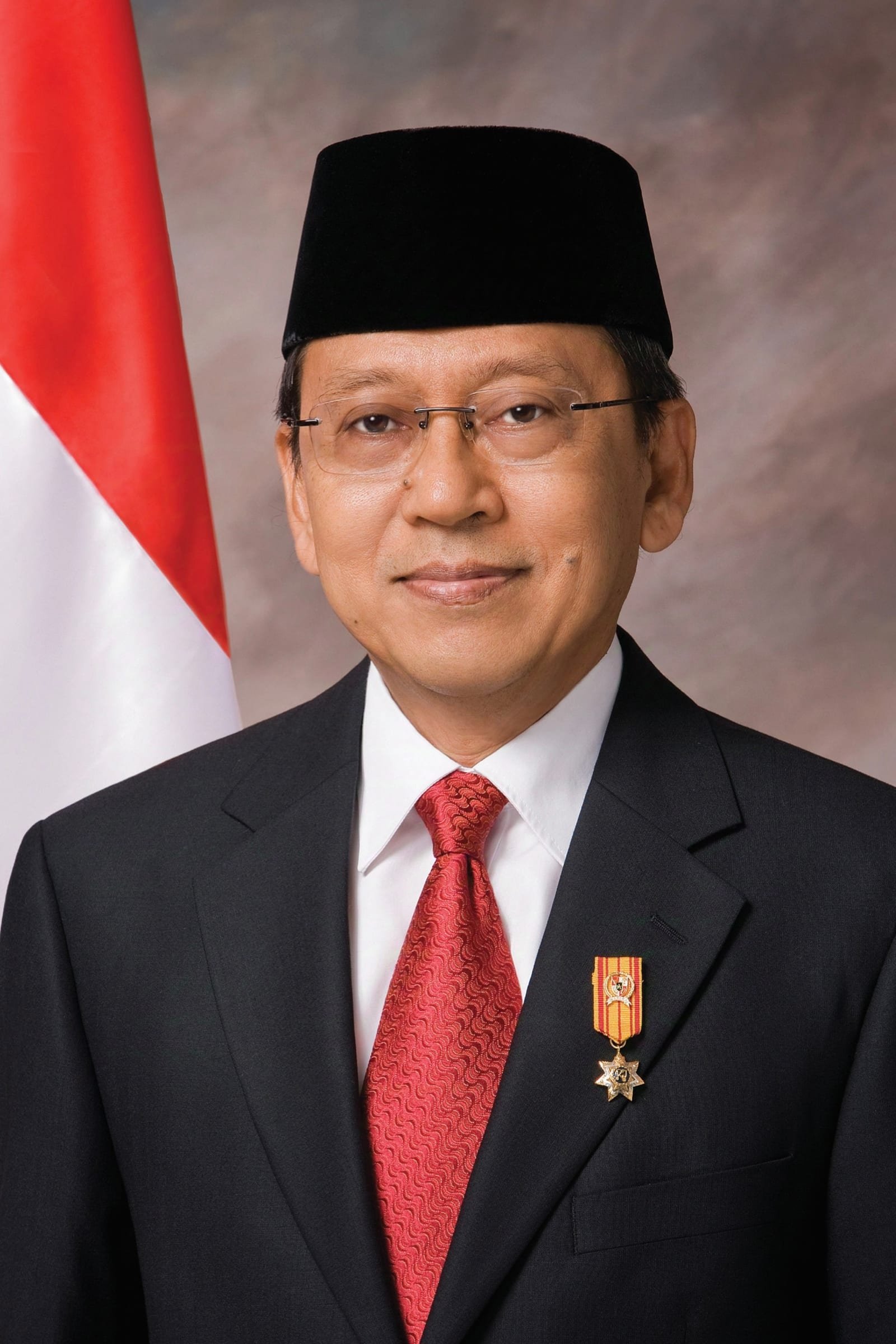
Boediono carried Indonesia’s post-crisis technocratic tradition into elected office, linking macroeconomic stabilisation, central-bank policy and Susilo Bambang Yudhoyono’s second presidential term.
Timeline
Key moments
Completed a doctorate in economics
Finished doctoral study at the Wharton School after economics degrees in Australia.
Joined the Reformasi-era cabinet
Served as state minister for national development planning during recovery from the Asian financial crisis.
Became finance minister
Managed fiscal policy and institutional reform under President Megawati Sukarnoputri.
Led Bank Indonesia
Became central-bank governor as the global financial crisis reached emerging markets.
Won the vice presidency
Joined Susilo Bambang Yudhoyono’s ticket and won the presidential election in one round.
Completed a five-year term
Left office after supporting economic coordination and policy continuity through Yudhoyono’s second term.
An economist formed across universities and institutions
Boediono was born in Blitar in 1943 and studied economics at the University of Western Australia, Monash University and the University of Pennsylvania. He later taught at Gadjah Mada University, combining academic economics with a career inside the institutions responsible for Indonesia’s planning, finance and monetary policy.
His public profile was deliberately technocratic rather than partisan. He worked at Bank Indonesia and in national planning before the Asian financial crisis. That professional identity became especially valuable after 1997, when Indonesia needed to stabilise its currency, repair banks, renegotiate public finances and rebuild confidence in economic management.
Managing the post-crisis economy
President B. J. Habibie appointed Boediono state minister for national development planning in 1998. Under President Megawati, he served as finance minister from 2001 to 2004. His work belonged to a wider programme of fiscal consolidation, banking reform and institutional recovery after the deep contraction that had helped end Suharto’s rule.
Susilo Bambang Yudhoyono later brought him back as coordinating minister for economic affairs. Boediono helped maintain macroeconomic stability while the government reduced fuel subsidies, managed commodity-driven growth and sought more investment. Supporters saw competence and calm; critics questioned whether technocratic policy gave enough weight to inequality, labour and political accountability.
Bank Indonesia and the global financial shock
Parliament elected Boediono governor of Bank Indonesia in 2008. Within months, the collapse of global credit markets tested Indonesia’s banks and currency. Authorities guaranteed deposits, supplied liquidity and approved support for Bank Century, arguing that failure could spread through an anxious financial system.
The Century intervention later became the subject of parliamentary and anti-corruption scrutiny. Boediono defended the decision as crisis prevention and later testified in proceedings involving former central-bank deputy Budi Mulya. The episode remained politically contested long after the immediate crisis, illustrating how emergency economic choices can face later evaluation under very different conditions.
A technocrat elected vice president
Yudhoyono selected Boediono as his 2009 running mate, favouring economic expertise and a non-party profile. The choice caused tension among coalition parties seeking the vice-presidential nomination, but the ticket won 73,874,562 votes—60.80 per cent—avoiding a runoff.
As vice president, Boediono worked on economic coordination, education, poverty reduction and bureaucratic implementation while rarely competing for the political spotlight. His low-key term reinforced his reputation for institutional service. It also demonstrated that direct elections could place a career economist in the second-highest office without requiring him to build a mass party of his own.
Quick answers
Frequently asked questions about Boediono
- Who is Boediono?
- Boediono is the 11th Vice President of Indonesia and economist. Boediono carried Indonesia’s post-crisis technocratic tradition into elected office, linking macroeconomic stabilisation, central-bank policy and Susilo Bambang Yudhoyono’s second presidential term.
- What is Boediono best known for?
- Boediono is best known for serving as vice president after leading Indonesia’s finance, economic-planning and central-bank institutions.
- When and where was Boediono born?
- Boediono was born on 25 February 1943 in Blitar, East Java.
Sources and further reading
How this biography was checked
Core dates and offices are checked against the sources below. This profile was last reviewed on 3 October 2026.
- Bank Indonesia InstituteBoediono biography and policy career
- Bank Indonesia InstituteBoediono: Kepemimpinan Sunyi
- Secretariat of the Vice President of IndonesiaVice presidents of Indonesia from 1945 to the present
- General Elections Commission of IndonesiaIndonesia’s 2009 election in figures
- Wikimedia CommonsOfficial portrait and public-domain record