In this biography
Quick facts
- Born
- 14 May 1953
- Birthplace
- Phnom Penh, Cambodia
- Country
- Cambodia
- Nationality
- Cambodian
- Known for
- Bringing a career in classical dance and cultural diplomacy to Cambodia’s constitutional monarchy
- Selected as king
- 14 October 2004
- Enthronement
- 29 October 2004
- Selected by
- Royal Council of the Throne
- Earlier career
- Dance teacher and cultural diplomat
- Father
- Norodom Sihanouk
Why this life matters
Sihamoni’s biography connects Cambodia’s royal house with classical performance, UNESCO cultural diplomacy and the deliberately limited public role of a constitutional monarch.
Timeline
Key moments
Began studies in Prague
Studied music, dance and theatre in Czechoslovakia.
Studied filmmaking in North Korea
Continued his artistic education after completing his Prague studies in 1975.
Returned to Cambodia
Was held under house arrest with his parents and younger brother during Khmer Rouge rule.
Moved to France
Taught classical dance and established a dance company in Paris.
Represented Cambodia at UNESCO
Became Cambodia’s permanent representative in Paris.
Elected king
The throne council selected him after Norodom Sihanouk abdicated.
Enthroned in Phnom Penh
The enthronement ceremony followed his selection by the Royal Council of the Throne.
Joined a French scholarly academy
Was elected a foreign associate of the Académie des Inscriptions et Belles-Lettres on 6 June.
Childhood and artistic education in Prague
Norodom Sihamoni was born in Phnom Penh on 14 May 1953 to Norodom Sihanouk and Norodom Monineath Sihanouk. His education took him away from the royal palace: after attending school in Cambodia, he moved to Prague in 1962, while Czechoslovakia was still a communist state.
He progressed from school to conservatory training and the Academy of Performing Arts, specialising in dance, music and theatre. He completed his higher artistic studies in 1975, with work on the organisation of artistic schools in Cambodia, then studied cinematography in North Korea in 1975–1976.
Sources for this section: [1]
Khmer Rouge confinement and a career in Paris
His return to Cambodia brought confinement rather than a public career. The French academy’s biographical chronology records house arrest from 1976 to 1979 with his parents and younger brother, Norodom Narindrapong. This episode belongs to the Khmer Rouge period, not to his later diplomatic service.
In 1981 he began teaching classical dance and artistic pedagogy in Paris. His work included the Deva ballet group and, later, Khemara Pictures, through which he directed dance films. These were sustained professional activities rather than ceremonial interests attached to a royal title.
UNESCO diplomacy and cultural work
Sihamoni became Cambodia’s ambassador to UNESCO in 1993. His earlier experience as a teacher, choreographer and filmmaker gave this cultural assignment a practical foundation. The posting also kept him in Paris during a period when Cambodia was rebuilding its international relationships after years of conflict.
His connection with heritage scholarship continued after he became king. In June 2008 the Académie des Inscriptions et Belles-Lettres elected him a foreign associate. Its profile highlights his support for historical and archaeological research and for the École française d’Extrême-Orient’s work in Cambodia. This cultural patronage is distinct from directing government policy.
Sources for this section: [2]
Selection and enthronement in October 2004
Sihanouk’s abdication in October 2004 opened a succession process governed by Cambodia’s constitution. The Royal Council of the Throne selected Sihamoni on 14 October; his enthronement took place on 29 October. The two dates describe different stages and should not be used interchangeably.
Being Sihanouk’s son made him part of an eligible royal line, but succession was not automatic inheritance from father to son. The constitutional framework assigns selection to a council containing parliamentary, government and Buddhist leaders. It restricts eligibility to qualifying royal descendants aged at least thirty.
What Cambodia’s constitutional king does
Article 7 states that the king reigns but does not govern. The constitution presents the monarch as head of state and a symbol of national unity, with formal functions including promulgating laws and making appointments through prescribed procedures. The prime minister and government exercise executive administration.
Sihamoni’s kingship therefore differs from both an executive presidency and Sihanouk’s earlier political leadership. Royal participation in a state act does not by itself mean that the king designed the policy. His biography is most clearly understood through this separation of constitutional representation, cultural patronage and day-to-day government.
Sources for this section: [3]
Quick answers
Frequently asked questions about Norodom Sihamoni
- When did Norodom Sihamoni become king?
- The Royal Council of the Throne selected him on 14 October 2004. His enthronement ceremony followed on 29 October 2004.
- What did Norodom Sihamoni do before becoming king?
- He trained in dance, music, theatre and filmmaking, taught classical dance in Paris, directed performance and film work, and became Cambodia’s UNESCO ambassador in 1993.
- Does Norodom Sihamoni govern Cambodia?
- No. Cambodia’s constitution separates the king’s head-of-state and formal constitutional functions from executive administration by the prime minister and government.
- How is Norodom Sihamoni related to Norodom Sihanouk?
- He is the son of Norodom Sihanouk and Norodom Monineath Sihanouk. His selection in 2004 followed the constitutional throne-council process, rather than automatic inheritance.
Keep exploring
Lives connected to this story
- Norodom Sihanouk
His father’s changing roles explain why Sihamoni’s constitutional kingship differs from earlier royal political leadership.
- Hun Sen
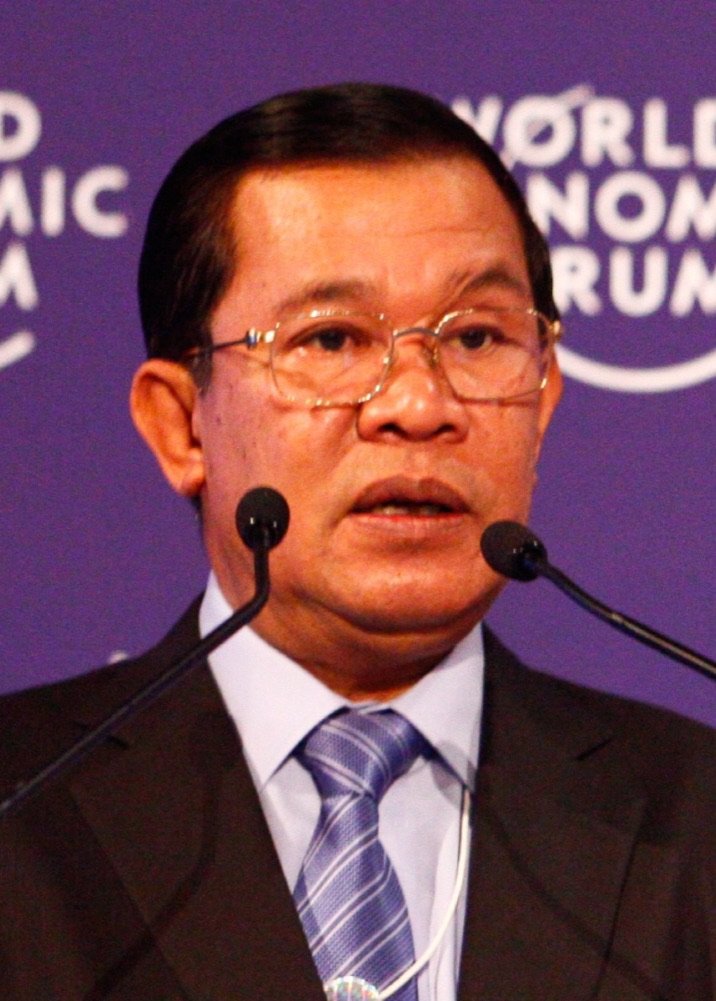
Compare the monarch’s formal role with the long-serving prime minister who exercised executive power.
- Hun Manet
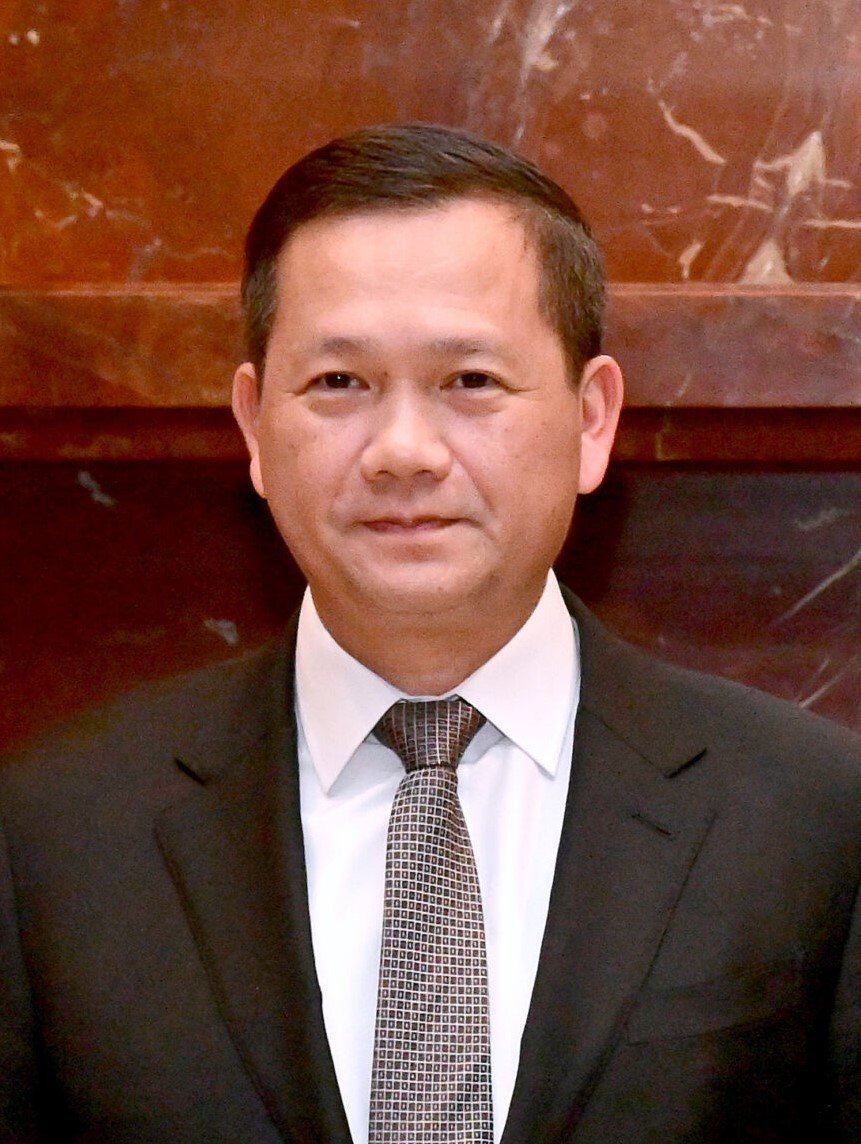
Follow the 2023 change of prime minister without confusing government succession with royal succession.
Sources and further reading
Explore the evidence
These references support the biography and offer further reading. Official records, first-person accounts and independent reporting provide different perspectives; image records document attribution and licensing.
- 1. Royal Cabinet of CambodiaNorodom Sihamoni — royal biographical chronology
Royal Cabinet chronology distinguishes selection on 14 October from enthronement on 29 October 2004. Its UNESCO endpoint differs from the French academy profile; the biography gives the agreed 1993 start without asserting a disputed endpoint.
- 2. Académie des Inscriptions et Belles-LettresNorodom Sihamoni — foreign associate and career
Institutional membership profile supports the 1976–1979 confinement, artistic career and 2008 election. Its assessment of royal cultural support is an institutional account, not an evaluation of government policy.
- 3. Press and Quick Reaction Unit, Council of MinistersConstitution of the Kingdom of Cambodia
Government-hosted constitutional text is used for the monarchy’s framework and formal functions, not as proof of how every provision operates in practice.
- 4. Wikimedia CommonsPortrait and GODL-India record