
The short answer
The bombings in Kuta killed 202 people from more than twenty countries and transformed Indonesian and regional counter-terrorism. This guide centres the victims and first responders while tracing the forensic investigation, court cases, constitutional questions and long recovery that followed.
Chronology
A timeline of the turning points
Bombs strike Kuta and Denpasar
Explosions at Paddy’s Pub and outside the Sari Club devastated a crowded nightlife district; a smaller device detonated near the U.S. consular agency.
Emergency care and identification begin
Balinese residents, hospital staff, volunteers and international medical teams treated severe burns and trauma while investigators began identifying victims from many countries.
The UN Security Council adopts Resolution 1438
The Council condemned the attacks and called on states to support Indonesia in finding and bringing the perpetrators to justice.
Indonesia issues emergency anti-terrorism regulations
The government created a new legal framework for terrorism offences and a separate regulation applying it to the Bali attack.
Key suspects are arrested
Forensic work and Indonesian-led investigations identified the bomb vehicle and network, leading to the arrests of Amrozi, Imam Samudra and Ali Ghufron.
Trials produce major convictions
Indonesian courts convicted members of the operational network under terrorism and criminal law, establishing a public judicial record of the conspiracy.
The Constitutional Court rejects retroactive legislation
The Court invalidated the law that retroactively applied the new terrorism regulation, while convictions supported by pre-existing criminal law remained consequential.
Three principal perpetrators are executed
Amrozi, Imam Samudra and Ali Ghufron were executed after their convictions and appeals, a decision that also renewed debate over capital punishment.
Victims’ rights receive a wider legal framework
Revised terrorism law and later court decisions strengthened routes to compensation, medical help and psychosocial rehabilitation for victims of past attacks.
Communities continue to commemorate the victims
Services in Bali, Indonesia, Australia and elsewhere remember 202 people from more than twenty countries and recognise survivors and first responders.
What happened in Bali on 12 October 2002?
On a Saturday night in Kuta, a suicide bomber detonated an explosive device inside Paddy’s Pub. People fled toward the street, where a much larger vehicle bomb exploded outside the Sari Club. The second blast caused the overwhelming share of deaths, injuries and destruction along Jalan Legian.
A smaller device exploded near the United States consular agency in Denpasar without causing comparable casualties. The coordinated locations and timing showed that the operation was designed to strike a crowded civilian area and produce mass casualties, fear and international attention.
The attack killed 202 people, including 88 Australians and 38 Indonesians, and victims from more than twenty countries. Hundreds more were injured. The multinational casualty list reflected Bali’s role as both an Indonesian home and workplace and one of the world’s best-known tourism destinations.
The human cost and the emergency response
The first response came from people already nearby: Balinese residents, hospitality workers, police, taxi drivers, tourists and volunteers moved victims away from fire and debris. Sanglah Hospital in Denpasar received patients with severe burns, blast injuries and trauma that exceeded local emergency capacity.
Medical evacuations carried many patients to Australia and other countries, while international teams supported treatment and forensic identification. The work required cooperation across languages, national systems and incomplete family information. Identification took time because heat and blast damage made ordinary visual recognition unreliable.
The death toll alone cannot describe the event. Survivors faced long recovery, disability and psychological trauma; families navigated grief across borders; Balinese workers lost colleagues and income as tourism fell. Later memorial and health programmes emerged from these connected personal, medical and economic consequences.
How investigators reconstructed the attack
Indonesia led the criminal investigation with extensive support from the Australian Federal Police and other international partners. Teams treated the damaged streets as a large forensic site, recording fragments, chemical evidence, vehicle components and patterns of blast damage.
A vehicle identification number and other physical traces helped investigators connect the main bomb to a Mitsubishi van. Telephone records, witness accounts, travel, rental and purchase evidence then linked the material preparation to members of a wider network.
The investigation demonstrated the value of patient forensic work over speculation. Public anxiety initially produced rumours and competing claims, but convictions required a chain connecting devices, transport, finance, meetings and individual acts. Operation Alliance became an important model for joint Indonesian–Australian policing.
Jemaah Islamiyah and the operational network
Investigators attributed the plot to members of Jemaah Islamiyah, a clandestine regional organisation whose networks had grown through religious schools, conflict zones and connections across Indonesia, Malaysia, Singapore and the Philippines. The organisation was not identical to any community, school or religious movement, and responsibility belongs to the planners and participants rather than to a faith or population.
The Bali team included people who selected targets, assembled explosives, transported components, arranged accommodation and carried out the detonations. Some senior figures were linked to earlier regional plots, while others were recruited for specific logistical roles.
Indonesian trials convicted numerous participants. Three central defendants—Amrozi, Imam Samudra and Ali Ghufron, also known as Mukhlas—received death sentences and were executed in 2008. Ali Imron cooperated with investigators and received life imprisonment. Other suspects were captured or tried over many years, showing that the legal aftermath extended far beyond the first anniversary.
Anti-terrorism law and a constitutional dispute
Six days after the attacks, President Megawati Sukarnoputri’s government issued Government Regulations in Lieu of Law No. 1 and No. 2 of 2002. The first created a terrorism framework; the second applied it specifically to the 12 October attack. Parliament later converted the measures into statutes.
In 2004, Indonesia’s Constitutional Court ruled that the law applying the new framework retroactively to Bali violated the constitutional protection against retrospective prosecution. The judgment did not treat the bombings as lawful or erase all convictions: murder, explosives and conspiracy were already crimes, and courts had relied on different combinations of law and evidence.
The dispute matters because democratic states face pressure to expand power after mass violence. Effective investigation, fair trial and legal certainty are not competing luxuries; together they determine whether counter-terrorism protects the public without making emergency rule permanent.
How the bombings changed regional security
The attacks accelerated intelligence, policing and judicial cooperation across Southeast Asia. Indonesia’s specialist counter-terrorism capacity expanded, while neighbouring governments intensified investigations into Jemaah Islamiyah cells, financing and travel networks.
International cooperation combined training, forensic support, information sharing and prosecutions. It contributed to the disruption of further plots and the arrest or death of senior operatives, though later attacks in Jakarta and Bali showed that organisational pressure did not immediately eliminate violent networks.
Security success also raised continuing questions about detention, interrogation, surveillance, rehabilitation and the return of convicted offenders to society. The durable lesson is institutional: prevention depends on credible law enforcement and community trust as well as tactical capability.
Bali’s recovery, memory and the rights of victims
Tourism fell sharply after the attack, affecting hotels, restaurants, transport, small businesses and households far beyond Kuta. Recovery required both physical confidence and reassurance that Bali would not be reduced to the site of a terrorist attack. The island’s communities continued cultural and religious life while supporting memorials and survivors.
A permanent memorial on Jalan Legian lists the dead by name and nationality. Annual ceremonies bring together families, survivors, first responders, officials and community members. The names resist a narrative centred only on perpetrators: the historical subject is also the lives taken, the people who responded and the societies that carried the loss.
Indonesia’s later victim-compensation framework recognised that criminal convictions do not by themselves repair medical, economic and psychological harm. Litigation continued into the 2020s over deadlines and access for victims of past terrorism, demonstrating how the obligations created in 2002 remain active public policy.
Continue the chronology
Related history guides
Reformasi and Democratic Transition
Place the attack inside the institutional transition from Suharto to competitive constitutional government.
Read the timeline1965–1998Indonesia’s New Order Era
Understand the authoritarian institutions and security legacies inherited by post-Suharto governments.
Read the timeline15 August 2005The Aceh Peace Agreement
Compare a different security challenge resolved through negotiation, autonomy and monitored demobilisation.
Read the timeline1825–todayIndonesia History Timeline
Return to the wider chronology of independence, authoritarian rule, democratic reform and contemporary government.
Read the timelineConnected biographies
Two national leaders connecting the immediate response, security policy and the transition that followed
 Indonesia · Politics
1947—
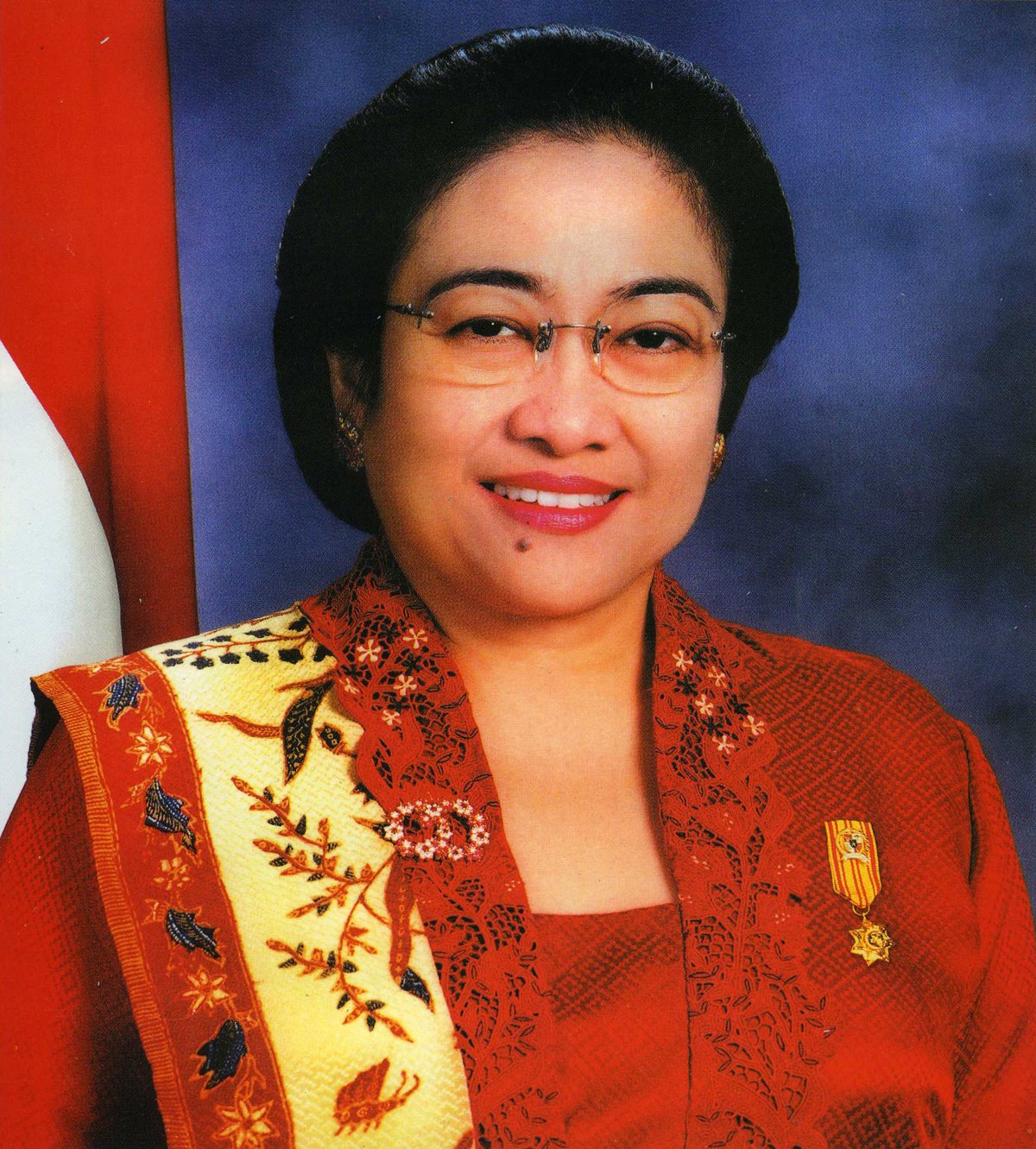
Megawati Sukarnoputri
Former president of Indonesia and chair of PDI-PIndonesia’s first woman president, an opposition symbol under Suharto and the PDI-P chair who remains central to post-Reformasi politics.Read biography Indonesia · Politics
1949—
Susilo Bambang Yudhoyono
Sixth President of IndonesiaThe retired general known as SBY who won Indonesia’s first direct presidential election and led the country from 2004 to 2014.Read biographyQuick answers
Common questions
- How many people died in the 2002 Bali bombings?
- The attacks killed 202 people, including 88 Australians and 38 Indonesians, with victims from more than twenty countries. Hundreds of people were injured.
- Where did the 2002 Bali bombings happen?
- The two mass-casualty explosions struck Paddy’s Pub and the street outside the Sari Club on Jalan Legian in Kuta. A smaller device exploded near the U.S. consular agency in Denpasar.
- Who carried out the Bali bombings?
- Indonesian investigations and court cases attributed the operation to members of Jemaah Islamiyah. Multiple participants were convicted for planning, bomb-making, logistics and execution roles.
- How were the Bali bombers found?
- Indonesian police, supported by Australian and other international investigators, used blast evidence, vehicle fragments, telephone records, witness accounts and financial and travel links to reconstruct the network.
- What changed after the 2002 Bali bombings?
- Indonesia adopted a terrorism-law framework and expanded specialist policing. Regional intelligence and judicial cooperation grew, while later reforms strengthened compensation and rehabilitation rights for victims.
Primary and institutional sources
How this history was checked
Dates, legal milestones and historical claims are checked against the official and institutional records below. This article was reviewed on 2 October 2026.
- United Nations Security CouncilResolution 1438 (2002) on the Bali bomb attacks
- Audit Board of the Republic of IndonesiaGovernment Regulation in Lieu of Law No. 2 of 2002
- Constitutional Court of the Republic of IndonesiaDecision No. 013/PUU-I/2003 on retroactive terrorism law
- Australian Federal PoliceOperation Alliance: 2002 Bali Bombings
- Australian Department of Foreign Affairs and TradeCommemorative services for the twentieth anniversary
- United Nations Office on Drugs and CrimeCountry Programme for Indonesia, 2017–2020
- Constitutional Court of the Republic of IndonesiaCompensation for past terrorism victims