The short answer
Bataan delayed Japan’s conquest for three months, but it was never just a last stand on a map. A predominantly Filipino army fought inside an American-led command system while blockade, shrinking rations and disease steadily destroyed its capacity to resist. The surrender on 9 April ended the battle and opened the ordeal of the Death March.
Chronology
A timeline of the turning points
Withdrawal toward Bataan begins
Douglas MacArthur activated the prewar withdrawal plan as Filipino and American formations attempted to reach the peninsula with the supplies they could save.
The first defensive line is occupied
Two corps held the Abucay–Mauban line across difficult terrain while Japanese forces prepared their first sustained assaults.
Japanese attacks begin in earnest
Artillery, infantry and tanks struck the eastern sector. Fighting widened into repeated attacks, infiltrations and local counterattacks.
Jose Calugas acts at Culis
The Philippine Scout crossed exposed ground, organised a volunteer gun crew and restored a disabled artillery piece under shellfire.
Defenders withdraw to Orion–Bagac
Pressure and penetrations forced a shorter main battle position. Other fighting continued against Japanese landings behind the lines.
The first Japanese offensive ends
Japanese forces paused after heavy losses. The defenders held, but blockade, disease and reduced rations kept weakening the army.
MacArthur leaves Corregidor
Acting under presidential orders, MacArthur departed for Australia. Jonathan Wainwright assumed command of United States forces in the Philippines.
The final Japanese offensive opens
A concentrated assault broke through formations already damaged by hunger, malaria, dysentery and an acute shortage of medicine.
Edward King surrenders Bataan
The Bataan commander capitulated to prevent the destruction of forces no longer capable of organised defence. Corregidor continued to resist.
Why did the defenders withdraw to Bataan?
Japan attacked the Philippines in December 1941 and quickly gained control of the air and sea approaches. The defence fell back to Bataan and the fortified islands of Manila Bay, where prewar planning had envisioned delaying an invasion until relief arrived.
The withdrawal saved a large army from immediate encirclement, but many supplies were lost or left outside the peninsula. A Japanese blockade then made large-scale reinforcement and resupply impossible. Strategy bought time without solving the material crisis inside Bataan.
Filipino troops formed most of the defending army
The force was often described simply as American, but most of its soldiers were Filipino. It included Philippine Army divisions mobilised shortly before the invasion, the more experienced Philippine Scouts of the United States Army and smaller United States units.
Training, weapons and communications varied sharply. Some formations entered battle with limited preparation, yet held positions for months against a force with superior air power, artillery and armour. Remembering Bataan requires keeping both Filipino numerical weight and unequal colonial command structures visible.
The campaign moved through two main defensive lines
Fighting began along the Abucay–Mauban line in January. Japanese penetrations and landings forced the defenders onto the shorter Orion–Bagac position, while isolated actions continued in jungle, coastal and mountain terrain.
The defence repelled the first major offensive and imposed significant losses. Individual actions such as Jose Calugas restoring a gun at Culis occurred inside this larger system of artillery support, local counterattack and repeated movement between positions.
Hunger and disease became combat factors
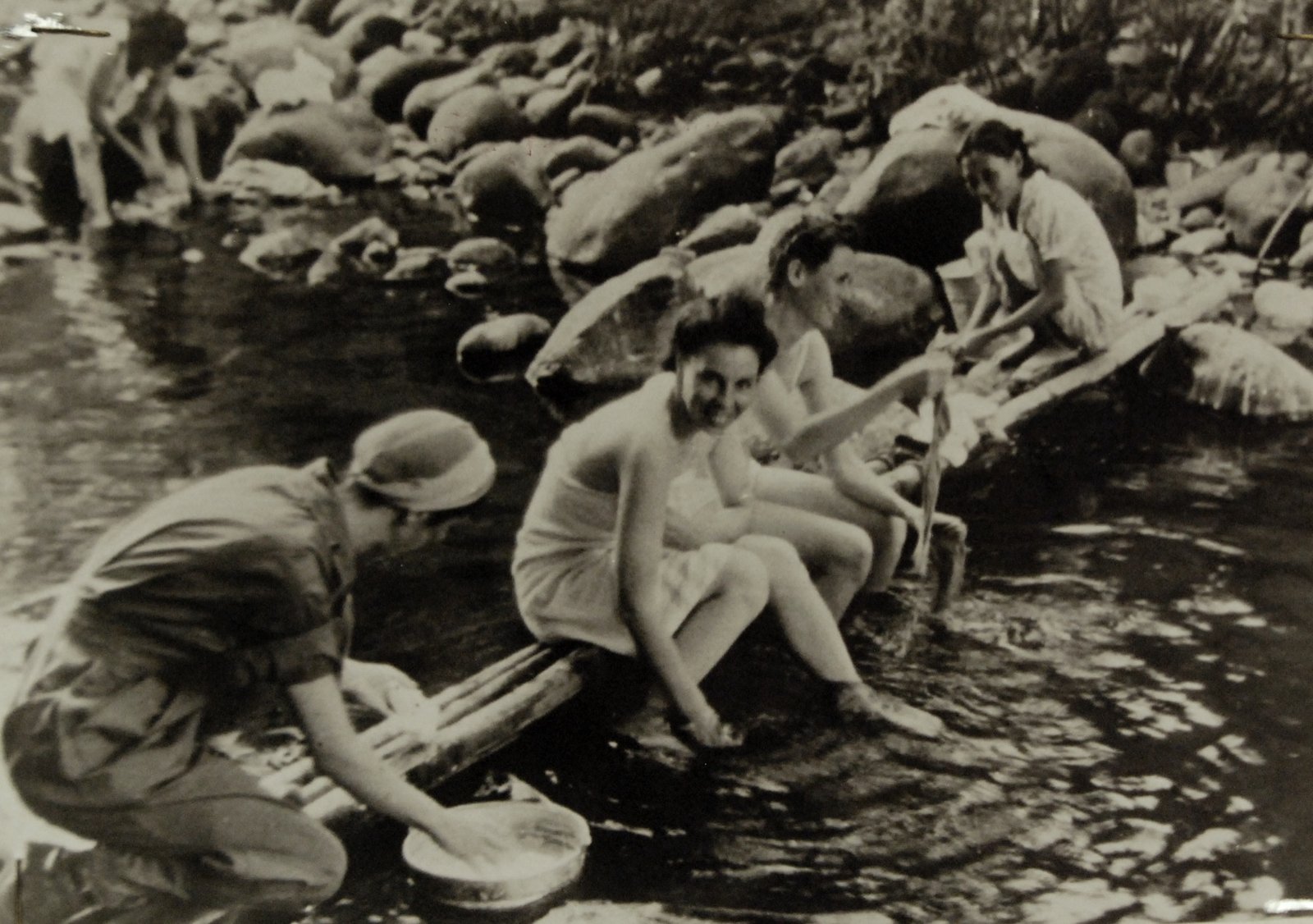
Rations were reduced as food stocks disappeared. Malaria, dysentery, beriberi, scurvy and other illnesses spread among troops who lacked sufficient quinine, vitamins and hospital capacity. By April, many soldiers were consuming fewer than 1,000 calories a day according to the U.S. Army’s official history.
These conditions were not background hardship. They directly reduced mobility, attention and the ability of units to withstand the final offensive. A battle map alone cannot explain why the front disintegrated so rapidly after 3 April.
Why did Bataan surrender on 9 April?
Major General Edward P. King faced exhausted formations, collapsing lines and no realistic prospect of relief. He surrendered the Bataan force on 9 April, while Jonathan Wainwright on Corregidor had not authorised a general capitulation at that moment.
The decision ended organised defence on the peninsula but not the wider campaign. Corregidor held until 6 May, units elsewhere continued fighting, and guerrilla groups emerged or expanded across the islands.
Surrender began a new ordeal
Japanese forces took more than 70,000 surviving Filipino and American troops from Bataan. Many were already sick, wounded and starving. Their forced transfer from Mariveles and Bagac toward San Fernando, Capas and Camp O’Donnell became the Bataan Death March.
The march and the lethal conditions in prison camps belong to the aftermath of the battle, not to its battlefield death toll. Keeping those stages separate makes the scale and mechanisms of death easier to understand.
How is Bataan remembered?
The Philippines observes 9 April as Araw ng Kagitingan, or Day of Valor. Memorials at Mount Samat and along the Death March route connect military resistance to captivity, civilian aid and national remembrance.
Bataan has also been used in American memory as a story of endurance after early defeat. A fuller account recognises the Filipino majority, the colonial structure of USAFFE, the failures of supply and the different futures of soldiers who died, entered captivity or joined resistance.
Continue the chronology
Related history guides
The Bataan Death March
Follow the prisoners from two starting points through San Fernando and Capas to Camp O’Donnell.
Read the timeline29 Dec 1941–6 May 1942The Battle of Corregidor
Continue to the siege, amphibious assault and surrender of the fortified islands.
Read the timeline1942–1945The Japanese Occupation of the Philippines
Place the campaign inside the wider history of occupation, resistance and liberation.
Read the timelineEleven sourced livesBataan, Corregidor and Philippine Resistance
Compare military defence, civil refusal, intelligence and guerrilla organisation.
Read the timelineConnected biographies
Four lives connecting command, battlefield action and wartime government
1888—1944
Vicente Lim
Brigadier general and guerrilla organiserThe first Filipino graduate of West Point, a 41st Division commander in Bataan and a guerrilla organiser executed by Japanese forces in Manila.Read biography1907—1998
Jose Calugas
Philippine Scout, Medal of Honor recipient and guerrilla agentA Philippine Scout who crossed exposed ground to restore a silenced gun at Bataan, survived the Death March and captivity, and later aided a guerrilla intelligence network.Read biography Philippines · Politics
1878—1944
Manuel L. Quezon
President of the Commonwealth of the PhilippinesThe statesman who secured Commonwealth status, became its first president and led the Philippine government in exile during the Second World War.Read biography1886—1942
José Abad Santos
Chief justice and wartime head of the Commonwealth governmentA jurist and Commonwealth statesman who carried emergency authority during the Japanese invasion and was executed after refusing to cooperate with the occupation.Read biographyQuick answers
Common questions
- When was the Battle of Bataan?
- The main defence of Bataan ran from early January until the surrender on 9 April 1942, following withdrawal into the peninsula in late December 1941.
- Who fought in the Battle of Bataan?
- The defending force included Philippine Army divisions, Filipino Philippine Scouts serving in the U.S. Army and United States units under USAFFE. Most of the defenders were Filipino.
- Why did Bataan fall?
- Japanese military superiority, blockade and the loss of supplies combined with hunger, disease, medicine shortages and the failure of relief to weaken the defenders before the final April offensive.
- Who surrendered Bataan?
- Major General Edward P. King Jr., commander on Bataan, surrendered the peninsula’s forces on 9 April 1942. Corregidor under Jonathan Wainwright continued resisting until 6 May.
- What happened after the surrender of Bataan?
- Japanese forces transferred more than 70,000 surviving Filipino and American prisoners toward camps. The brutal journey became known as the Bataan Death March.
- Why is April 9 important in the Philippines?
- The date of Bataan’s surrender is commemorated as Araw ng Kagitingan, or Day of Valor, honouring those who fought and endured captivity.
Primary and institutional sources
How this history was checked
Dates, legal milestones and historical claims are checked against the official and institutional records below. This article was reviewed on 9 September 2026.
- U.S. Army Center of Military HistoryThe Fall of the Philippines
- U.S. Army Center of Military HistoryPhilippine Islands campaign booklet
- U.S. Army Center of Military HistoryWorld War II — Asiatic-Pacific Theater campaigns
- U.S. Army Medical DepartmentMalaria in the Southwest Pacific Area
- United States ArmyWorld War II Medal of Honor citation: Jose Calugas
- Wikimedia CommonsBattle of Bataan medical workers photograph and licence