
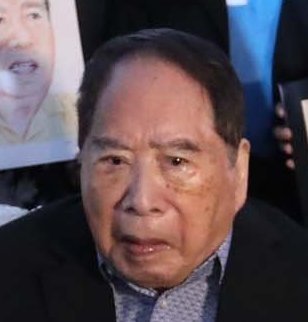
In this biography
Quick facts
- Born
- 15 October 1924
- Died
- 19 January 2019
- Birthplace
- Fujian, China
- Country
- Philippines
- Nationality
- Filipino
- Known for
- Building a shoe store into a retail, property and banking group
- Birth name
- Sy Chi Sieng
- Company founded
- ShoeMart, later SM Group
- First shoe store
- 1958, downtown Manila
- Major sectors
- Retail, property and banking
Why this life matters
Sy’s career follows the rise of mass retail, large urban malls and consumer banking, as well as the multigenerational family ownership behind a major Philippine conglomerate.
Timeline
Key moments
Born in Fujian
Born on 15 October and later migrated to the Philippines.
Opened ShoeMart
Established a footwear store in downtown Manila.
Opened SM City North EDSA
The group’s first major mall helped define a new retail format.
Listed SM Prime
The property company entered the Philippine stock market.
Became SM Prime chairman emeritus
Ended his term as SM Prime chairman in April, while the group’s other companies retained distinct leadership structures.
A migrant family and a shoe-store beginning
Henry Sy was born in Fujian in 1924 and moved to the Philippines as a child. In a later interview, he described arriving at age twelve, seeing his father work in a small store and learning a new country without speaking English or Tagalog. That first-person recollection is valuable for understanding how Sy presented his beginnings, although it does not independently document every detail of the family business.
SM Prime’s biographical record dates the first ShoeMart store to 1958. This was not the founding date of each company later associated with the SM Group: the retail operation came first, followed by separate property and financial businesses. Corporate histories describe a move from shoes into wider department-store merchandise during the 1960s and 1970s. The change mattered because Sy was building a repeatable retail format, not merely operating one successful footwear shop.
The leap to large shopping malls
The opening of SM North EDSA in Quezon City in 1985 marked a different scale of investment. SM Prime’s history places it amid political and economic turbulence; its later company report describes the decision to build beyond the established downtown retail districts. The mall joined a department store and supermarket to many other tenants and services. That arrangement could make the site a destination even for customers who did not arrive to buy shoes.
SM Megamall followed in 1991, and the first provincial SM mall in Cebu opened in 1993, according to SM Prime’s dated company timeline. These dates explain the sequence better than a general claim that Sy “invented” Philippine mall culture. The company’s expansion was consequential, but wider urbanisation, transport links, competitors and consumer spending also shaped the market. SM’s corporate sources document its own projects rather than measuring its independent share of those broader changes.
SM Prime, banking and distinct companies
SM Prime Holdings was incorporated in January 1994 and listed on the Philippine Stock Exchange in July that year. Its initial function was to own and operate malls. The listing opened the property company to outside investors while the Sy family remained central to the wider group. It should not be confused with the 1958 ShoeMart store or treated as the legal parent of every retail and banking operation that carried the SM name.
Sy’s interests later extended across retail, property, hotels and financial services. SM Prime identifies him as chairman emeritus of BDO Unibank and honorary chairman of China Banking Corporation, distinct roles in distinct banks. China Bank’s own tribute describes his long relationship with that institution. The companies could benefit from shared customers and locations, but saying simply that Sy “owned the banks” would obscure their separate corporate histories and governance.
Succession, legacy and limits of the record
SM Prime’s board profile says Sy chaired that company from 1994 until April 2014 and then served as chairman emeritus until his death on 19 January 2019. The 2014 transition is a verifiable corporate milestone; the 2017 date sometimes associated with his public appearances is not when he assumed the emeritus title. His children and other executives had increasingly prominent roles, so later expansions cannot all be attributed to one founder’s direct management.
His story is often told as an immigrant success narrative, and its commercial scale is clear from the companies’ own records. The social assessment is more complicated: large malls can create jobs and convenient public destinations while also concentrating commercial bargaining power and changing local retail patterns. This profile does not claim to resolve those effects from company material alone. It traces documented business decisions and leaves evaluation of labour, land and competition impacts for independent research.
Quick answers
Frequently asked questions about Henry Sy
- What did Henry Sy found?
- He opened ShoeMart in 1958. The retail venture grew into the wider SM business group, with distinct retail, property and banking companies.
- What was SM’s first shopping mall?
- SM North EDSA opened in 1985. The group later opened SM Megamall in 1991 and its first provincial mall in Cebu in 1993.
- Are SM Group and SM Prime the same company?
- No. SM Prime is the distinct property company incorporated and listed in 1994. Its history should not be confused with the first ShoeMart store in 1958.
- When did Henry Sy become chairman emeritus of SM Prime?
- He became chairman emeritus in April 2014, after chairing SM Prime from 1994. He held the honorary title until his death in 2019.
Keep exploring
Lives connected to this story
- John Gokongwei Jr.
Compare another Philippine founder who built a diversified consumer and property group.
- Tony Tan Caktiong
Read how a different Philippine retail entrepreneur expanded a consumer brand.
- David Consunji
Compare a client-side retail enterprise with the contractor that undertook institutional projects.
Sources and further reading
Explore the evidence
These references support the biography and offer further reading. Official records, first-person accounts and independent reporting provide different perspectives; image records document attribution and licensing.
- 1. SM Prime HoldingsHenry Sy Sr.
SM Prime records April 2014 as the end of Sy’s chairmanship, not 2017; his honorary roles at other group companies remain distinct. Its explicit 1994–April 2014 term dates are retained, but the accompanying “ten (10) years” wording is internally inconsistent and is not adopted as the duration.
- 2. China BankA Special Tribute to Henry Sy
- 3. SM Prime HoldingsSM Prime company history
- 4. SM Prime HoldingsSM Prime 2014 annual report
- 5. SM Prime HoldingsSM Supermalls history and sustainability report
- 6. Philippine Star, reproduced by SM PrimeHenry Sy interview
- 7. Wikimedia CommonsPortrait and licence record
The displayed file is the full Commons crop of a 2017 Philippine News Agency image. Its Commons public-domain rationale is explicitly Philippine-jurisdiction based and should not be read as a guarantee for every country.
- 8. China BankCommemorative chapter: Henry Sy’s date, name and family history
The bank-authored chapter’s indexed extract gives 15 October 1924 and Xiamen. Direct web viewing exceeded the document-size limit; no claim is made to have read the complete book. The SM-hosted obituary uses Jinjiang. Both are in Fujian, so the quick fact uses the broader province rather than asserting a settled city.
- 9. ABS-CBN News · reproduced by SM Prime19 January 2019: Henry Sy’s legacy and Jinjiang origin

