
The short answer
The regional crisis reached the Philippines when pressure forced greater flexibility in the peso on 11 July 1997. Rapid credit growth, foreign-currency exposure and a wide current-account deficit created risk, but earlier reforms and a shorter lending boom helped prevent the deeper banking collapse seen elsewhere. Stabilisation still carried heavy costs for jobs, incomes and growth.
Regional comparison
One crisis, different national outcomes
The same reversal in confidence met different debt structures, banks and policy systems across Southeast Asia.
| Country | Currency response | Financial-system impact | Political effect |
|---|---|---|---|
| Philippines | Peso flexibility from July 1997 | Stress without systemic collapse | Regular 1998 presidential succession |
| Thailand | Baht floated 2 July 1997 | Finance companies closed and banks restructured | Government changed during the downturn |
| Malaysia | Ringgit fixed at RM3.80 from September 1998 | Danaharta, Danamodal and CDRC restructuring | Reformasi followed Anwar’s dismissal |
| Indonesia | Rupiah float and severe collapse | Systemic banking crisis | Suharto resigned amid Reformasi |
Chronology
A timeline of the turning points
Credit and capital inflows accelerate
Economic growth, bank lending, property exposure and foreign-currency intermediation expanded rapidly.
Thailand floats the baht
The regional shock prompted investors to reassess currencies, banks and short-term debt across Southeast Asia.
The BSP widens the peso trading band
The peso fell to ₱27.668 per U.S. dollar as authorities stopped defending the earlier range.
Policy tightens and the currency depreciates
Interest rates, fiscal restraint, external financing and bank-supervision measures sought to contain pressure.
The economy contracts
Regional recession, El Niño damage and weak domestic demand turned financial stress into an output and employment shock.
Policy support shifts toward recovery
As the peso and inflation stabilised, monetary and fiscal policy became less restrictive and growth resumed.
Why was the Philippines vulnerable?
Mid-1990s growth attracted capital and encouraged rapid private credit expansion. Banks increased lending to property and consumption, companies borrowed in foreign currencies, and the current-account deficit widened as imports and investment outpaced export earnings.
A de facto link between the peso and U.S. dollar reduced the apparent exchange-rate risk. When confidence changed, short-term inflows could reverse quickly while foreign-currency liabilities remained.
What happened on 11 July 1997?
Nine days after Thailand floated the baht, the Bangko Sentral ng Pilipinas widened the peso’s trading band. The currency immediately depreciated and later moved under a more flexible arrangement as regional pressure intensified.
Depreciation raised the peso cost of dollar debts and imported goods. Higher interest rates defended stability but also made domestic borrowing more expensive, transmitting the currency shock into company balance sheets and household demand.
Why was the Philippine downturn less severe than some neighbours?
The Philippines shared vulnerabilities with Thailand, Indonesia and South Korea, but its credit boom had been shorter, large banks were generally better capitalised and earlier debt and banking reforms gave authorities more room to respond.
A continuing programme relationship with the International Monetary Fund also allowed financing and policy adjustment without the sudden creation of an entirely new rescue framework. “Less severe” does not mean painless: output contracted, unemployment increased and poverty reduction was interrupted.
How did the government and central bank respond?
Authorities allowed the peso to float, tightened monetary conditions, adjusted the budget and strengthened bank supervision. The policy mix sought to slow capital flight, contain inflation and prevent individual bank weaknesses from becoming a system-wide collapse.
As financial conditions stabilised in 1998, policy shifted toward supporting domestic demand. The response evolved rather than following one fixed formula, which is important when judging claims that either austerity or stimulus alone defined the Philippine strategy.
What changed after the crisis?
The crisis accelerated prudential rules, monitoring of foreign-currency exposure, bank recapitalisation and more flexible exchange-rate management. Businesses and financial institutions became more conscious of maturity and currency mismatches.
Politically, the shock crossed the handover from Fidel Ramos to Joseph Estrada. Recovery began, but the crisis reinforced public concern about jobs, inequality and whether market-oriented reform distributed gains widely enough.
Continue the chronology
Related history guides
The Asian Financial Crisis in Thailand
Compare the crisis’s origin and a deeper financial-sector collapse.
Read the timeline1997–1999The Asian Financial Crisis in Malaysia
Compare the ringgit peg, selective controls and three-part financial restructuring framework.
Read the timeline1997–2004Reformasi in Indonesia
See how financial collapse became a regime-changing political crisis.
Read the timeline1992–2016Democratic Consolidation and Crisis
Place the economic shock inside the wider post-EDSA political sequence.
Read the timelineConnected biographies
Political and business leaders across the regional financial shock
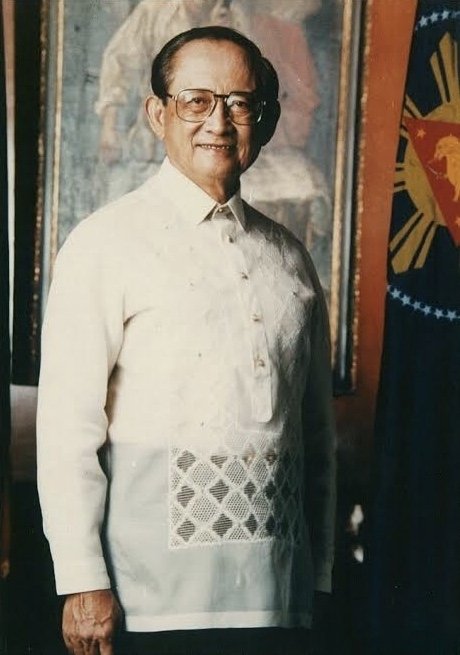
1928—2022
Fidel V. Ramos
President of the Philippines, 1992–1998The general who withdrew support from Ferdinand Marcos during People Power and later served as defence secretary and the Philippines’ twelfth president.Read biography
1937—
Joseph Estrada
President of the Philippines, 1998–2001The film star and populist politician who became president in 1998, left office amid impeachment and protest, and later returned as mayor of Manila.Read biography
1924—2019
Henry Sy
Founder of SM GroupThe entrepreneur who developed a Manila shoe store into SM, one of the Philippines’ largest groups in retail, property and financial services.Read biography
1959—
Jaime Augusto Zobel de Ayala
Chairman of Ayala CorporationThe Ayala Corporation chairman who led a 26-year chief-executive tenure and repositioned one of the Philippines’ oldest business groups around new industries and sustainability.Read biography
1934—
Lucio Tan
Chairman and CEO of LT GroupThe immigrant entrepreneur behind Fortune Tobacco and LT Group, with separate aviation interests in PAL Holdings and Philippine Airlines.Read biographyQuick answers
Common questions
- When did the Asian financial crisis reach the Philippines?
- The decisive currency break came on 11 July 1997, when the Bangko Sentral widened the peso trading band after Thailand floated the baht.
- Did the Philippine peso float in 1997?
- Yes. Authorities first widened the trading band and then allowed greater exchange-rate flexibility as regional pressure continued.
- Did the Philippines receive IMF support?
- Yes. An existing Extended Fund Facility was augmented and extended, followed by a precautionary stand-by arrangement in 1998.
- Why did the Philippines fare better than Indonesia or Thailand?
- Its lending boom was shorter, major banks were generally better capitalised, earlier reforms had reduced some debt risks, and policy adjustment began within an existing IMF-supported framework.
- Was there a Philippine recession?
- Yes. Real output contracted in 1998 as the regional crisis combined with high interest rates, weaker demand and severe El Niño effects on agriculture.
Primary and institutional sources
How this history was checked
Dates, legal milestones and historical claims are checked against the official and institutional records below. This article was reviewed on 9 September 2026.
- Bangko Sentral ng Pilipinas1997 Annual Report and crisis chronology
- Bangko Sentral ng PilipinasFragile Foundations, Enduring Lessons: the 1997 crisis revisited
- International Monetary FundPhilippines: Selected Issues — 1997–99 crisis management
- International Monetary FundFinancial Sector Crisis and Restructuring: Lessons from Asia