
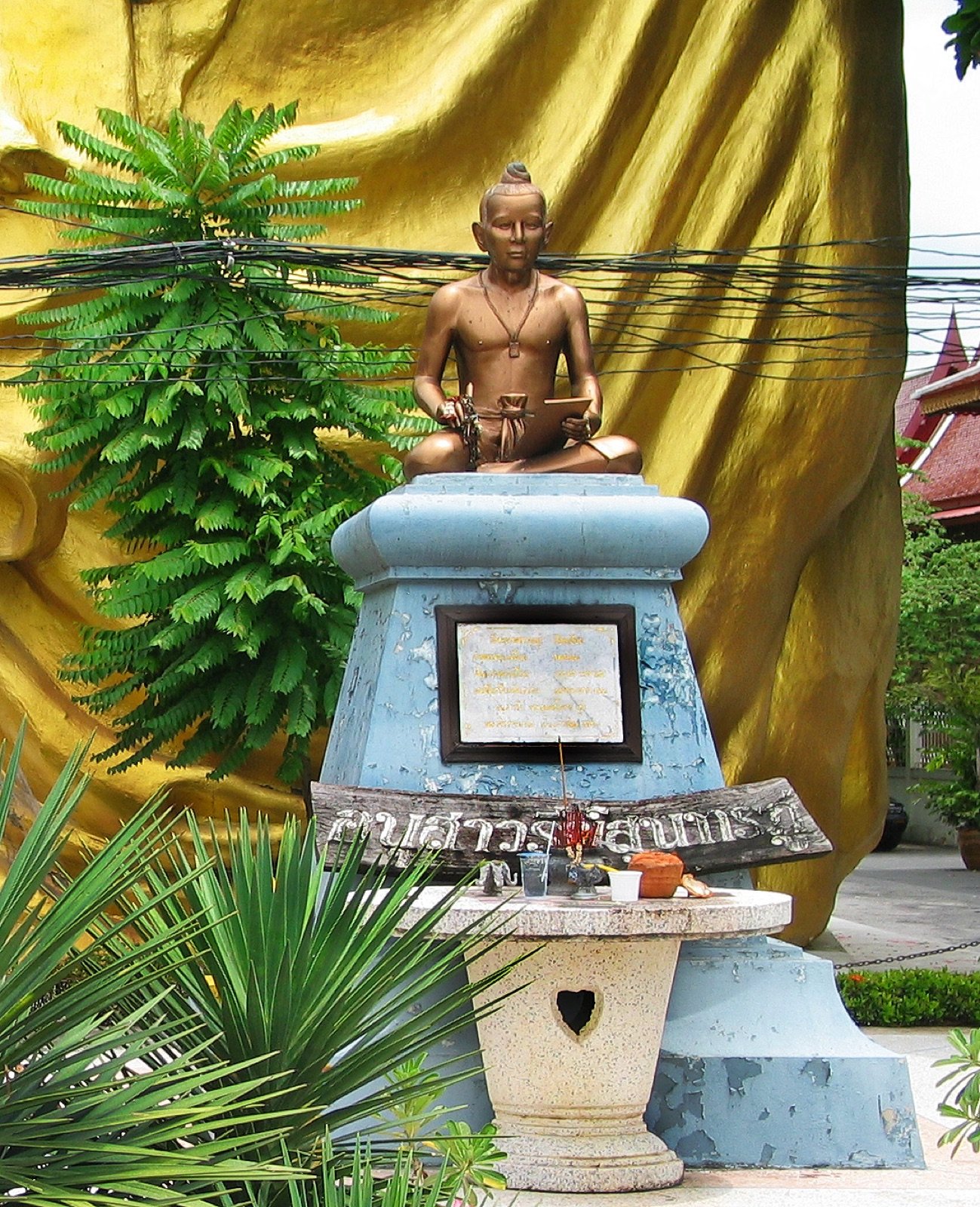
In this biography
Quick facts
- Born
- 26 June 1786
- Died
- 1855
- Birthplace
- Bangkok, Siam
- Country
- Thailand
- Nationality
- Thai
- Known for
- Phra Aphai Mani and the nirat travel-poem tradition
- Birth name
- Phu
- Best-known work
- Phra Aphai Mani
- Literary form
- Klon verse and nirat travel poetry
- National commemoration
- Sunthorn Phu Day, 26 June
Why this life matters
Sunthorn Phu expanded the reach of Thai literary language and created works that moved between court patronage, personal experience and broad public memory.
Timeline
Key moments
Born in Bangkok
Born on 26 June during the early Rattanakosin period.
Entered royal service
Worked as a scribe and developed a reputation for verse.
Composed an early nirat
Travel experience became the framework for separation, memory and observation.
Advanced at court
Received royal patronage during the reign of Rama II.
Life outside stable court favour
Periods of monastic life and travel shaped a more varied literary career.
Died in Bangkok
Died after returning to patronage late in life.
Bicentenary received UNESCO recognition
The two-hundredth anniversary of his birth brought international commemoration.
A poet between court and road
Sunthorn Phu was born in Bangkok in 1786 and entered royal service as a young man. His command of klon verse made poetry direct, rhythmic and memorable beyond a narrow literary elite.
The nirat form allowed travel to carry several stories at once: a route through real places, longing for an absent beloved and observations about society, landscape and belief.
Phra Aphai Mani and an enlarged world
His long narrative poem Phra Aphai Mani follows princes, mermaids, giants, hermits and travellers across an imaginative maritime world. Music and persuasion can matter as much as weapons, giving the work a distinctive moral and political texture.
The poem grew over many years and circulated through performance and manuscript before print. Its adaptability later supported illustration, theatre, film, comics and school reading.
Memory and national commemoration
Sunthorn Phu’s fortunes changed with court politics, and periods as a monk or traveller complicate the simple image of a permanently honoured royal poet. His writing preserves vulnerability, wit and ordinary detail alongside epic invention.
Thailand commemorates his birthday on 26 June, and the 1986 bicentenary received UNESCO recognition. The lasting measure of his influence is not only official honour but the continued movement of his lines, characters and journeys through Thai culture.
Quick answers
Frequently asked questions about Sunthorn Phu
- Who was Sunthorn Phu?
- Sunthorn Phu was a poet and royal scribe. Sunthorn Phu expanded the reach of Thai literary language and created works that moved between court patronage, personal experience and broad public memory.
- What is Sunthorn Phu best known for?
- Sunthorn Phu is best known for phra Aphai Mani and the nirat travel-poem tradition.
- When and where was Sunthorn Phu born?
- Sunthorn Phu was born on 26 June 1786 in Bangkok, Siam.
- When did Sunthorn Phu die?
- Sunthorn Phu died on 1855.
Sources and further reading
How this biography was checked
Core dates and offices are checked against the sources below. This profile was last reviewed on 8 September 2026.