
In this biography
Quick facts
- Born
- 29 October 1974
- Birthplace
- Jombang, East Java, Indonesia
- Country
- Indonesia
- Nationality
- Indonesian
- Known for
- The Wahid Foundation, religious pluralism and women-led Peace Villages
- Full name
- Zannuba Ariffah Chafsoh Rahman Wahid
- Family
- Daughter of Abdurrahman Wahid and Sinta Nuriyah
- Education
- Visual communication at Trisakti; public administration at Harvard Kennedy School
- Foundation origins
- Wahid Institute established on 7 September 2004
- Community focus
- Women’s livelihoods, conflict prevention and religious tolerance
Why this life matters
Her career shows how political influence can operate through civil society, community organising and interfaith cooperation as well as party office.
Timeline
Key moments
Born in Jombang
Born on 29 October into the Wahid family.
Design studies and journalism
Completed visual-communication studies and worked with the Australian newspapers’ Jakarta bureau.
Presidential support work
Worked as personal staff to her father during his presidency.
Harvard studies
Completed a master’s in public administration at Harvard Kennedy School.
Wahid Institute
Participated in the institution established to advance pluralism, democracy and peace.
Peace Village partnership
The women-centred initiative developed with UN Women and Japanese support.
Japanese recognition
Received recognition for cooperation and grassroots peace work.
Family, design studies and reporting
Yenny Wahid was born in Jombang, East Java, on 29 October 1974. Her full name is Zannuba Ariffah Chafsoh Rahman Wahid. As the daughter of Abdurrahman Wahid and Sinta Nuriyah, she grew up close to religious and political debate. In an interview with Republika, she recalled accompanying her father as he met people from different cultural and religious backgrounds.
Her early professional route was not confined to that family setting. She studied visual communication at Trisakti University and worked as an assistant correspondent for The Sydney Morning Herald and The Age. Reporting brought her into contact with perspectives outside Indonesian domestic politics. She subsequently completed a master’s in public administration at Harvard Kennedy School in 2003.
From presidential work to the Wahid Institute
During her father’s presidency she worked on his personal staff, including travel, public engagements and press relations. Her later experience included work with Susilo Bambang Yudhoyono’s presidential staff and a secretary-general role in the National Awakening Party, or PKB. These were distinct roles, rather than evidence that she herself had served as president or held an elected national executive office.
The Wahid Institute was established on 7 September 2004 and later became known as the Wahid Foundation. Its institutional history names Yenny among the founders alongside Abdurrahman Wahid, Greg Barton and Ahmad Suaedy. Research, discussion and publications about tolerant Islam developed into a wider civil-society programme concerned with democracy, social justice, welfare and non-violence.
How Peace Villages connect livelihoods and tolerance
The Peace Village approach made those broad aims more concrete. Rather than relying only on speeches about tolerance, it brought women together through enterprise training, access to capital and opportunities to work across religious differences. Its partnership with UN Women and Japanese support developed from 2017, following earlier community and economic-empowerment activity.
A 2019 foundation account described local conflict-awareness training and a nine-indicator framework. These included peace education, gender equality and a village working group with women among its members. A 2023 visit to Sinduharjo in Yogyakarta illustrated the approach through small businesses, traditional products and opportunities for women to learn programming. The examples describe programme activities, not proof that every local conflict was eliminated.
Recognition and a civil-society political career
In 2021 the foundation reported Japanese recognition of Yenny’s contribution to mutual understanding and the Peace Village programme. She attributed the honour to the women doing the community work. The recognition placed grassroots participation, rather than only elite interfaith meetings, at the centre of the public account of her peace advocacy.
Yenny’s biography consequently sits across journalism, political organisation and civil society. Family connections gave her access to national institutions, but the foundation’s community programmes show a different kind of political activity: creating local relationships and shared economic interests. Assessing that work requires distinguishing the foundation’s own explanation of its methods from independent measurement of their long-term effects.
Quick answers
Frequently asked questions about Yenny Wahid
- Is Yenny Wahid related to Abdurrahman Wahid?
- Yes. She is a daughter of Indonesia’s former president Abdurrahman Wahid and Sinta Nuriyah.
- What did Yenny Wahid study?
- She studied visual communication at Trisakti University and completed a master’s in public administration at Harvard Kennedy School in 2003.
- What is the Wahid Foundation?
- It is the civil-society institution originally established as the Wahid Institute in September 2004 to advance pluralism, democracy, welfare and peace.
- What are Yenny Wahid’s Peace Villages?
- The initiative connects women’s economic participation, local conflict prevention and tolerance. Its work with UN Women and Japanese support developed from 2017; earlier community work predates that partnership.
Keep exploring
Lives connected to this story
- Abdurrahman Wahid
Read the president and religious leader whose pluralist commitments helped shape the foundation.
- Susilo Bambang Yudhoyono
Place Yenny’s later presidential-staff experience within the following political era.
- Martha Tilaar
Compare a different Indonesian approach to women’s participation through enterprise and cultural knowledge.
Sources and further reading
Explore the evidence
These references support the biography and offer further reading. Official records, first-person accounts and independent reporting provide different perspectives; image records document attribution and licensing.
- 1. National Archives of Indonesia · presidential archiveWahid family and Yenny’s birth identity
- 2. Republika · original interviewEducation, journalism, political work and community methods
This is an interview and dated career list, not confirmation that every role marked current on the original page continues in 2026. Political roles are described historically without inferring an elected office.
- 3. Australian Catholic University conference · 2017 programmeSpeaker biography and Harvard graduation
- 4. Wahid Foundation · institutional history7 September 2004 establishment and named founders
The institutional page names several founders. Yenny is not described as the organisation’s sole founder or confused with the executive director listed on that page.
- 5. Wahid Foundation · 2019 programme accountNine Peace Village indicators and women’s participation
- 6. Wahid Foundation · 15 February 2023Sinduharjo visit and concrete community activities
- 7. Wahid Foundation · 14 September 2021Japanese recognition and the UN Women partnership
The 2017 date refers to the UN Women/Japan partnership, not the first emergence of every community initiative. Programme and impact statements are attributed to the foundation.
- 8. Wikimedia Commons · World Economic Forum2011 portrait, photographer and reuse terms
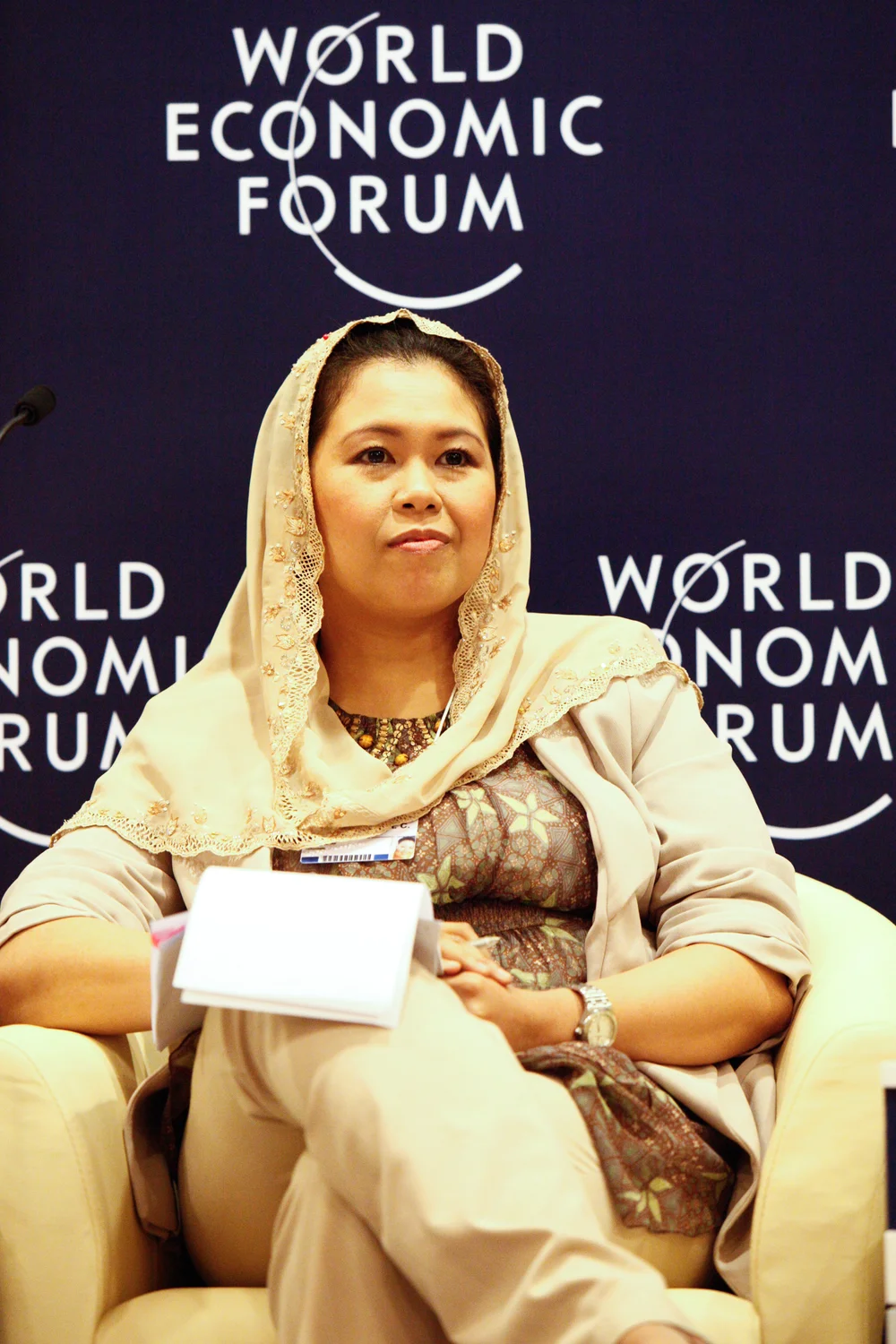
The Commons record identifies World Economic Forum photographer Sikarin Thanachaiary and a Flickr upload/licence confirmation on 6 March 2013 under CC BY-SA 2.0. Event date: 12 June 2011; no image-rights inference is drawn merely from WEF ownership.


