In this biography
Quick facts
- Born
- 27 May 1918
- Died
- 29 November 2019
- Birthplace
- Takasaki, Gunma Prefecture, Japan
- Country
- Japan
- Nationality
- Not independently established
- Known for
- Railway, telecommunications and tobacco reform during his 1982–1987 premiership.
- First House election
- 1947
- Premiership
- 27 November 1982–6 November 1987
- JNR transition
- 1 April 1987
- Parliamentary career
- Twenty consecutive election victories, per memorial address
Why this life matters
His reform agenda changed major national corporations, while the railway records show that institutional division and the disposal of inherited liabilities remained separate tasks.
Timeline
Key moments
Birth
Born in Takasaki on 27 May.
Parliament
Won his first House of Representatives election.
Cabinet roles
Held science, transport, defence and trade portfolios.
Prime minister
Entered office on 27 November.
Reform policy
The government adopted a basic policy for JNR reform.
Railway reorganisation
JNR was divided and reorganised from 1 April.
Left office
His premiership ended on 6 November.
Death
Died on 29 November, aged 101.
A long parliamentary apprenticeship preceded national leadership
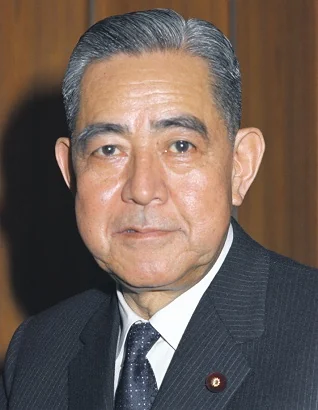
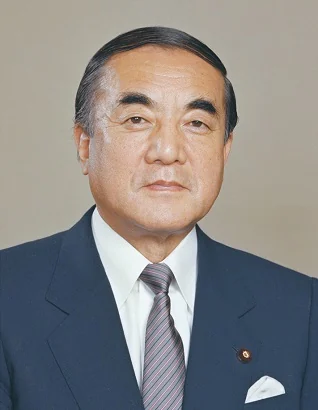
Yasuhiro Nakasone was born in Takasaki, Gunma Prefecture, on 27 May 1918. He served in the Home Ministry before entering postwar electoral politics. In 1947 he won a seat in the House of Representatives at the age of 28, beginning a parliamentary career that would span more than half a century.
The official memorial address delivered in 2020 records twenty consecutive election victories. It also lists his movement through science and technology, transport, defence, international trade and administrative management. These offices gave him experience in both the strategic and organisational questions that later marked his premiership.
Administrative management became a political programme
Nakasone became prime minister on 27 November 1982. The government faced international trade tensions, Cold War confrontation and pressure to restrain public expenditure. He made administrative reform a central political project, arguing for a smaller public sector and greater use of private enterprise.
His government pursued changes to the national railway, telecommunications and tobacco corporations. These projects required legislation and the work of ministries, expert bodies and managers. The reforming image associated with Nakasone grew from the coordination of those institutions, rather than from a prime minister being able to sell or reorganise a public corporation by personal decree.
Railway reform combined division with a staged ownership plan
The 1985 transport white paper described a plan for six regional passenger companies and a separate freight company. It also envisaged special companies initially capitalised through the transfer of assets, with shares to be sold gradually. The target date for the new management system was 1 April 1987.
The 1997 white paper records implementation on that date following eight reform-related laws. This was a major organisational break with the single national public corporation. It did not mean every company had immediately become privately owned through stock-market sales. Later listings remained a distinct stage, as did management of the old corporation’s liabilities.
The costs and labour questions survived the transition
The reform plan recognised substantial redundancy and the need to find other work for employees. It also acknowledged that the new companies and asset sales could not meet all inherited obligations. Those were central features of the proposed settlement, alongside the promise of more efficient railway management.
A later official account allocated 37.1 trillion yen in long-term debts and other liabilities between successor organisations and the JNR Settlement Corporation. It reported 25.5 trillion yen assigned to the latter. These records qualify any simple claim that privatisation made the old debt disappear. They also show why assessing Nakasone’s reforms requires attention to the people and public obligations left outside the operating companies.
War memory and relations with neighbouring countries
On 15 August 1985 Nakasone made an official visit to Yasukuni Shrine. The following year, Chief Cabinet Secretary Masaharu Gotoda acknowledged criticism from neighbouring countries that had suffered from Japan’s wartime actions, including concern about the shrine’s enshrinement of Class-A war criminals. The government defended the visit as a tribute to the war dead and a peace pledge, but announced that Nakasone would not make an official visit on 15 August 1986.
The decision placed war memory and relations with Asian neighbours alongside his more assertive postwar agenda. Nakasone left the premiership on 6 November 1987 and died on 29 November 2019. Alongside the changes to public corporations, this episode illustrates the disputes over how the Japanese state could commemorate the war while building international relationships.
Quick answers
Frequently asked questions about Yasuhiro Nakasone
- Were all JR shares sold in 1987?
- No. The official plan distinguished company reorganisation from gradual share sales, and later records date subsequent listings.
- Did JNR’s old debt vanish when it was divided?
- No. A large inherited debt-and-liability burden went to the Settlement Corporation and remained a public policy problem.
Keep exploring
Lives connected to this story
- Kakuei Tanaka
Nakasone served as trade minister in Tanaka’s government.
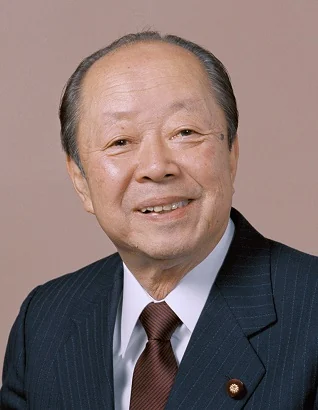
- Kiichi Miyazawa
Miyazawa held senior responsibilities during the Nakasone era.
- Shigeru Yoshida
Compare different conservative approaches to Japan’s postwar state and international position.
Sources and further reading
Explore the evidence
These references support the biography and offer further reading. Official records, first-person accounts and independent reporting provide different perspectives; image records document attribution and licensing.
- 1. Prime Minister’s Office of JapanNAKASONE Yasuhiro: historical cabinet profile
Japanese profile fields for birth date, prefectural association, cabinet dates and selected named ministers read. Prefectural “from” field is not automatically a certified birthplace. Not every reshuffle or ministry list analysed.
- 2. Prime Minister Suga; Prime Minister’s Office of JapanMemorial address for Nakasone Yasuhiro, 17 October 2020
Complete short provisional English memorial address read: Takasaki/Home Ministry, election 1947, cabinet roles and administrative/rail/telecom/tobacco reform. Ceremonial praise is attributed, not independent proof of every benefit; no performance recording or funeral photos adopted.
- 3. Ministry of Transport, historical white paperTowards the Division and Privatization of JNR, 1985
Complete short chapter text read: July 1985 advisory, six passenger/one freight plan, initial special-company status, gradual share sales, debt/labour plans and April 1987 target. Prospective estimates not described as measured outcomes; embedded figures not independently redrawn.
- 4. Ministry of Transport, historical white paperSettlement of JNR long-term debts and liabilities, 1996
Selected sections 1–2 read:37.1 total, 11.6 successor/25.5 Settlement Corporation allocation, 14.5 adjusted successor burden including Shinkansen leases, 1988 policy, land disposal and 1993/1996 share listings. German/British comparison not used; not a complete debt repayment audit.
- 5. Ministry of Transport, historical white paperCollapse of JNR and implementation of reform, 1997
Complete short section read: end-FY 1986 loss/debt categories, committee recommendation, eight laws and 1 April 1987 division/privatisation. Distinguish 25.1 long-term debt from 37.1 broader debt-and-liability total; no claim of present JR ownership or performance.
- 6. Consulate-General of Japan in New York, 2 December 2019Passing of former Prime Minister Yasuhiro Nakasone
Actual indexed consular opening read for 29 November 2019 death, age 101. Origin 403; no original-byte body or complete condolence process read.
- 7. Prime Minister’s Office of JapanPrevious Prime Ministers: selected historical rows
Selected complete-term rows for Sato 61–63, Tanaka 64–65, Nakasone 71–73, Miyazawa 78 and Hosokawa 79 read. These establish exact cabinet office periods, not the date of every political announcement. No current premiership asserted.
- 8. Chief Cabinet Secretary Masaharu Gotoda; Ministry of Foreign Affairs text in World and Japan DatabaseStatement on official Yasukuni visits, 14 August 1986
Complete short official English statement, points 1–5, read:15 August 1985 visit, government’s stated commemorative intent, neighbouring peoples’ criticism concerning Class-A war criminals, decision against an official visit 15 August 1986 and non-abolition qualification. This is the government’s contemporary position, not a judicial ruling or a census of public opinion.