In this biography
Quick facts
- Born
- 17 December 1874
- Died
- 22 July 1950
- Birthplace
- Berlin, Ontario, now Kitchener, Canada
- Country
- Canada
- Nationality
- Not independently established
- Known for
- Three periods as prime minister, wartime government and the 1944 conscription decision
- Prime minister
- 1921–1926, 1926–1930 and 1935–1948
- Liberal leader
- 1919–1948
- Earlier career
- Deputy minister of labour and labour conciliator
- Wartime office
- Prime minister throughout the Second World War
Why this life matters
King’s career shows how cautious coalition management could sustain a government while postponing divisive decisions. The eventual overseas-conscription order, social legislation and wartime racial policies reveal both the effectiveness and the human costs of that approach.
Timeline
Key moments
Born in Berlin, Ontario
Born on 17 December in the city now called Kitchener.
Labour administration
Serves as deputy minister of labour and later as labour minister under Laurier.
Party and government leadership
Becomes Liberal leader in 1919 and prime minister in 1921.
Return to office
Returns after five years out of government during the Depression.
Mobilization and social policy
The NRMA provides compulsory home service; federal unemployment insurance is established.
Plebiscite and forced removal
The government seeks release from its conscription pledge and forcibly removes Japanese Canadians from the Pacific coast.
Family allowances and overseas conscription
Parliament enacts family allowances; King authorizes sending NRMA conscripts overseas in November.
Retirement and death
Leaves the premiership in 1948 and dies at Kingsmere on 22 July 1950.
Labour administration shaped his route into politics
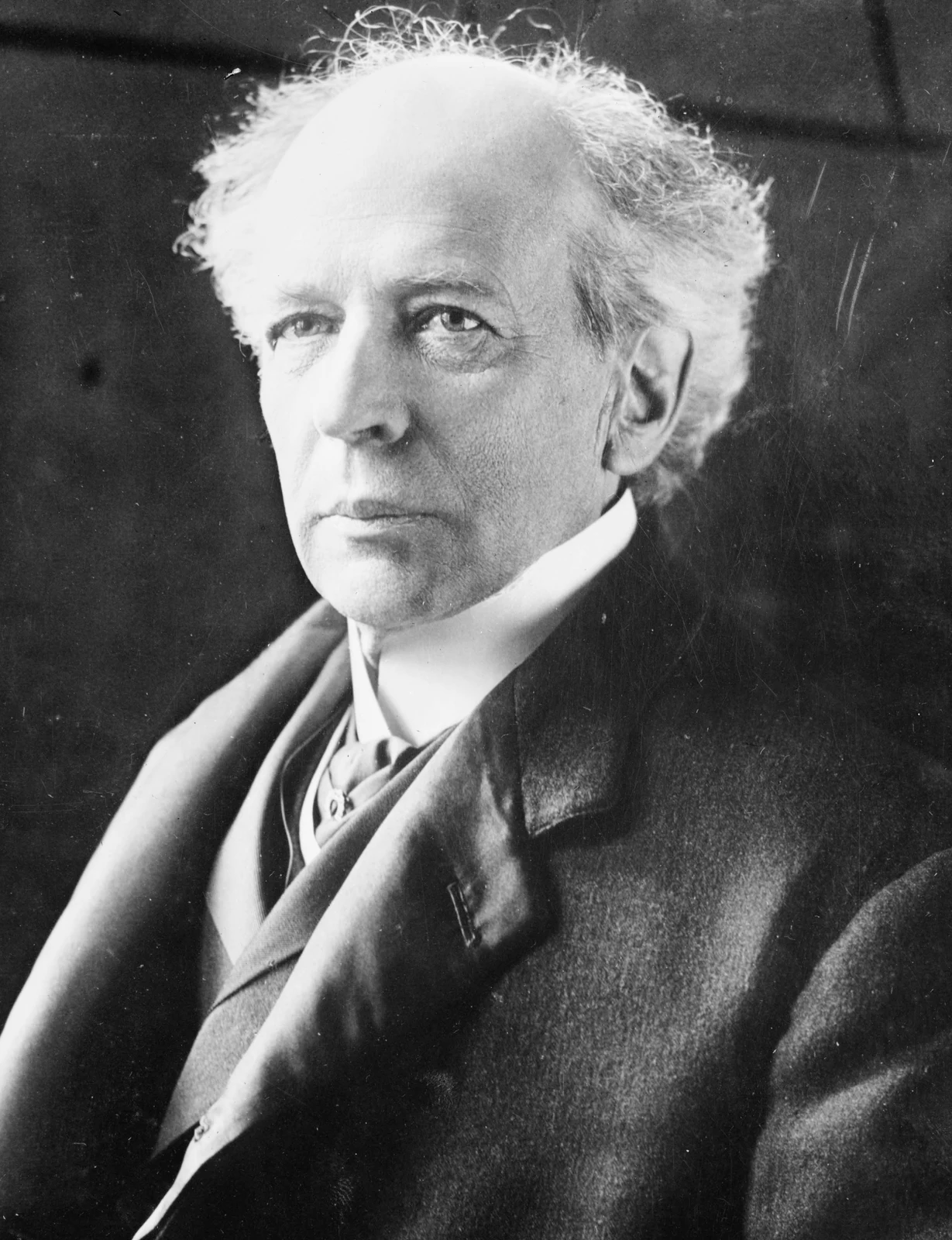
King was born in Berlin, Ontario, on 17 December 1874. The city was later renamed Kitchener. He studied at Toronto, Harvard and Chicago, and worked in journalism, public administration and industrial relations. These experiences supplied a language of mediation that remained important in his political career.
He became Canada’s first deputy minister of labour in 1900 and served as labour minister under Wilfrid Laurier from 1909 to 1911. Work connected with the Rockefeller Foundation followed before he succeeded Laurier as Liberal leader in 1919. His rise was therefore rooted in labour administration as well as electoral organization.
Three periods in office included the King–Byng dispute
King first became prime minister in December 1921. His tenure was interrupted in 1926, continued until 1930 and resumed in 1935. These separate periods made him Canada’s longest-serving prime minister in total, not the holder of a continuous government from 1921 to 1948.
In June 1926, facing a censure vote over a customs scandal, King asked Governor General Lord Byng to dissolve Parliament. Byng refused, giving Arthur Meighen an opportunity to govern after King resigned. Meighen soon lost the House’s confidence and obtained a dissolution. King returned after the September election, campaigning against Byng’s refusal. His political victory did not establish that his constitutional accusation was legally correct; the dispute concerned a governor general’s discretion as well as parliamentary support.
Depression-era government expanded federal social protection
After the Liberals returned to office in 1935, economic insecurity and the changing demands of government pushed social policy forward. Unemployment insurance was established federally in 1940; the Family Allowances Act followed in 1944. These measures became important parts of Canada’s developing welfare state.
They should not be described as a complete modern social system created by one prime minister. Parliamentary legislation, provincial–federal arrangements and the work of ministers and officials were essential. The contrast is nevertheless significant: a leader associated with caution presided over durable new forms of federal responsibility for income security.
The Second World War made conscription a delayed reckoning
King led the federal government throughout the Second World War. He initially distinguished compulsory service for home defence from compulsory service overseas, hoping to avoid the national division associated with 1917. The National Resources Mobilization Act of 1940 brought men into home service without immediately making them overseas reinforcements.
The 1942 plebiscite asked voters to release the government from its pledge against compulsory overseas service. A national majority voted Yes, while Quebec voted predominantly No. King did not immediately send the home-service conscripts abroad. Heavy infantry losses and cabinet conflict brought the decisive reversal in November 1944, when his government authorized 16,000 for overseas service.
Racial exclusion and dispossession were government actions, not incidental prejudices
The 1923 Chinese Immigration Act, passed under King, severely restricted Chinese entry. Its repeal in 1947 did not erase the years of family separation and unequal treatment. A biography centred only on accommodation between English and French Canadians would miss people deliberately excluded from that political settlement.
In 1942 the government forcibly removed Japanese Canadians from the Pacific coast. Officials confiscated and sold property, turning removal into lasting dispossession. University of Victoria researchers document how that loss disrupted homes, businesses and communities. Wartime security language does not by itself establish that the people targeted posed the threat used to justify the measures.
Retirement left a durable but deeply uneven governing legacy
King left the premiership in November 1948 and died at Kingsmere, Quebec, on 22 July 1950. His successor inherited institutions strengthened by wartime mobilization and social legislation, as well as unresolved consequences of policies that had deprived Canadians of property and rights.
His political longevity is an important fact, not a sufficient evaluation. King held together a governing coalition through depression and war, but preservation of that coalition could accompany delay, coercion and racial discrimination. Reading his record through both social reform and exclusion gives a fuller account of how federal power expanded during his years in office.
Quick answers
Frequently asked questions about William Lyon Mackenzie King
- How long was Mackenzie King prime minister?
- He served in three periods—1921–1926, 1926–1930 and 1935–1948—for more than twenty-one years in total.
- Did the 1942 plebiscite immediately impose overseas conscription?
- No. It released the government from its earlier pledge; the overseas order followed in November 1944.
- What social programmes developed under King?
- His governments established federal unemployment insurance in 1940 and passed the Family Allowances Act in 1944.
- What happened to Japanese Canadians under his government?
- They were forcibly removed from the Pacific coast during the war, and their confiscated property was sold. Removal and permanent dispossession were related but distinct government policies.
Keep exploring
Lives connected to this story
- Wilfrid Laurier
Read about King’s predecessor as Liberal leader and the 1917 crisis his later conscription policy tried to avoid.
- Franklin D. Roosevelt
Place King’s wartime leadership beside the American president’s mobilization and international role.
- Lester B. Pearson
Continue into the postwar diplomacy and later social legislation of another Liberal prime minister.
- William Lyon Mackenzie
Distinguish the later prime minister from his grandfather, the Upper Canadian reform journalist and committee chairman.
Sources and further reading
Explore the evidence
These references support the biography and offer further reading. Official records, first-person accounts and independent reporting provide different perspectives; image records document attribution and licensing.
- 1. Dictionary of Canadian BiographyKing, William Lyon Mackenzie: indexed biographical passages
Substantive indexed passages were read; direct access returned HTTP 429. The accessible archived biographical chronology corroborates the dates and ministries.
- 2. Library and Archives Canada, archived digital collectionBiography of William Lyon Mackenzie King
- 3. House of Commons of CanadaGovernment Ministries and Prime Ministers of Canada Since 1867
- 4. Canadian War MuseumDemocracy at War: the conscription crisis
The deployment sequence is used, but its plebiscite percentages conflict with Elections Canada. The national/Quebec outcome follows Elections Canada, without reproducing the conflicting figures.
- 5. Elections CanadaA History of the Vote in Canada, Chapter 3: modernization and the 1942 plebiscite
- 6. Canadian HeritageSignificant events in history of Canadians of Asian heritage
- 7. University of Victoria / Landscapes of InjusticeResearch on the dispossession of Japanese Canadians
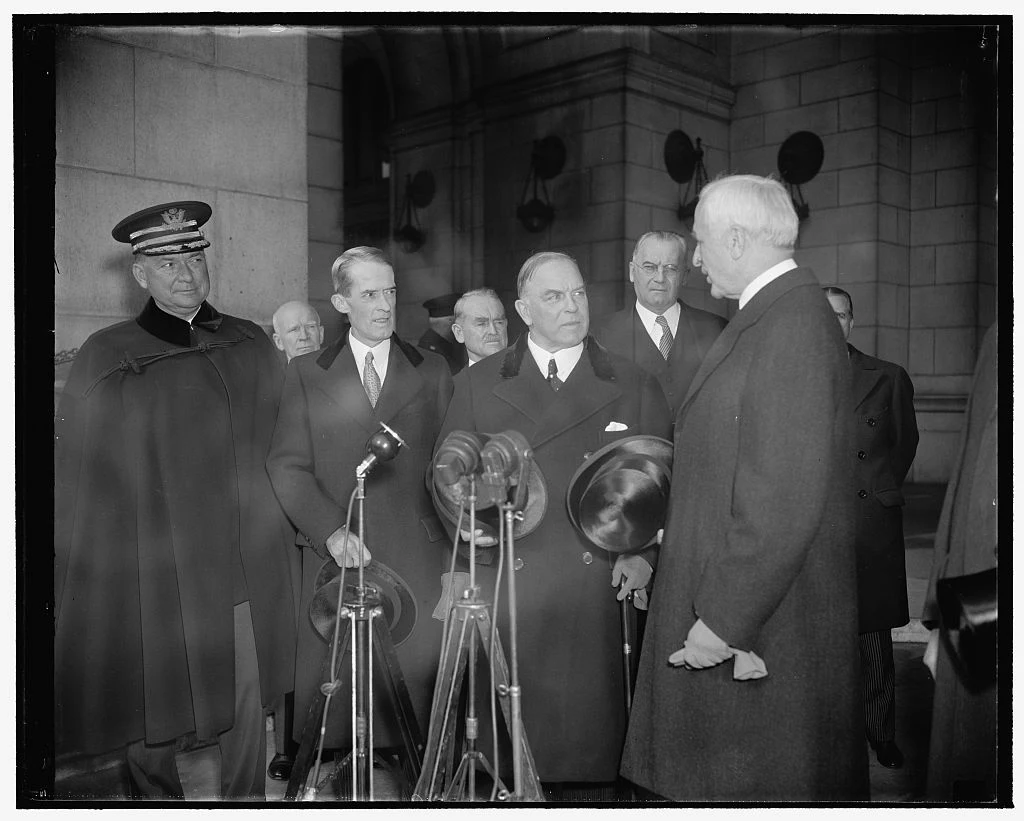
- 8. Harris & Ewing Collection / Library of Congress / Wikimedia CommonsMackenzie King arrives in Washington, 17 November 1938, hec.25405
- 9. Library of CongressHarris & Ewing Collection: rights and restrictions information
The collection-specific permission and no-known-restrictions statement was read. The native Library 1024 × 821 image is used instead of the enlarged Commons revision; background people remain visible.