In this biography
Quick facts
- Born
- 15 March 1959
- Birthplace
- India; exact birthplace not established by the selected institutional records
- Country
- India
- Nationality
- Not independently established
- Known for
- Developing a finance company into Kotak Mahindra Bank and a diversified financial group
- Finance company
- Established in 1985
- Banking licence
- February 2003
- Executive departure
- September 2023
Why this life matters
His career explains the difference between finding a financing opportunity and building a regulated institution responsible to depositors, borrowers and shareholders.
Timeline
Key moments
Management education
Completes an MBA at Jamnalal Bajaj Institute before developing a financing business.
Finance enterprise
The enterprise that becomes Kotak Mahindra’s financial group is established.
Bank conversion
Kotak Mahindra Finance receives a banking licence in February.
Executive succession
Steps down as MD and CEO; moves to the non-executive board role.
An education in business and financing
Born in 1959, Kotak grew up around a family trading business. After completing an MBA at Jamnalal Bajaj Institute in 1982, he developed his own financial activity rather than simply continuing in the family’s existing line. His interviews describe noticing gaps between what savers could earn and what companies paid to obtain finance.
This was an entrepreneurial opportunity within the financial system of the time. It was not the invention of lending. Establishing a credible intermediary required counterparties to trust that transactions would be honoured, while learning how to assess borrowers and manage funding.
Building a financial group before it became a bank
The group dates its establishment to 1985. Over time its activities extended beyond one financing niche into vehicle finance, securities, investment banking, asset management and insurance. Those businesses served different clients and required different forms of expertise and authorisation.
Calling the whole enterprise a bank from its beginning erases an important transition. A non-banking finance company could lend and arrange transactions without possessing the same permissions or responsibilities as a licensed commercial bank. Employees, partners and professional managers built the systems through which the business expanded.
The 2003 licence changed the institution
In February 2003 Kotak Mahindra Finance received an RBI banking licence and converted into Kotak Mahindra Bank. The company describes it as India’s first non-banking finance company to make that conversion. The event changed what the institution could offer and the framework under which it operated; it was not the foundation of an entirely unrelated business.
Banking brings a broader relationship with depositors, payments and financial stability. A founder’s appetite for growth must coexist with capital, liquidity, governance and operational requirements. Kotak’s significance therefore lies partly in the transition from entrepreneurial finance to a continuing regulated organisation.
Growth and wider institutional assignments
The later ING Vysya merger was a separate stage of expansion, adding a different customer base and operating network. A licence and a merger answer different questions: one permits a business to operate as a bank, while the other combines institutions. Integrating people, systems and customer relationships remains work to be done after the announcement.
Kotak also chaired the government-constituted IL&FS board from October 2018 to April 2022, according to the bank’s director record. That crisis-management assignment was not the same position as running Kotak Mahindra Bank. It placed his experience within a wider institutional problem involving creditors, assets and governance.
Leaving executive office did not end his board role
Kotak resigned as managing director and CEO in September 2023. The corrected annual-report record distinguishes the executive departure effective 1 September from his non-executive appointment effective 2 September. Dipak Gupta served as interim MD and CEO until the end of December; Ashok Vaswani took office on 1 January 2024.
The current bank board continues to identify Kotak as a non-executive, non-independent director. “Founder”, “shareholder”, “director” and “CEO” describe different relationships to an institution. Continuing board influence should not be confused with retaining the CEO office or with becoming an independent director.
Operational scrutiny is part of an institution’s record
In April 2024 the RBI restricted the bank’s online and mobile onboarding of new customers and its issue of fresh credit cards, following concerns about technology systems. The bank’s February 2025 filing records the removal of those restrictions after remedial work and an external audit. Existing customer service had not been generally prohibited.
This episode concerns the bank and its systems; it does not by itself establish personal misconduct by Kotak. It does demonstrate why a long record of commercial growth cannot replace continuing operational oversight. A financial institution’s reputation depends on how reliably it serves and protects customers after its founder’s executive tenure.
Quick answers
Frequently asked questions about Uday Kotak
- Was Kotak Mahindra a bank in 1985?
- No. The financial enterprise preceded the banking licence. Kotak Mahindra Finance converted into a bank after receiving its licence in February 2003.
- Is Uday Kotak still the bank’s CEO?
- No. He left that executive office in September 2023. The reviewed board record lists him as a non-executive, non-independent director.
- Did the 2024 RBI restrictions close the bank?
- No. They restricted specified new digital onboarding and fresh credit-card issuance. The restrictions were lifted in February 2025 after remedial measures.
Keep exploring
Lives connected to this story
- Deepak Parekh
Compare building a regulated lending institution with HDFC’s different housing-finance history.
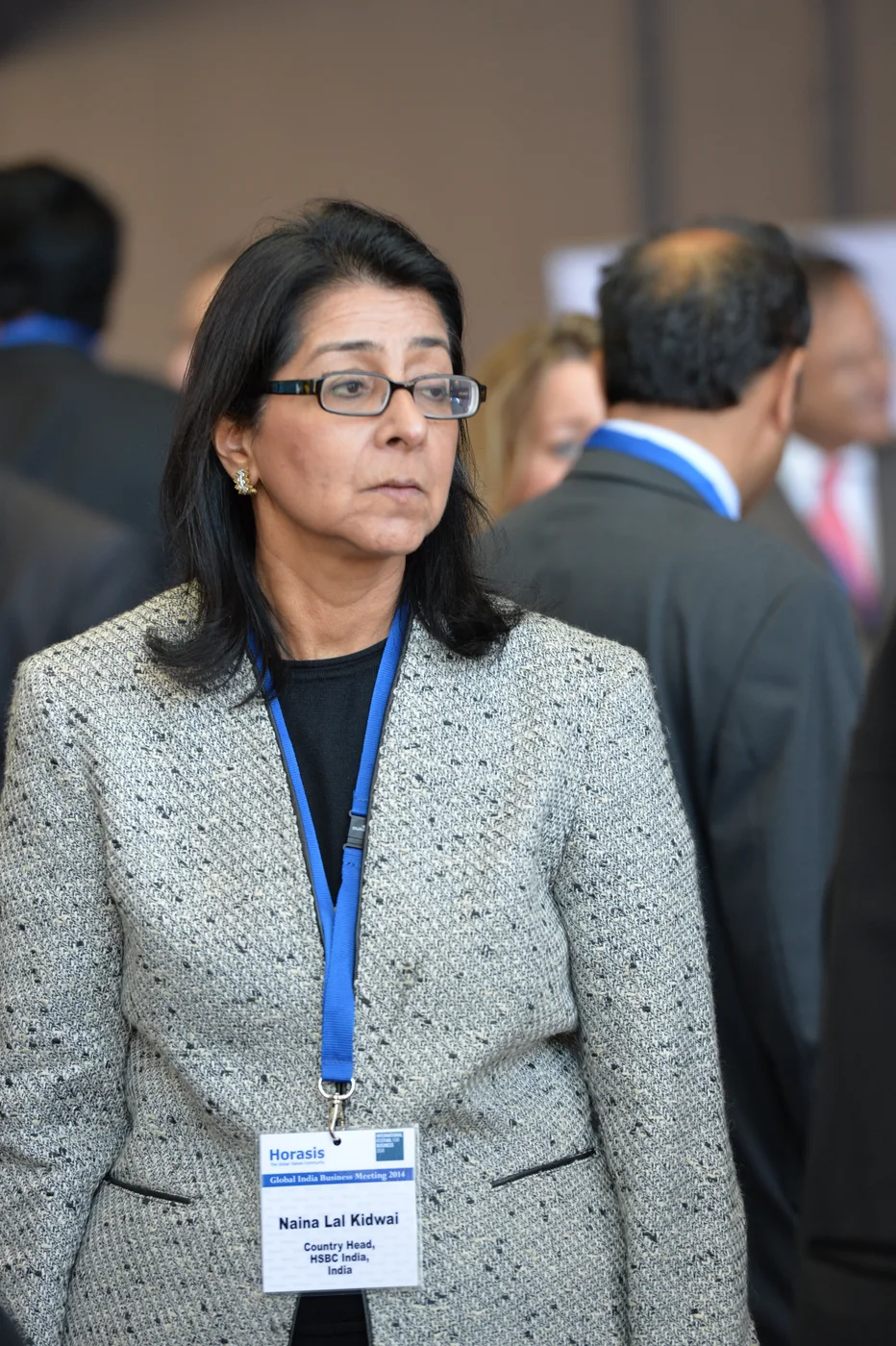
- Naina Lal Kidwai
Compare a founder’s career with a professional banker’s work across several institutions.
Sources and further reading
Explore the evidence
These references support the biography and offer further reading. Official records, first-person accounts and independent reporting provide different perspectives; image records document attribution and licensing.
- 1. Kotak Mahindra BankCurrent board: founder and non-executive non-independent director
- 2. Kotak Mahindra BankCorporate Governance Report March 2024: birth date
- 3. Kotak Mahindra Bank2022 institutional history: February 2003 banking licence
- 4. Kotak Mahindra PrimeGroup history and the NBFC-to-bank conversion
- 5. Kotak Mahindra BankAnnual-report clarification: September 2023 departure and January 2024 succession
The bank’s corrected annual-report chronology resolves executive cessation and non-executive commencement on adjacent September 2023 dates.
- 6. Moneylife / Sucheta Dalal and Debashis BasuUday Kotak interview: early finance business and risk, 2010
Early motivations and lessons are attributed retrospective testimony, compared with independent reporting and filings. No investment guidance or personal wealth estimate is offered.
- 7. Outlook BusinessThe Man Who Saw Tomorrow: education, family business and early finance
- 8. Reserve Bank of IndiaBanking structure and licensing: why commencing banking requires a licence
- 9. Kotak Mahindra BankRemoval of supervisory restrictions, 12 February 2025
- 10. The Financial ExpressRBI lifts restrictions: scope and IT-system concerns, 12 February 2025
- 11. Kotak Mahindra BankING Vysya merger announcement: later expansion, 2014
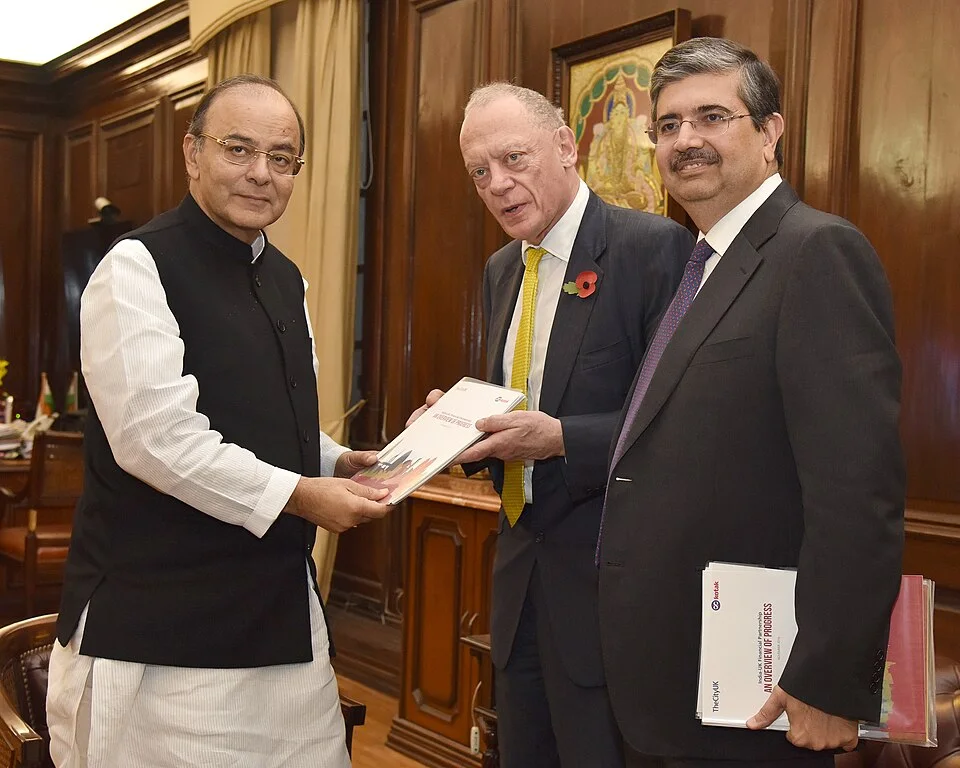
- 12. Ministry of Finance / Wikimedia CommonsComplete PIB 93007 photograph, official authorship, sitter caption and file history
Official government authorship, named event caption and EXIF photographer establish provenance; the primary PIB reproduction grant is used alongside Commons GODL evidence. The complete group frame is retained.
- 13. Press Information BureauPrimary accurate-reproduction permission, excluding third-party material
- 14. Government of IndiaGovernment Open Data Licence: corroborating licence recorded by Commons