In this biography
Quick facts
- Born
- 2 June 1965
- Birthplace
- Durban, South Africa
- Country
- South Africa
- Nationality
- Not independently established
- Known for
- Agriculture and land-reform leadership, women’s organising and parliamentary presiding authority
- Full name
- Angela Thokozile Didiza
- Born
- 2 June 1965, Durban
- Agriculture and Land Affairs
- Minister, 1999–2006
- Public Works
- Minister, 2006–2008
- Speaker elected
- 14 June 2024
Why this life matters
Her public life connects organising for women’s equality with the difficult institutions of redistribution and democratic government. Moving from a ministry to the Speaker’s chair changed her responsibility: executive programmes gave way to presiding over a legislature that must scrutinise government.
Timeline
Key moments
Durban birth
Born on 2 June.
Women’s National Coalition
Works as secretary-general during the transition to democracy.
Agriculture and public works
Deputy-ministerial service is followed by two cabinet portfolios.
National Land Summit
Convenes stakeholders to examine land-reform policy and delivery.
Parliament and a contested candidacy
House leadership precedes nomination for Tshwane mayor; Msimanga later wins the office.
Return to agriculture
Leads the agriculture, land reform and rural development ministry.
Speaker
Elected in June 2024 and identified in the role in Parliament’s August 2026 address.
Women’s organising preceded elected office
Angela Thokozile Didiza was born in Durban on 2 June 1965. Before entering Parliament she worked in legal administration, church-linked social action and the Young Women’s Christian Association. These roles placed her in organisations concerned with public participation rather than in an elected executive office.
As secretary-general of the Women’s National Coalition during 1992–1994, she participated in the movement that produced a charter for effective equality. Its demands entered the first democratic Parliament. This organising background is important to her later political trajectory: her career did not begin with the land portfolio for which she became widely known.
Cabinet experience and further study developed together
In 1994 Didiza became deputy agriculture minister, the first woman in that position. She became minister of agriculture and land affairs in 1999, then moved to public works in 2006. Her cabinet service ended with her resignation in September 2008, following Thabo Mbeki’s departure.
She also pursued higher education, completing an honours degree at Unisa and postgraduate study in tertiary education management at Melbourne. Later work included social-policy research at Unisa. King’s College London appointed her a visiting senior research fellow in 2017. These academic connections complemented, rather than replaced, her continuing parliamentary and political career.
Land reform required support beyond the transfer of property
As land minister, Didiza convened the National Land Summit in Johannesburg in 2005. Before it met, she identified expensive land, insecure tenure, uneven provincial capacity and inadequate support for newly settled farmers as obstacles. Finance, infrastructure and market access were part of the problem alongside ownership.
Her summit address called for a more proactive state role and stronger coordination among departments. Those proposals were not proof that the intended redistribution had already occurred. The meeting’s rejection of the existing market-led approach also left disagreement about the replacement mechanism, especially among commercial farmers. Her ministry consequently faced an implementation problem as well as a political demand.
The Tshwane nomination exposed party conflict
The ANC selected Didiza as its Tshwane mayoral candidate in June 2016 after disagreement over local nominees. Contemporary reporting described national intervention and violent resistance to the announcement. Party leaders urged acceptance of the decision and condemned the violence; the disturbances do not establish that Didiza personally directed them.
She disputed suggestions that being Durban-born made her an outsider to Tshwane, where she lived, and said she wanted to work with local communities. Nomination did not secure the mayoralty. After the municipal election, councillors elected the DA’s Solly Msimanga unopposed in August. Didiza’s candidacy therefore belongs to the history of a contested campaign, not a completed mayoral administration.
The Speaker’s chair brought a different institutional duty
Didiza had returned to Parliament as a House chairperson in 2014. She re-entered cabinet in 2019 as minister of agriculture, land reform and rural development, serving until 2024. On 14 June 2024 the National Assembly elected her Speaker.
Parliament describes the office as providing political leadership and strategic direction, presiding over the House and relevant committees, and exercising executive authority within the institution. These are parliamentary responsibilities, not the continuation of an agriculture ministry. An August 2026 parliamentary address still identified her as Speaker, the position recorded at this article’s review. Her earlier experience now operates within an institution responsible for debate, lawmaking and executive accountability.
Quick answers
Frequently asked questions about Thoko Didiza
- What is Thoko Didiza’s full name?
- Parliament and the government profile use Angela Thokozile Didiza; the directory heading also uses Angela Thoko Didiza.
- Did she become mayor of Tshwane?
- No. She was the ANC’s 2016 candidate; Solly Msimanga was elected mayor after the municipal election.
- What office did she hold at the October 2026 review?
- National Assembly Speaker, having been elected on 14 June 2024.
- Did the 2005 summit itself complete land reform?
- No. It debated policy and recommended changes that required subsequent implementation.
Keep exploring
Lives connected to this story
- Phumzile Mlambo-Ngcuka
Read about the deputy president who participated in the 2005 land-reform debate.
- Thabo Mbeki
Place her first cabinet career and 2008 resignation in their presidential context.
- Thandi Modise
Compare an earlier National Assembly Speaker’s movement between Parliament and cabinet.
- Edna Molewa
Compare another minister’s path from movement organising into provincial and national government.
Sources and further reading
Explore the evidence
These references support the biography and offer further reading. Official records, first-person accounts and independent reporting provide different perspectives; image records document attribution and licensing.
- 1. South African GovernmentThoko Didiza: historical appointments, education and women’s organisations
Historical appointments are separated from stale undated party and committee memberships. Conflicting YWCA end dates are withheld.
- 2. South African History Online2 June 1965: Didiza’s birth and selected ministerial chronology
- 3. Carien du Plessis / News2420 June 2016: political background, resignation and return to Parliament
- 4. King’s College LondonThoko Didiza: education and 2017 visiting research fellowship
The fellowship is institutionally confirmed. Inconsistent degree nomenclature and an incomplete government graduation date are not resolved by guessing.
- 5. Ministry for Agriculture and Land Affairs / Polity18 July 2005: Didiza’s National Press Club explanation of the summit agenda
- 6. Ministry of Agriculture and Land Affairs / Polity27 July 2005: National Land Summit address at Nasrec, Johannesburg
- 7. Sapa / Mail & Guardian1 August 2005: summit majority rejects willing-buyer, willing-seller approach
- 8. Mdu Nhlebela / City Press20 June 2016: Tshwane nomination process and resistance
- 9. TimesLIVE23 June 2016: Didiza responds to violent resistance to her candidacy
- 10. Karabo Ngoepe / News2419 August 2016: Solly Msimanga elected Tshwane mayor
- 11. Parliament of South AfricaAngela Thokozile Didiza: Speaker profile and institutional responsibilities
- 12. Inter-Parliamentary UnionNational Assembly: Speaker and start of term
- 13. Parliament of South Africa13 August 2026: Speaker’s Women’s Parliament address, opening identification
- 14. GCIS / GovernmentZA, FlickrMinister Thoko Didiza briefs media on findings of land restitution evaluation study on financial compensation paid to beneficiaries
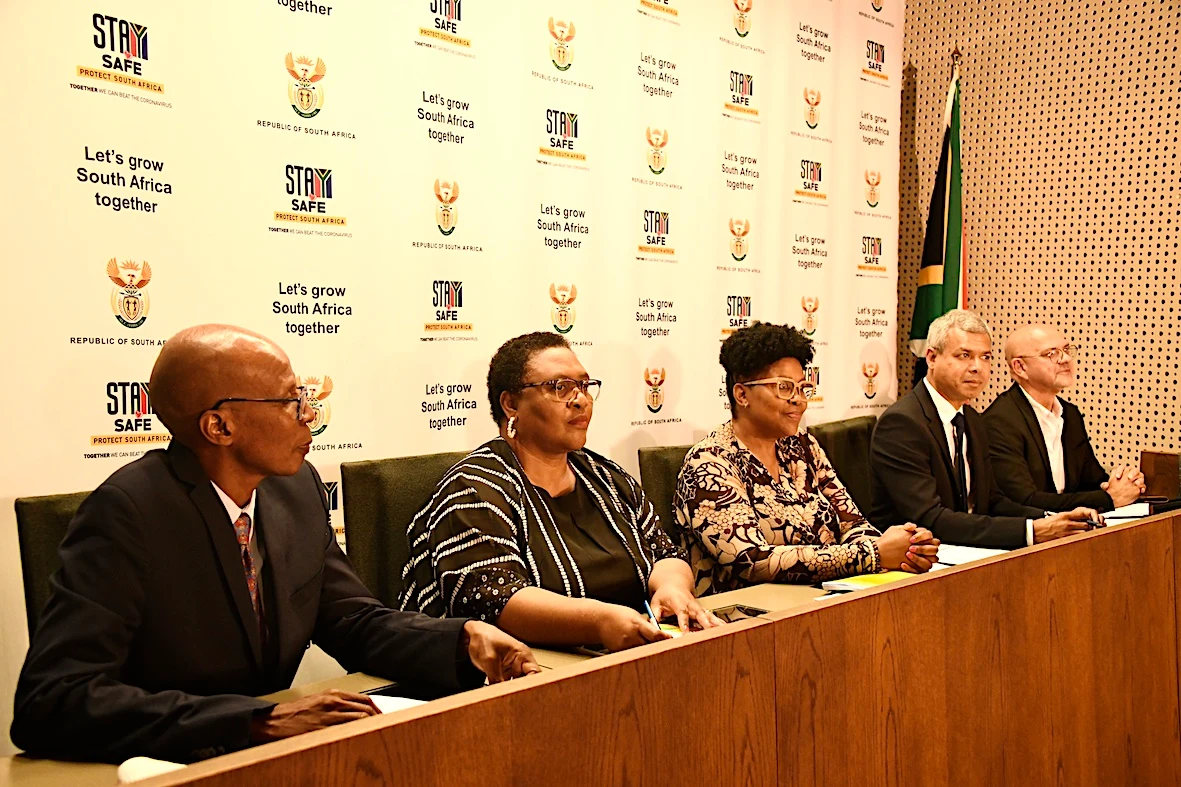
The complete 2024 briefing photograph illustrates Didiza, seated at centre; it does not depict the 2005 summit.