In this biography
Quick facts
- Born
- December 1967
- Birthplace
- Hlabisa, KwaZulu-Natal, South Africa
- Country
- South Africa
- Nationality
- Not independently established
- Known for
- Standard Bank’s African operations, joint group leadership from 2013 and sole group leadership from 2017
- Birth record
- December 1967; Hlabisa
- Education
- Law at Rhodes and Notre Dame; later tax and management studies
- Joined Standard Bank
- 2000
- Group leadership
- Joint CEO from 2013; sole CEO from 2017
Why this life matters
His career connects professional advancement after apartheid with the responsibilities of leading a major African financial institution whose commercial decisions affect communities as well as investors.
Timeline
Key moments
Born in Hlabisa
Grows up in Soweto during apartheid.
Law and structured finance
Trains and practises as a lawyer before moving into investment banking.
Standard Bank responsibilities expand
Moves through project finance, African operations and personal and business banking to the South African bank leadership.
Joint group appointment
Becomes joint group chief executive with Ben Kruger on 7 March.
Sole group chief executive
The joint structure ends in September.
Dated role verification
The bank’s 2026 conference biography identifies him as group chief executive.
Hlabisa origins and a Soweto childhood shaped his outlook
Simpiwe Kenneth Tshabalala was born in December 1967. Contemporary interview reporting identifies Hlabisa in KwaZulu-Natal as his birthplace; he grew up in Soweto. His mother worked as a nurse and his father ran a chicken shop. His parents helped him reach a Marist Brothers school despite the exclusions and inequalities of apartheid.
In his later interview with Ranjay Gulati, Tshabalala recalled the school’s philosophical and religious teaching and his family’s sacrifices. These are his reflections on formative influences, rather than an explanation that cancels the structural obstacles faced by other black South Africans. The registry confirms South African nationality; no exact birthday is added.
Legal study preceded banking rather than replacing its disciplines
Tshabalala studied philosophy and law at Rhodes and pursued an LLM at Notre Dame. He described practising as an attorney before deciding to move in another direction. His subsequent financial career drew on legal and analytical training; it was not a progression from founding a bank to owning a banking group.
He joined Standard Bank in 2000. The bank’s career record follows his work in project finance, Stanbic Africa and personal and business banking before the 2008 appointment to lead Standard Bank South Africa. That country-bank role should not be confused with leadership of the entire listed group.
Purpose is a public argument about how banking should work
Tshabalala’s interviews place the bank’s commercial work within a broader ambition for African growth. He links professional responsibility with the opportunities that finance can enable. This is a statement of purpose: profitable lending, broader participation and public benefit are related goals, but they are not automatically the same result.
His account also rejects a view of African markets defined only by difficulties. EWN’s 2024 interview coverage records that optimism and the importance he attaches to his upbringing. A biography can explain those convictions without presenting every corporate statement about development as independently measured social progress.
Fossil-fuel financing has brought that argument into dispute
Climate campaigners have challenged Standard Bank’s continued involvement in fossil-fuel projects. GroundUp reported recurring protests in Johannesburg and demands for a public debate with Tshabalala and the bank’s investment-banking leadership. Activists argued that lending choices conflicted with the institution’s climate commitments and raised concerns about the East African oil pipeline.
The bank’s own policy announcement sets separate targets for emissions from its operations and from its financed portfolio. Those commitments should not be mistaken for completed outcomes. The disagreement concerns institutional financing and its consequences; the cited protest report does not establish a personal criminal finding against Tshabalala.
Quick answers
Frequently asked questions about Sim Tshabalala
- What is Sim Tshabalala’s fuller name?
- The official director record identifies Simpiwe Kenneth Tshabalala; Sim is the familiar professional form.
- Was he group CEO from 2008?
- The 2008 appointment concerned Standard Bank South Africa. Joint group leadership began in 2013 and sole group leadership in 2017.
- Did the joint-CEO system divide accountability completely?
- No. The contemporary report explicitly retained joint and several responsibility despite allocating duties.
- Do climate targets establish that all financed emissions have ended?
- No. Targets concern future outcomes and remain distinct from the disputed financing decisions described by campaigners.
Keep exploring
Lives connected to this story
- Mike Brown
Compare the responsibilities and contested strategic choices of another long-serving South African bank executive.
- Nonkululeko Nyembezi
Distinguish Standard Bank’s non-executive chairmanship from the group CEO’s operating responsibilities.
Sources and further reading
Explore the evidence
These references support the biography and offer further reading. Official records, first-person accounts and independent reporting provide different perspectives; image records document attribution and licensing.
- 1. UK Companies HouseSimpiwe Kenneth Tshabalala: selected December 1967, nationality and Stanbic Africa Holdings appointment record
- 2. Keely Goodall / EWN25 November 2024: Hlabisa origins, parents and interview reflections
- 3. Ranjay Gulati / Deep PurposeSim Tshabalala interview: selected school, law studies and purpose discussion; introductory CEO-date shorthand corrected against bank records
Selected transcript read; the introductory 2008 CEO shorthand is corrected against the institutional appointment record.
- 4. Standard Bank GroupLeadership biography: country-bank and group appointments distinguished
The bank record distinguishes country-bank and group posts; its leadership and event biographies are treated as one shared source pool.
- 5. Standard Bank Group2012 integrated report, printed page 119: subsequent joint-CEO appointment and shared accountability
- 6. Business Report / IOL13 September 2017: indexed report on ending the joint-group CEO structure
- 7. Standard Bank Corporate and Investment Banking2026 African markets conference speaker: current group-CEO identification, checked 24 October 2026
- 8. Masego Mafata / GroundUp13 March 2024: climate protests, disputed fossil-fuel funding and request for executive debate
Campaigners’ claims are attributed, and policy targets are not represented as achieved outcomes.
- 9. Standard Bank GroupClimate-policy announcement: operational and financed-emissions targets, not completed outcomes
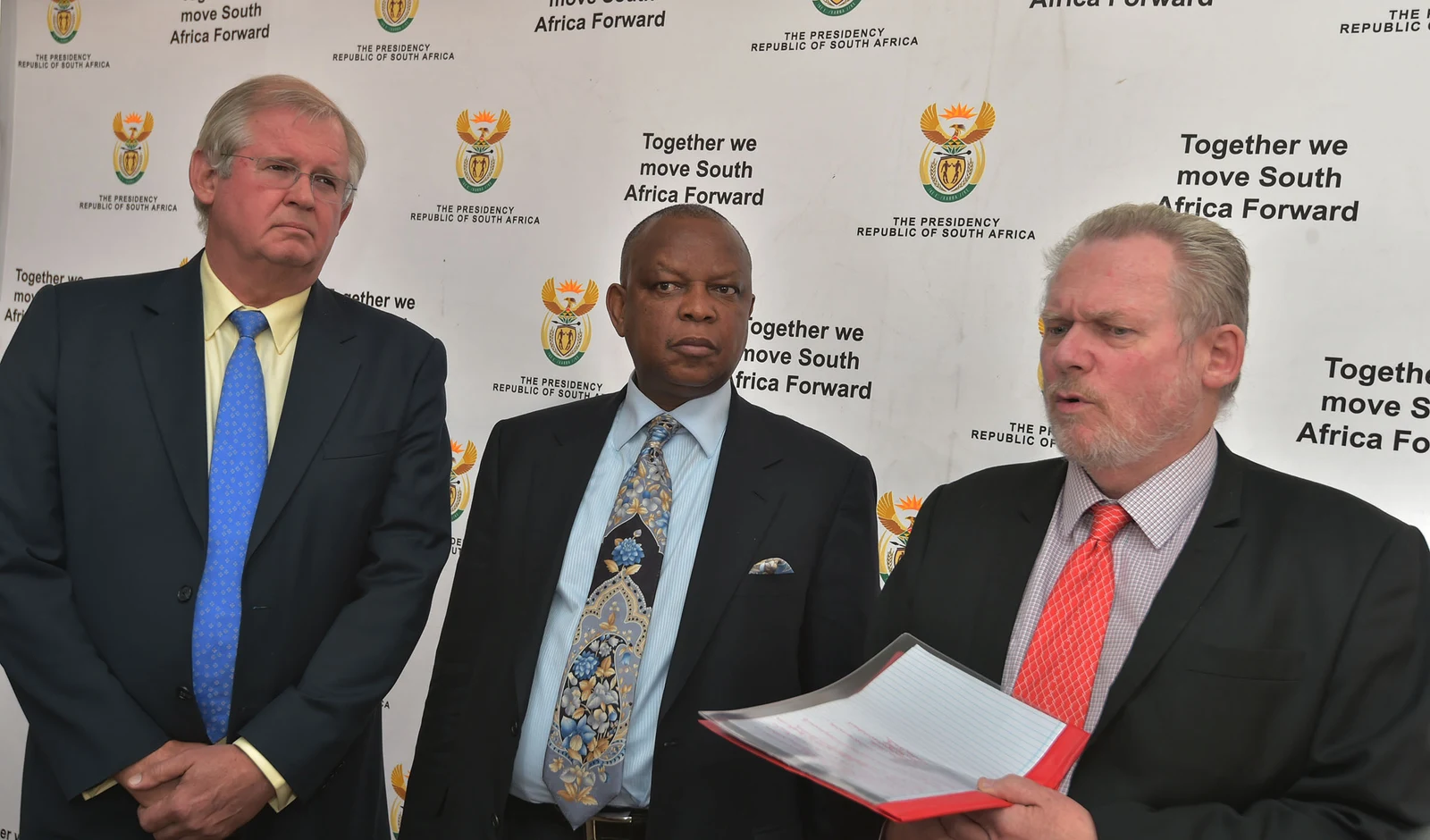
- 10. US Embassy South Africa0003: Sim Tshabalala speaking, supplied May 2017 photograph
Exact embassy declaration is United States Government Work. No named photographer or first-licence history was available; U.S. public-domain status is not a worldwide guarantee.
- 11. USAGovGovernment copyright: official-duty works, third-party exceptions and territorial limits
- 12. U.S. Copyright Office17 USC 101 and 105: government-work definition and United States copyright exclusion