In this biography
Quick facts
- Born
- 27 July 1930
- Died
- 12 April 2021
- Birthplace
- London, England
- Country
- United Kingdom
- Nationality
- British
- Known for
- Education policy, founding the Social Democratic Party, the Crosby by-election and Liberal Democrat leadership in the Lords
- Education Secretary
- 1976–1979
- SDP founding
- One of the Gang of Four, 1981
- Crosby by-election
- Elected 26 November 1981
- Harvard teaching
- Kennedy School faculty, 1988–2000
Why this life matters
Williams linked post-war Labour reformism with the social-democratic breakaway and later Liberal Democrats. Her commitment to Europe, education and women’s participation extended beyond election results into teaching, public debate and parliamentary work.
Timeline
Key moments
Political family and Oxford
Born in London to Vera Brittain and George Catlin; entered Somerville in 1948 and chaired the Oxford University Labour Club in 1950.
Campaigning before Commons success
Contested Harwich and Southampton Test before winning Hitchin in 1964.
Ministerial and Cabinet service
Held Labour and education posts, then Prices and Consumer Protection and Education and Science in Cabinet.
Lost her Commons seat
Defeated in Hertford and Stevenage at the general election.
Co-founded the SDP and won Crosby
Joined the Limehouse Declaration, helped launch the new party and won the November by-election.
Electoral defeat and party realignment
Lost Crosby in 1983; supported cooperation and eventual merger with the Liberals.
Harvard and the Lords
Taught at Harvard, became a life peer in 1993 and led the Liberal Democrats in the Lords from 2001 to 2004.
Retirement and death
Retired from the Lords in February 2016; died on 12 April 2021.
A childhood shaped by argument and public service
Shirley Williams was born Shirley Catlin in London on 27 July 1930. Her mother was the writer and pacifist Vera Brittain and her father the political scientist George Catlin. Discussion of war, politics and social obligation was part of family life. That background helps explain her intellectual confidence, but does not make her later decisions inevitable: she also seriously pursued acting before concentrating on politics.
She entered Somerville College, Oxford, in 1948 to study philosophy, politics and economics. In 1950 she became the first woman to chair the Oxford University Labour Club. Journalism and work as general secretary of the Fabian Society followed, bringing practical political organisation together with the public communication that would remain central to her career.
Parliamentary persistence preceded Cabinet office
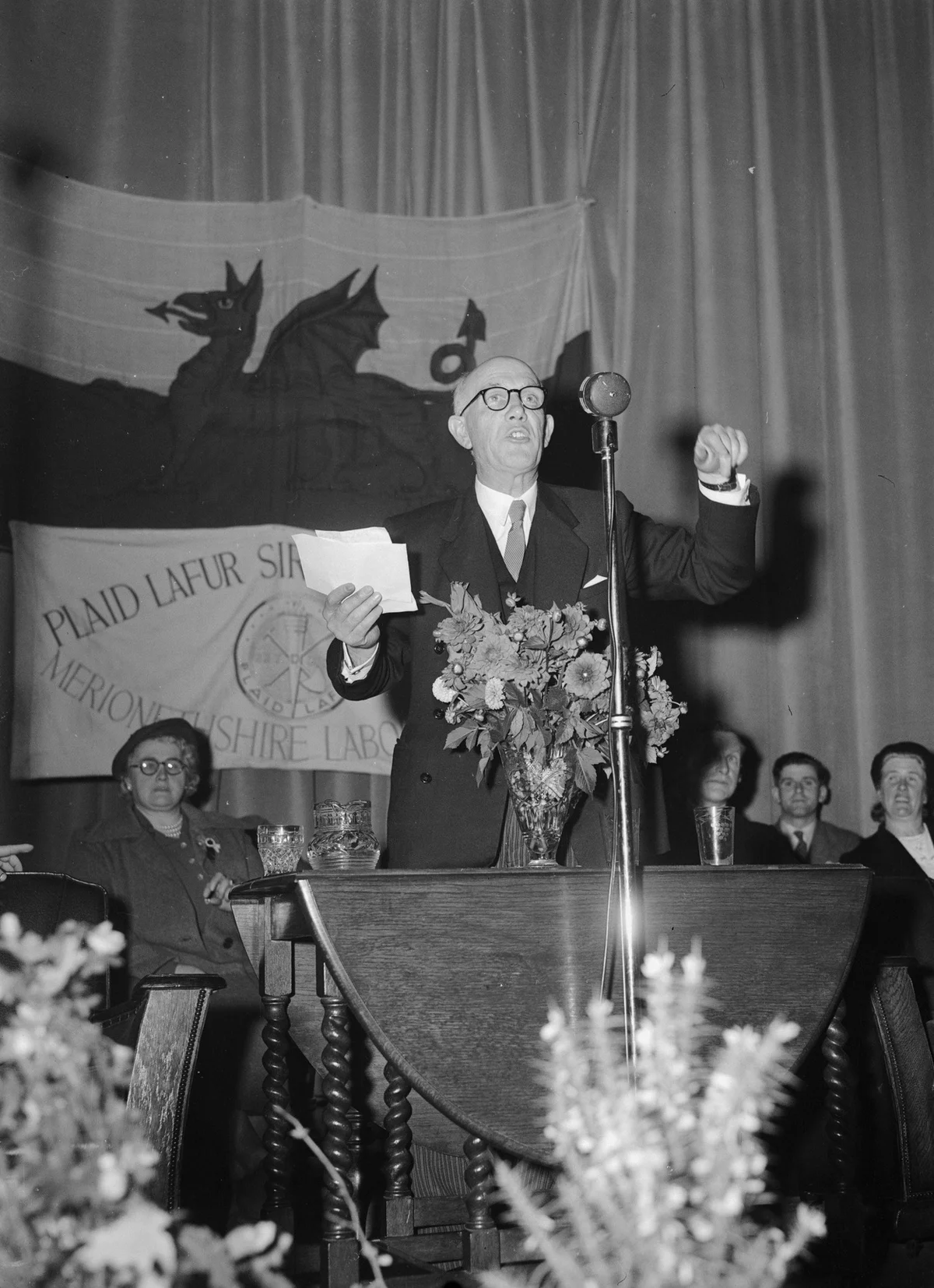
Williams contested Harwich in 1954 and 1955 and Southampton Test in 1959 before winning Hitchin for Labour in 1964. From 1974 she represented Hertford and Stevenage. These constituencies and defeats matter because her reputation as an assured broadcaster can obscure the years spent building a conventional parliamentary career through unsuccessful campaigns and local electoral work.
Ministerial appointments began in 1966. She worked in the Ministry of Labour, education and the Home Office before entering Cabinet as Secretary of State for Prices and Consumer Protection in 1974. Harold Wilson’s and James Callaghan’s governments faced inflation and severe economic pressures. Her responsibilities placed her within those difficult collective choices rather than outside them as an independent commentator.
Education and the limits of a minister’s power
As Secretary of State for Education and Science from September 1976 until May 1979, Williams associated herself with wider educational opportunity. Comprehensive education and the future of schooling were politically contentious subjects, linked to differences over selection, standards and equality. Her record belongs within a longer sequence of Labour educational reforms, local-authority decisions and constraints on government spending.
It is misleading to credit her alone with abolishing selection across Britain. Her ministerial remit and period of office were specific, and local systems did not become uniform. More securely, her long concern with access to education is visible in her earlier departmental service, subsequent university teaching and final parliamentary speech on adult education. Education was an enduring interest across several institutions.
Leaving Labour and building a new party
After losing her seat in 1979, Williams joined Roy Jenkins, David Owen and Bill Rodgers in the January 1981 Limehouse Declaration. It proposed a Council for Social Democracy and challenged Labour’s direction and leadership-selection arrangements. Its authors advocated equality, a mixed economy, decentralisation and international cooperation. Their criticisms were the founders’ political case, not a neutral verdict on everyone who remained in Labour.
The SDP formally launched on 26 March. Liverpool’s catalogue of the David Owen Papers describes a division of work: Williams handled publicity and media, Jenkins policy, Rodgers organisation and Owen the parliamentary committee. This collective structure corrects the idea that Williams founded the party alone. Her November victory at Crosby gave the new organisation a striking electoral success.
Popularity did not guarantee parliamentary survival
Williams lost Crosby at the 1983 general election and failed to return through Cambridge in 1987. The SDP’s alliance with the Liberal Party thus did not provide a secure Commons future for one of its most recognisable campaigners. Arguments over party direction and cooperation continued. She supported the route that led to the 1988 merger and the Liberal Democrats.
Historians also question accounts that explain the breakaway only through personalities. Stephen Meredith, writing about his research for LSE British Politics, emphasises conflicting ideas within social democracy as well as institutional disputes. Williams’s career illustrates that tension: loyalty to social justice coexisted with a judgement that Labour no longer offered the political vehicle she wanted. Former colleagues could admire her while regretting the split.
Teaching, Europe and later parliamentary influence
Harvard Kennedy School records her faculty service from 1988 to 2000, including teaching about political careers and women in politics. This was a substantial second setting for her public work, involving students and practical political judgement. She entered the House of Lords in 1993 as Baroness Williams of Crosby, combining some of those years with her American academic role.
She led the Liberal Democrats in the Lords from 2001 to 2004 and retired in February 2016. European cooperation and opportunities for women remained prominent causes. The tributes following her death on 12 April 2021 describe persuasion, generosity and intellectual energy; they are recollections of colleagues, not measurements of policy success. Her significance lies in the combination of ministerial responsibility, party realignment and sustained political education.
Quick answers
Frequently asked questions about Shirley Williams
- Did Shirley Williams found the SDP alone?
- No. She was one of the Gang of Four, with Roy Jenkins, David Owen and Bill Rodgers. They issued the Limehouse Declaration in January 1981 and helped launch the party in March.
- When did Shirley Williams win Crosby?
- She won the by-election on 26 November 1981, becoming the first person elected to the Commons under the SDP banner. Existing SDP MPs had transferred from other parties.
- Was Shirley Williams prime minister?
- No. She served in Labour Cabinets, including as Education Secretary, and later led the Liberal Democrats in the Lords, but never became prime minister.
- Did she work at Harvard?
- Yes. Harvard Kennedy School records her faculty service from 1988 to 2000, teaching electoral politics and related subjects.
Keep exploring
Lives connected to this story
- Harold Wilson
Place Williams’s ministerial rise within the Labour governments of the 1960s and 1970s.
- Margaret Thatcher
Understand the governing opponent against whom the SDP sought a new political alignment.
- Roy Jenkins
Jenkins was a fellow SDP co-founder; the biographies retain the collaborative character of party formation.
- Jo Grimond
Grimond’s earlier Liberal realignment strategy provides context for the later SDP–Liberal relationship.
Sources and further reading
Explore the evidence
These references support the biography and offer further reading. Official records, first-person accounts and independent reporting provide different perspectives; image records document attribution and licensing.
- 1. Somerville College, OxfordBaroness Williams: obituary and recollections of her education
Read the obituary for family, Oxford and later interests. Its mistaken 1991 Crosby reference and compressed account of abolishing the 11-plus are not repeated; parliamentary dates take precedence.
- 2. Harvard Kennedy School / Douglas ElmendorfShirley Williams: faculty tribute, 14 April 2021
- 3. UK ParliamentBaroness Williams of Crosby: parliamentary career
- 4. UK Parliament, HansardTributes to Baroness Williams of Crosby, 14 April 2021
Read the published tributes as attributed recollections; hypothetical prime-ministerial prospects are not treated as established outcomes.
- 5. Liberal Democrat History GroupRemembering Shirley Williams: biographical appreciation
- 6. Williams, Owen, Rodgers and Jenkins / Journal of Liberal HistoryLimehouse Declaration, 25 January 1981: transcript
- 7. University of Liverpool, Special Collections and ArchivesDavid Owen Papers, D 709 3/1: launch and organisation of the SDP
Read the catalogue’s administrative history of the launch and constitutional arrangements. The sixteen underlying files and unpublished correspondence were not inspected.
- 8. Liberal Democrat History Group26 March 1981: formal establishment of the SDP
- 9. LSE British Politics / Stephen MeredithBritish social democracy in the 1970s and the origins of the SDP
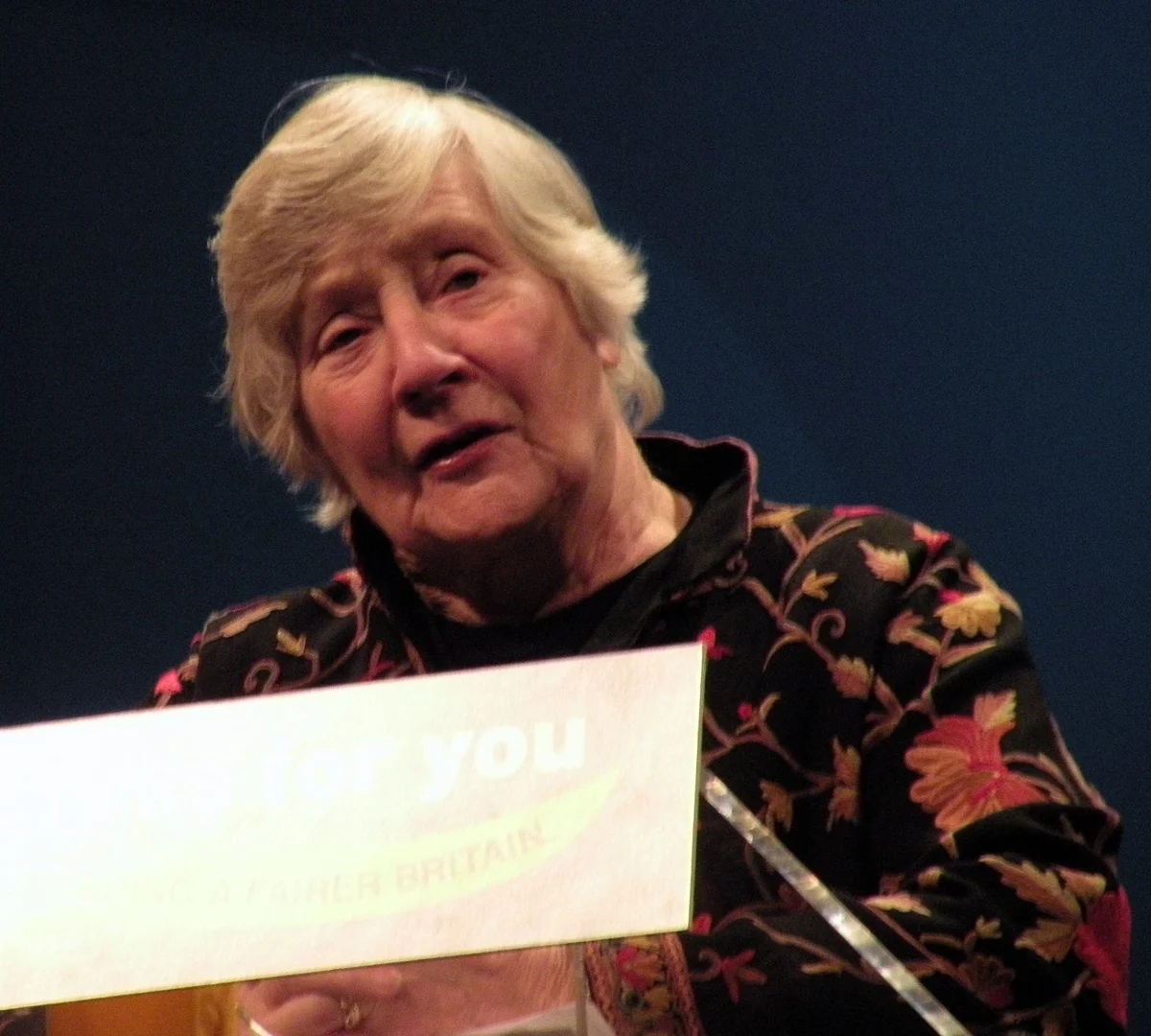
- 10. Keith Edkins / Wikimedia CommonsShirley Williams at Birmingham, 12 March 2010: photograph and licence
Exact own-work item, date, creator and selectable CC BY-SA 3.0 licence checked. Complete original and WebP inspected; lectern retained.
- 11. Creative CommonsAttribution-ShareAlike 3.0 Unported licence