
In this biography
Quick facts
- Born
- 18 September 1950
- Birthplace
- Hyderabad, Hyderabad State, India (now Telangana)
- Country
- India
- Nationality
- Indian
- Known for
- Ankur, Arth, Khandhar, Paar, Godmother, Fire and a career across parallel and mainstream cinema
- Training
- Film and Television Institute of India, acting batch of 1971
- National Film Awards
- Five Best Actress awards: Ankur, Arth, Khandhar, Paar and Godmother
- Parliament
- Nominated Rajya Sabha member, 1997–2003
- Public-health advocacy
- Appointed UNFPA Goodwill Ambassador for India in 1998
Why this life matters
Her performances helped make women’s interior lives and unequal social power central to Indian screen drama; her public work extended that concern beyond acting.
Timeline
Key moments
Born in Hyderabad
Born on 18 September to poet Kaifi Azmi and theatre actor Shaukat Kaifi.
Professional acting training
Joined the FTII acting batch later celebrated by the institute at its golden jubilee.
Ankur reaches audiences
Shyam Benegal’s film established her as Lakshmi and brought a National Film Award.
A range of women’s lives
Arth, Khandhar and Paar brought consecutive National Film Awards; commercial roles continued alongside them.
Fire and Godmother
Fire premiered internationally in 1996 and faced attacks at Indian cinemas in 1998; Godmother brought a fifth National Film Award.
Parliamentary service
Served a nominated Rajya Sabha term and was appointed a UNFPA ambassador in 1998.
Broken Images
Performed Girish Karnad’s one-person play in Alyque Padamsee’s production.
New screen settings
Credits include Halo, Rocky Aur Rani Kii Prem Kahaani and the 2025 series Dabba Cartel.
A household of writing, theatre and argument
Shabana Azmi was born on 18 September 1950 in Hyderabad, then in Hyderabad State, India. Her father was the Urdu poet and lyricist Kaifi Azmi; her mother, Shaukat Kaifi, was a theatre actor. In a 2025 interview she recalled a home filled with books and a father who supported her choice of profession. Performance and public ideas were familiar parts of family life rather than separate worlds.
She acted at school and at St Xavier’s College in Bombay before training at the Film and Television Institute of India in Pune. FTII identifies her with its acting batch of 1971. She later connected the institute’s exposure to international cinema with her own artistic standards. Family encouragement mattered, but training and encounters with unfamiliar films also shaped her working practice.
Ankur and an unconventional screen heroine
Shyam Benegal’s Ankur reached audiences in 1974 and established Azmi as Lakshmi, a rural worker whose relationship with a landowner’s son exposes caste, gender and economic power. The performance brought her first National Film Award. She later described the character as a departure from familiar expectations of a Hindi-film heroine: a woman judged for adultery was treated as a complex human being rather than merely a moral warning.
The debut became an important point in parallel cinema, but Azmi’s career did not remain confined to one category. The tension between commercial visibility and difficult material became a continuing feature of her work. Her later account emphasised willingness to risk failure rather than waiting for every role to fit an established model of female virtue or audience approval.
A career across different kinds of cinema
Arth, Khandhar and Paar brought three consecutive National Film Awards for Best Actress. They placed her within different directors’ approaches to damaged relationships, frustrated lives and social struggle. A fifth Best Actress award came for Godmother, in which she played a woman operating within a male-dominated world of power. The official award citation recognises that dramatic portrayal, not a general career achievement.
Her credits also include Amar Akbar Anthony, Masoom, Sparsh, City of Joy and Neerja. This range complicates a simple division between serious art films and popular entertainment. In 2025 she welcomed the increasing movement between those categories and the availability of substantial roles for older performers. Her work in Rocky Aur Rani Kii Prem Kahaani in 2023 formed part of that later phase, not a retirement from demanding acting.
Fire and the politics around a performance
In Deepa Mehta’s Fire, Azmi played Radha opposite Nandita Das’s Sita, two women whose intimacy unsettles a restrictive household. The film premiered in Toronto in 1996; its Indian exhibition became a major controversy in 1998. Dipanita Nath’s retrospective describes attacks on cinemas by Shiv Sena activists and the civil-society response defending the film. These were reactions to a work and its public presence, not evidence of wrongdoing by its performers.
The dispute made visible the connection between representation, sexuality and women’s autonomy. Azmi’s role belongs within that debate, but the character should not be mistaken for a statement about the actor’s private life. The film’s significance includes the space it created for viewers and activists to discuss queer relationships within a family-centred narrative.
Theatre, television and continued work
Theatre remained a demanding medium in its own right. In Girish Karnad’s Broken Images, directed by Alyque Padamsee, Azmi performed a writer’s encounter with her electronic image, bringing questions of language, authorship and self-deception into a one-person production. The director’s archive records its 2009 production and international performances. The technical relationship between a live actor and a recorded counterpart differs markedly from a conventional screen role.
Her later television work includes Admiral Margaret Parangosky in Halo and the ensemble crime series Dabba Cartel, released in 2025. In January 2026 a director’s interview reported completed shooting on USA v Raj; that report does not establish an actual release date. As reviewed on 23 October 2026, the documented career remains active across media, sustained by the same interest in complicated characters that first made her debut distinctive.
Quick answers
Frequently asked questions about Shabana Azmi
- Was Ankur her first released feature?
- Ankur, released in 1974, established her feature-film career. Accounts distinguish it from projects she had begun earlier, including Faslah.
- Which films brought her five Best Actress National Awards?
- Ankur, Arth, Khandhar, Paar and Godmother. Award years and commercial release years are not always identical.
- Was Shabana Azmi an elected MP?
- No. She was nominated to the Rajya Sabha and served from 1997 to 2003.
- Does she work only in parallel cinema?
- No. Her career includes mainstream Indian films, international productions, theatre and television as well as parallel cinema.
Keep exploring
Lives connected to this story
- A. R. Rahman
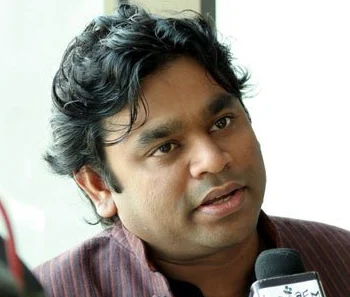
Rahman composed the music for Fire, a film central to Azmi’s career and its public debates.
- Girish Karnad
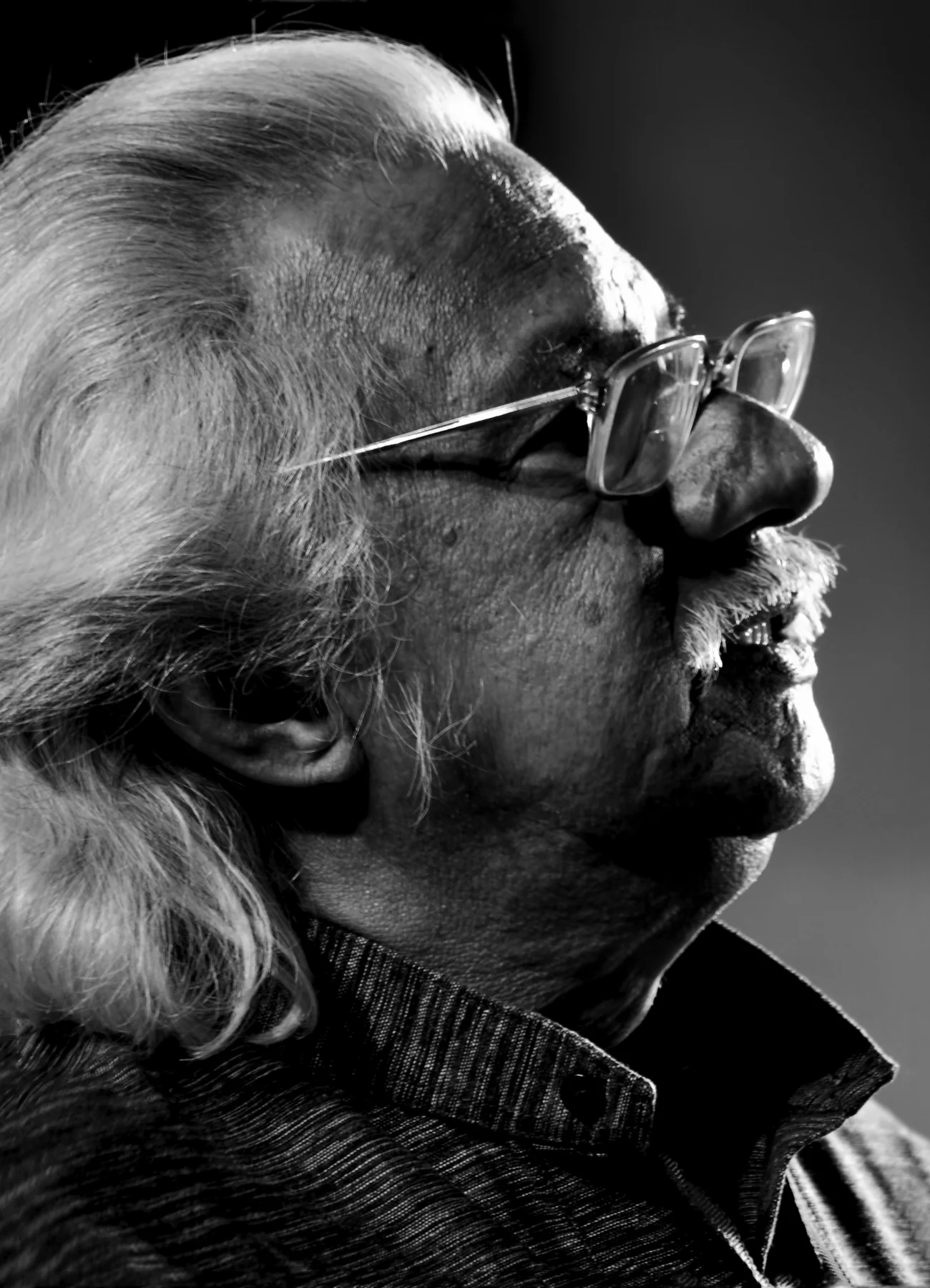
Read about the playwright of Broken Images, the one-person stage work Azmi performed.
Sources and further reading
Explore the evidence
These references support the biography and offer further reading. Official records, first-person accounts and independent reporting provide different perspectives; image records document attribution and licensing.
- 1. Subhash K. Jha / Bollywood HungamaBirthday interview, 15 September 2025: turning 75 on 18 September
Read dated birthday interview: 18 September and turning 75 in 2025 corroborate 1950, against 1951 in one parliamentary compilation. Her own 2025 interview confirms Hyderabad over conflicting secondary New Delhi entries.
- 2. The New Indian Express6 February 2025 interview: Hyderabad, family, acting and later roles
Read the published interview on Hyderabad, college, FTII, family encouragement, older actors and the 2023 film. No new viewing of the film is claimed.
- 3. Film and Television Institute of IndiaGolden jubilee of the 1971 acting batch
- 4. United Nations Population Fund1 November 1998 appointment: career, family and advocacy
Read complete 1998 appointment release. Historical ambassador and council references are not presented as verified 2026 offices.
- 5. Lalitha Sridhar / India TogetherArtiste and activist: interview recorded May 2003, published 2004
- 6. British Film InstituteAnkur: 1974 film and production record
- 7. Australian Academy of Cinema and Television Arts2017 conversation announcement: five awards and selected credits
- 8. Directorate of Film Festivals46th National Film Awards: Godmother Best Actress citation
Read indexed official Best Actress citation for Godmother, award year 1998, distinct from its familiar 1999 release date. No claim to have read the entire awards catalogue.
- 9. Dipanita Nath / The Indian ExpressFire: retrospective on the film and 1998 controversy
- 10. Rajya Sabha SecretariatNominated members: Shabana Azmi’s 1997–2003 term
- 11. BRAC UniversityEleventh convocation, held 5 December 2016
- 12. Alyque Padamsee archiveBroken Images (2009): production and performance design
- 13. Netflix TudumHalo: cast and Admiral Margaret Parangosky credit
- 14. NetflixDabba Cartel: cast, creators and 2025 announcement
- 15. British Board of Film ClassificationDabba Cartel: 2025 streaming-release classification
- 16. Subhash K. Jha / Bollywood Hungama17 January 2026: director reports completed USA v Raj shooting
Read director interview reporting completed shooting, dated 17 January 2026. Expected summer release is not treated as an observed release.
- 17. Wikimedia Commons / Ifthekhar OmerBRAC convocation photograph: exact identity and CC release
Full-frame BRAC photograph replaces rejected cropped Bollywood Hungama candidate. Event date is 5 December 2016; BRAC’s report was published 31 December.
Social advocacy and a parliamentary term
Azmi served as a nominated Rajya Sabha member from 1997 to 2003. Looking back near the end of her term, she described the freedom of not following a party line and the corresponding difficulty of securing legislative backing. Housing for underprivileged people, women’s rights and opposition to communalism were among the concerns she identified. Parliamentary work required preparation and negotiation as well as a public voice.
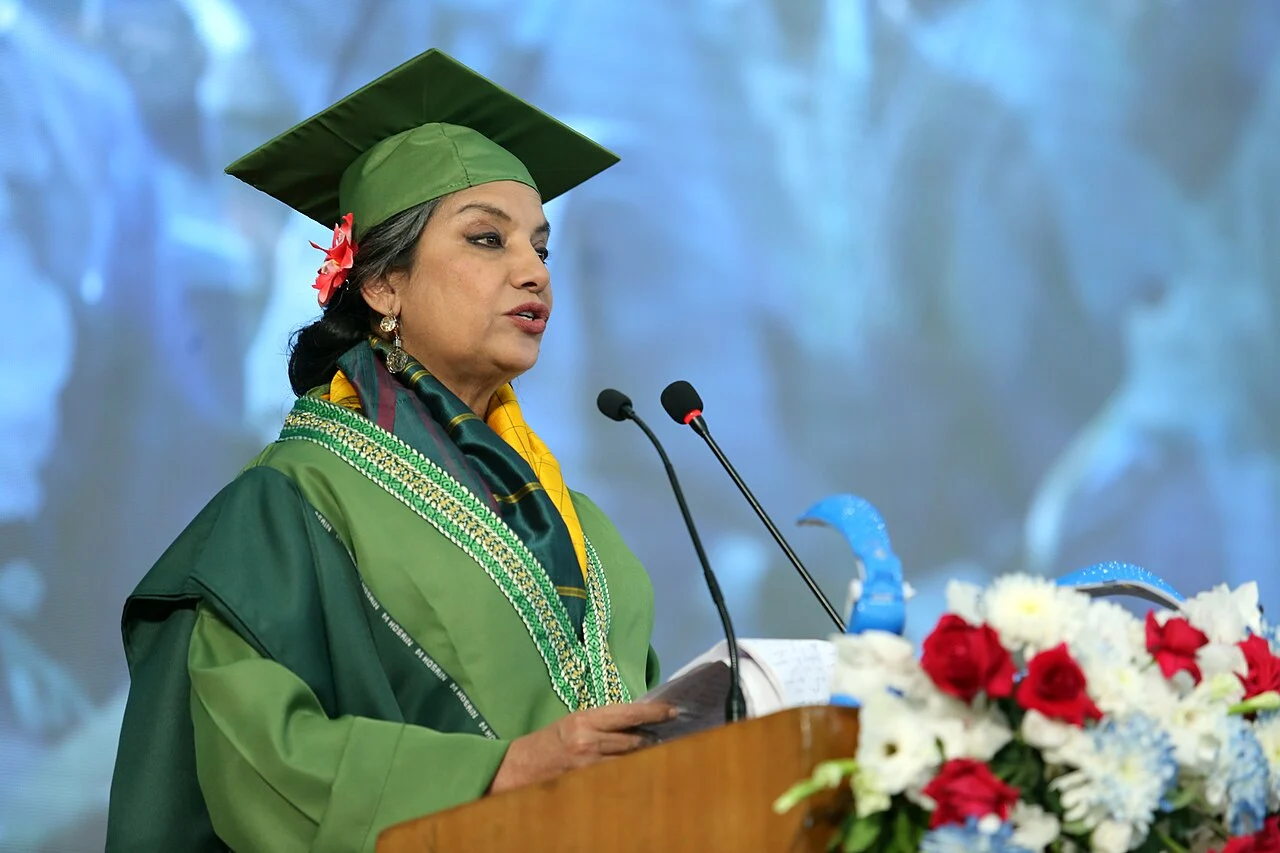
UNFPA appointed her its Goodwill Ambassador for India in November 1998, specifying reproductive health, gender and population-and-development issues. Its announcement also noted her campaigning against the exclusion of people with AIDS. This dated appointment should not automatically be treated as proof of a current office. Public speaking remained another strand of her work: she addressed BRAC University’s convocation in Dhaka in December 2016.
Sources for this section: [10] · [5] · [4] · [11]