In this biography
Quick facts
- Born
- 1968-01-28
- Birthplace
- Halifax, Nova Scotia, Canada
- Country
- Canada
- Nationality
- Canadian
- Known for
- Fumbling Towards Ecstasy, Surfacing, Lilith Fair and the Sarah McLachlan School of Music
- Born
- 28 January 1968, Halifax, Nova Scotia
- Early label
- Nettwerk, based in Vancouver
- Lilith Fair
- Co-founder; original tours, 1997–1999
- School roots
- Music outreach project established in 2002
Why this life matters
Her work joins songwriting and studio collaboration to practical questions about who gets heard, who shares a concert bill and who can afford to learn music.
Timeline
Key moments
Halifax and musical study
Classical training and the band October Game precede a Nettwerk contract and a move to Vancouver.
A recording identity develops
Touch and Solace precede the breakthrough Fumbling Towards Ecstasy.
Surfacing and Lilith Fair
A successful studio album coincides with the women-led touring festival and the later live album Mirrorball.
Recognition and music education
An Order of Canada appointment precedes a 2002 outreach project and the school’s 2011 incorporation as a charity.
Further recording directions
Afterglow, Wintersong, Laws of Illusion, Shine On and Wonderland extend the catalogue.
Better Broken
A new production team contributes to the 2025 album; an extended version follows in June 2026.
Halifax training and a move into independent music
Sarah McLachlan was born in Halifax, Nova Scotia, on 28 January 1968. Childhood lessons in voice, piano and guitar supplied a classical grounding before she sang with the new-wave band October Game as a teenager. Her development connected formal study with the less predictable experience of playing in a band.
Nettwerk noticed her while she was still young. She completed further schooling before signing with the Vancouver independent label and moving west. Touch and then Solace established an audience before international recognition. Halifax is her birthplace; Vancouver belongs to the later professional story, rather than supplying an alternative place of birth.
A voice develops through collaboration
Producer Pierre Marchand became a central partner from Solace onward. In a 2024 interview, McLachlan described bringing the basic structure of a song on guitar or piano and discovering how his arrangements opened possibilities she had not imagined. She also credited him with encouraging a lower vocal range after the acrobatic influences of her first record.
Fumbling Towards Ecstasy, released in 1993, brought a wider American audience. She recalled writing with unusual freedom in a cabin near Montreal, after sustained touring had built support city by city. The finished sound grew from that writing and from a working relationship; intimacy on a record does not mean that nobody else helped make it.
Surfacing and a different approach to touring
Surfacing followed in 1997, with Building a Mystery, Adia and Angel among its best-known songs. It expanded her audience while the live album Mirrorball later documented another form of performance. The Canadian Music Hall of Fame places these records within the same period as her largest touring initiative.
Lilith Fair was co-founded with Terry McBride, Dan Fraser and Marty Diamond. Its women-led bills challenged promoters’ assumptions about putting female artists together, with rotating lineups extending beyond one singer’s set. The original run ended after 1999, and a 2010 revival struggled with weak sales and cancelled dates.
Charitable work becomes a lasting institution
An Officer of the Order of Canada appointment in October 1999 recognized both her music and Lilith Fair’s support for women’s shelters. The official citation describes shared audiences and musical collaboration as part of the festival’s purpose. The honour therefore records social work connected to a career, rather than only record sales.
Music education became another continuing commitment. The school’s own history distinguishes the Sarah McLachlan Music Outreach project, begun with Arts Umbrella in 2002, from incorporation as a charity in 2011. Its free after-school programmes address unequal access to instruction. Those dates describe successive stages of an organization and should not be collapsed into one founding ceremony.
Later albums and the time required to make them
Afterglow, Wintersong and Laws of Illusion moved between original songs, seasonal material and renewed studio work. Shine On followed, while Wonderland returned to a Christmas repertoire. Her participation in the ASPCA’s animal-welfare commercials gave Angel a new public association. In 2025 she told the Associated Press she was grateful for that work and the audience it reached.
McLachlan has also described the practical limits on creative time. In that interview, she connected the long interval between albums of new material with parenting and fundraising for the music schools. Her account identifies competing responsibilities; it does not support treating every gap between releases as retirement or a loss of interest in music.
Better Broken opens the studio to new partners
Better Broken arrived through Concord in September 2025. Producers Tony Berg and Will Maclellan joined a changed creative circle after decades of work with Marchand. The artist’s press biography identifies Sound City in Los Angeles as its main recording setting and names contributors including Wendy Melvoin, Matt Chamberlain, Greg Leisz and Katie Gavin.
The new songs addressed family relationships, uncertainty and women’s autonomy, according to McLachlan’s own explanations. An extended edition and The Kiss followed in June 2026. This later work gives the biography a present beyond its 1990s breakthrough, while the accounts of collaboration show how a familiar voice can enter a different recording environment.
Quick answers
Frequently asked questions about Sarah McLachlan
- Where was Sarah McLachlan born?
- Halifax, Nova Scotia, on 28 January 1968. Vancouver became an important centre of her professional life.
- Did Sarah McLachlan create Lilith Fair alone?
- She co-founded it with Terry McBride, Dan Fraser and Marty Diamond. The original tours ran from 1997 to 1999.
- When did the Sarah McLachlan School of Music begin?
- Its own history traces a music outreach project with Arts Umbrella to 2002 and incorporation as a charity to 2011.
- Is Better Broken an album of old recordings?
- The 2025 release is an album of new material, made with Tony Berg, Will Maclellan and other collaborators. An extended version followed in June 2026.
Keep exploring
Lives connected to this story
- Joni Mitchell
Compare another Canadian songwriter whose voice and arrangements developed through changing musical partnerships.
- Alanis Morissette
Explore a contemporary Canadian songwriter’s different route through American recording studios and international success.
- Avril Lavigne
Compare a later breakthrough shaped by shared songwriting and a strongly identified individual voice.
Sources and further reading
Explore the evidence
These references support the biography and offer further reading. Official records, first-person accounts and independent reporting provide different perspectives; image records document attribution and licensing.
- 1. Dictionary of Women Worldwide / Encyclopedia.comFull birth date, Halifax and early musical study
The reference entry’s full date agrees with the 1968 birth year in the Governor General’s Performing Arts Awards biography. A conflicting 1978 field on Canada’s Walk of Fame is not used.
- 2. Governor General’s Performing Arts Awards2015 lifetime achievement biography and Canadian beginnings
- 3. Canadian Music Hall of FameNettwerk, album development, later recordings and 2017 induction
Biographies differ over Touch’s release year and the school’s founding date. The narrative avoids a precise Touch year and uses the school’s own distinction between 2002 outreach and 2011 incorporation. Historical award and sales totals are not presented as current counts.
- 4. Lee Campbell / Under the Radar2024 artist interview on writing, Marchand and creative freedom
The artist’s quoted recollections were read; the introduction’s conflicting Touch year and old school location list are not repeated.
- 5. Lesley Kennedy / HISTORYLilith Fair’s four co-founders and original touring years
- 6. Governor General of Canada1999 appointment and support for women’s shelters
- 7. Sarah McLachlan School of Music2002 outreach, 2011 incorporation and free programmes
- 8. Associated Press2025 artist interview on parenting, fundraising and recording time
- 9. Sarah McLachlan / Shore Fire MediaBetter Broken: release, production and musician credits
- 10. David McPherson / Recording Academy2025 interview on the new songs and Lilith Fair’s legacy
- 11. Concord / Shore Fire Media26 June 2026 extended edition and The Kiss
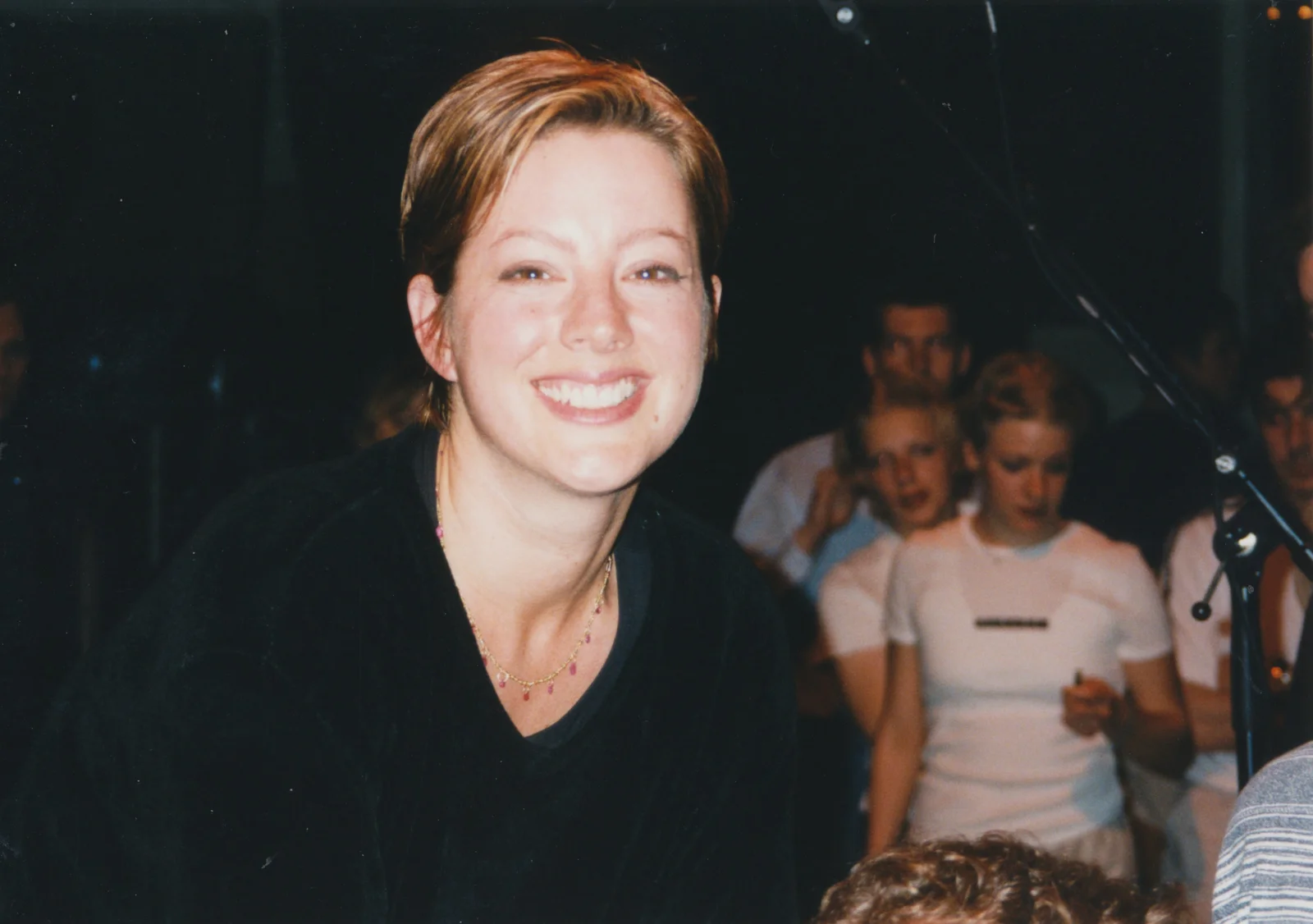
- 12. Marcel Rijs / Wikimedia Commons1999 Paradiso portrait, sole revision and CC0 grant
The exact own-work CC0 grant and sole original revision were checked. The complete original was inspected before proportional conversion; the image is a venue portrait, not proof of a particular performance.