In this biography
Quick facts
- Born
- 16 July 1947
- Birthplace
- Port Elizabeth, South Africa
- Country
- South Africa
- Nationality
- Not independently established
- Known for
- National Party negotiations with the ANC, constitutional transition and later peace mediation
- Full name
- Roelof Petrus Meyer
- Training
- Commerce and law, University of the Free State
- Parliamentary entry
- National Party, 1979
- Negotiating counterpart
- Cyril Ramaphosa, representing the ANC
- Later party
- UDM co-founder, 1997
- Dated diplomatic role
- US ambassador; credentials presented in May 2026
Why this life matters
His negotiating role does not erase his service within apartheid’s governing system. The useful historical question is how someone exercising power in that system participated in negotiating its replacement—and how bilateral trust related to a much wider multiparty process.
Timeline
Key moments
Education and legal training
Born in Port Elizabeth, he completes commerce and law degrees.
National Party career
Parliamentary service leads to appointment as a deputy minister.
Constitutional negotiations
He works with Ramaphosa to restore talks and negotiate transition arrangements.
Government of national unity
Constitutional-affairs responsibilities continue under Mandela.
A new party and a change of direction
UDM involvement precedes his departure from active party politics.
Peace work and diplomacy
International mediation is followed by the US ambassadorial appointment.
Law and National Party politics shaped his early career
Roelof Petrus Meyer was born in Port Elizabeth on 16 July 1947. Schooling in Ficksburg preceded commerce and law studies at the University of the Free State. His historical curriculum vitae dates those degrees to 1968 and 1971. He then practised law in Pretoria and Johannesburg.
He entered Parliament for the National Party in 1979. That placed him inside the party governing apartheid, not in an opposition movement against it. Later recognition for negotiation should be read with that starting point in view: his authority initially came from the existing political order.
His account of political change is a participant’s recollection
Appointed deputy minister in 1986, Meyer held responsibility during the national state of emergency. In a 2010 oral-history interview, he described travelling to townships and encountering the resistance and violence surrounding government policy. He presented that experience as important to his own change in outlook.
That is valuable first-person evidence, but it remains his retrospective account. Calling it transformation does not remove responsibility attached to the office. He subsequently served as defence minister and became constitutional-affairs minister in 1992, moving from administering the existing system towards negotiating the framework that would replace it.
Negotiation depended on more than a personal partnership
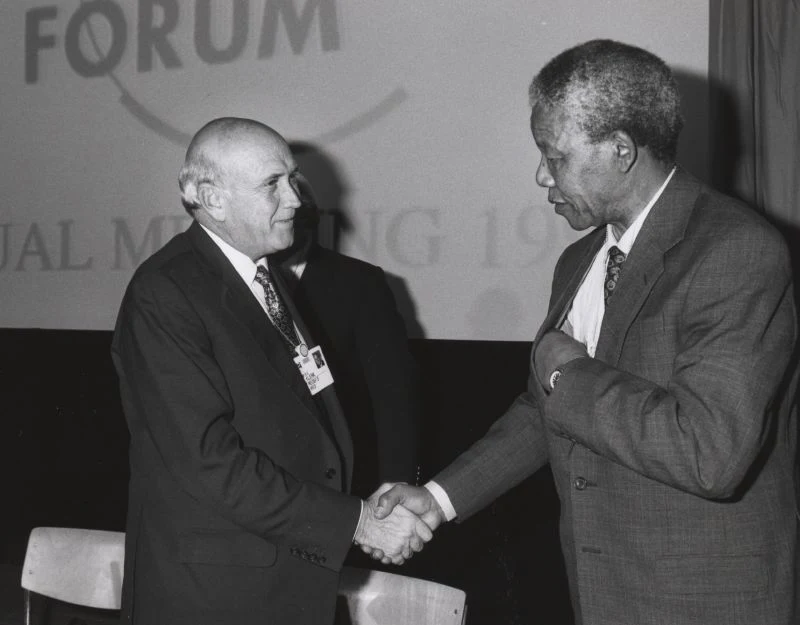
As government negotiator he worked closely with the ANC’s Cyril Ramaphosa. Their channel helped restore communication during the 1992 crisis. The September Record of Understanding identifies their meetings and records agreement on obstacles to renewed negotiations, rather than announcing a finished constitution.
The ensuing transition involved many organisations and disputed questions of representation, regional powers and security. Meyer’s contribution was important without being solitary. After the 1994 election he continued in constitutional affairs under Nelson Mandela, crossing from the old administration into the government of national unity while constitutional arrangements were still developing.
Party realignment was followed by international peace work
Meyer left the National Party and helped establish the United Democratic Movement with Bantu Holomisa in 1997. He served as its deputy president before leaving active party politics in 2000. That change did not mean the end of all public involvement.
Historical profiles describe business, civil-society responsibilities and consultation on peace processes in countries including Northern Ireland and Sri Lanka. These later activities applied experience from South Africa elsewhere, but each conflict had its own actors and conditions. A list of advisory engagements is not evidence that he personally settled those conflicts, nor does a decades-old profile establish a current appointment.
A 2026 appointment added a new diplomatic responsibility
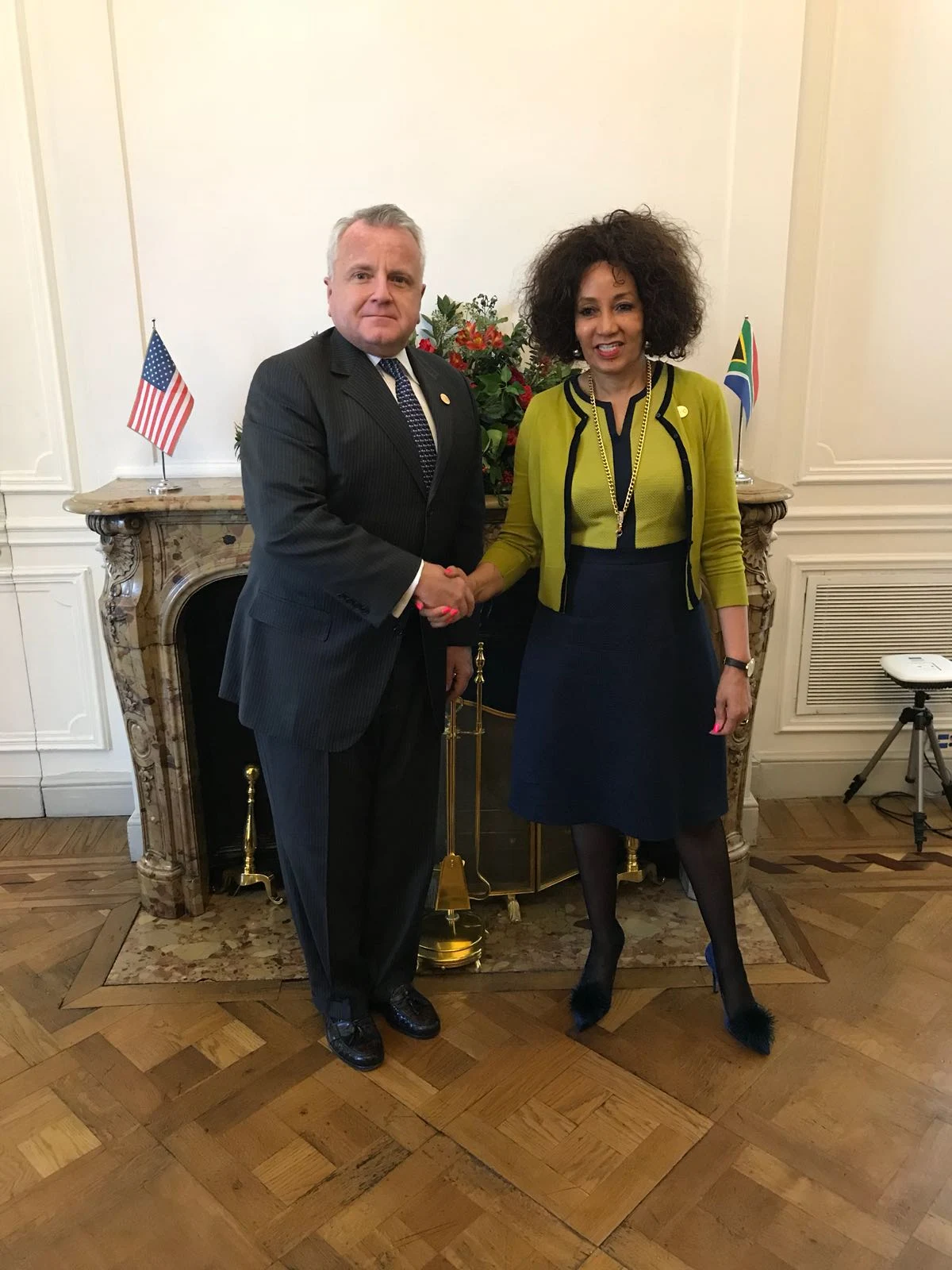
In April 2026 President Cyril Ramaphosa confirmed Meyer’s appointment as ambassador to the United States. The government announcement emphasised his negotiating and mediation experience. Independent reporting records that he presented credentials to President Donald Trump at the White House on 21 May.
The stages matter: appointment and presentation of credentials are not the same event. An October publisher’s notice still describes him as ambassador, supporting dated wording at this article’s review. It advertises a political memoir; this biography does not claim to have read that book. His long career therefore ends here with a verified diplomatic role, not an outdated statement that retirement in 2000 ended public service.
Quick answers
Frequently asked questions about Roelf Meyer
- Did Meyer begin as an anti-apartheid opposition politician?
- No. He entered Parliament for the governing National Party.
- Did he and Ramaphosa negotiate the transition alone?
- No. Their bilateral channel operated within a wider, contested multiparty process.
- Did leaving party politics end every public role?
- No. Mediation work followed, and he became US ambassador in 2026.
- When were his US credentials presented?
- Independent reporting dates the White House ceremony to 21 May 2026.
Keep exploring
Lives connected to this story
- Cyril Ramaphosa
Read about the ANC negotiator opposite Meyer at the table.
- F. W. de Klerk
Place his government role within the last apartheid administration.
- Nelson Mandela
Follow the transition into the government of national unity.
- Pravin Gordhan
Compare negotiation with the later work of democratic administration.
Sources and further reading
Explore the evidence
These references support the biography and offer further reading. Official records, first-person accounts and independent reporting provide different perspectives; image records document attribution and licensing.
- 1. South African History OnlineRoelof Petrus (Roelf) Meyer: selected life and office chronology
- 2. Roelf Meyer / Institute for Security Studies archiveHistorical curriculum vitae: education, legal practice and peace work
Historical CV, not a 2026 office directory. Its anomalous deputy-minister date is not adopted.
- 3. Roelf Meyer / Princeton Innovations for Successful Societies9 February 2010 interview: selected state-of-emergency and constitutional-negotiation recollections
Selected opening recollections and constitutional discussion only; self-assessment is attributed rather than independently certified.
- 4. Pádraig O’Malley archive / Nelson Mandela FoundationMeyer, Roelf: historical cabinet, party and mediation profile
- 5. South African Government and ANC / International IDEA ConstitutionNetRecord of Understanding, 26 September 1992: meeting record and agreement, pages 1–2
- 6. South African Government News Agency15 April 2026: President confirms Meyer’s US ambassadorial appointment
- 7. Lindsay Dentlinger / Eyewitness News22 May 2026: credentials presented at the White House the previous day
- 8. Polity / Tafelberg book notice5 October 2026: memoir notice and dated ambassador description, not the book text
Publisher’s notice used narrowly for October role wording; no complete memoir reading is claimed.
- 9. Fredrick Omondi / AMISOM Public Information / Wikimedia CommonsMeyer at an AMISOM training ceremony in Nairobi, 8 March 2017
Named event caption identifies Meyer at right. Initial CC0 declaration and a dated Flickr review survive on Commons; current original Flickr page returns 404.