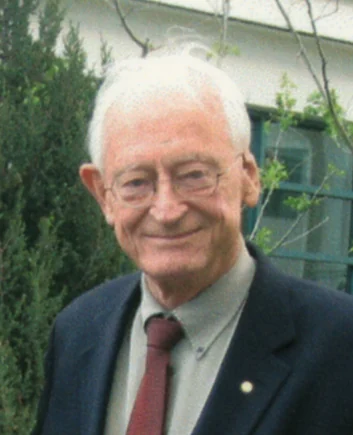
In this biography
Quick facts
- Born
- Not securely established
- Died
- 1 December 1951
- Birthplace
- Urenui, Taranaki, New Zealand
- Country
- New Zealand
- Nationality
- Not independently established
- Known for
- Māori health work, Polynesian material culture and Bishop Museum leadership
- Birth
- Probably 1877; exact date disputed
- Medical degrees
- MBChB 1904; MD 1910, Otago
- Bishop Museum director
- From1 July 1936
- Death
- 1 December 1951, Honolulu
Why this life matters
His life connects several institutions and kinds of knowledge, while his Ngāti Mutunga identity and continuing relationship with New Zealand remain central to the story.
Timeline
Key moments
Uncertain birth year
The school register favours 1877, but Buck later claimed 1880.
Medical qualification
Completed MB and ChB at Otago.
Health appointment
Became a medical officer working with Māori communities.
Parliament
Represented Northern Māori.
Health administration
Became director of the Māori Hygiene Division.
Material-culture research
Fieldwork and publications helped establish his professional anthropology career.
Museum director
Assumed the Bishop Museum directorship on 1 July.
Death
Died in Honolulu on 1 December.
A disputed birth date belongs in the biography
Buck was born at Urenui and belonged to Ngāti Mutunga. The DNZB explicitly treats his birth year as uncertain: a primary-school register suggests 1877, while he later claimed 1880. An exact birthday is therefore not supplied here. His upbringing included Māori language and knowledge learned from relatives as well as English-language schooling. The name Te Rangi Hīroa was conferred by elders and became a name he used in his scholarly work. Keeping both names visible helps readers connect publications and institutional records that may identify the same person differently.
Sources for this section: [1]
Medicine and public service preceded professional anthropology
After Te Aute College he studied medicine at Otago, completing MB and ChB qualifications in 1904 and an MD in 1910. From 1905 he worked as a medical officer to Māori, alongside Māui Pōmare, with attention to community sanitation and health. He entered Parliament for Northern Māori in 1909 and served until 1914. These were practical and political responsibilities, not stages of a single university anthropology post. His early writing on Pacific material culture developed alongside medical visits and public work, giving him several routes into the research that later became his main occupation.
Sources for this section: [1]
War service was followed by health administration
Buck served with Māori troops during the First World War, first as a medical officer and later in other military roles before returning to medical duties. Back in New Zealand he took responsibility within Māori health administration and became director of the Māori Hygiene Division in 1921. His biography places this work in the aftermath of the 1918 influenza pandemic. The record describes a programme involving communities, nurses, officials and other practitioners. It should not be reduced to a single person independently producing all the changes in population health during that period.
Sources for this section: [1]
Material objects and Pacific fieldwork reshaped the career
Fieldwork with colleagues and publications on clothing and material culture drew him further into anthropology. Work in the Cook Islands helped lead to a Bishop Museum fellowship. He subsequently undertook research across Pacific island groups and published detailed studies, then held visiting appointments at Yale. His 1938 Vikings of the Sunrise reached a broad readership, while more specialised work appeared in museum and scholarly series. The inspected biographical records establish those publications and settings; they do not mean that every book or field notebook has been read for this profile.
Sources for this section: [1]
Museum leadership added an institutional responsibility
He assumed the Bishop Museum directorship on 1 July 1936. The museum’s own publication history independently places the transition from Herbert Gregory to Buck in 1936. Research, publications and administration now occupied the same career, with wartime circumstances later restricting Pacific fieldwork. He continued to correspond with Āpirana Ngata and maintained an interest in developments in New Zealand. The collection descriptions and published histories make this continuing connection visible; they do not establish that residence in Hawaii erased his Māori identity or automatically changed his citizenship.
The legacy includes scholarship and a continuing relationship
Buck returned to New Zealand for a final visit in 1949 and died in Honolulu on 1 December 1951. His ashes were later returned to the Urenui area. His career can be followed through medical work, representation, field research and a museum’s collections and publications. Those activities also belong to a period with its own assumptions about anthropology and cultural change. Reading his specific contributions alongside later Māori scholarship helps preserve both the scale of his work and the historical context in which it was produced. Ranginui Walker’s biography offers a later, differently situated academic and public career.
Quick answers
Frequently asked questions about Te Rangi Hīroa (Peter Buck)
- Is 1877 a certain birth year?
- No. The DNZB marks the year as uncertain and records a conflict with Buck’s own 1880 claim.
- Was he known only as Peter Buck?
- No. Te Rangi Hīroa and several spelling variants appear alongside Peter Henry Buck in the scholarly and public record.
Keep exploring
Lives connected to this story
- Ranginui Walker
Compare a later Māori scholar’s urban research, teaching and public advocacy.
- Witi Ihimaera
Explore a different form of Māori authorship and cultural work.
- Āpirana Ngata
Follow a collaborator whose parliamentary and cultural work developed alongside scholarship.
Sources and further reading
Explore the evidence
These references support the biography and offer further reading. Official records, first-person accounts and independent reporting provide different perspectives; image records document attribution and licensing.
- 1. M.P.K.Sorrenson; Manatū Taonga Ministry for Culture and HeritagePeter Henry Buck(Te Rangi Hīroa): Dictionary of New Zealand Biography
The DNZB explicitly marks Buck’s birth year uncertain, favouring 1877 from the school register while recording his 1880 claim. Later directorship and death passages were also read through saved captures. An exact birth date remains uncertain. Complete books and correspondence were not reviewed.
- 2. Bishop MuseumBishop Museum Occasional Papers101: publication history,2008
Only the publication-history paragraph on PDF 5of the museum’s actual 2008 volume was used for the 1936 director transition. It is not a complete museum administrative history.
- 3. Peter Clayworth; Te Ara and Hocken Collections, University of OtagoPeter Buck researching Arts and crafts of Hawaii: historical caption
The institutional caption identifies the museum/Yale research setting, but explicitly requires permission to reuse the Hocken photograph. That photograph is not used.