In this biography
Quick facts
- Born
- 27 January 1949
- Birthplace
- KwaZulu-Natal, South Africa
- Country
- South Africa
- Nationality
- Not independently established
- Known for
- Health and diplomatic portfolios, Home Affairs administration and the AU Commission’s first woman chair
- Full name
- Nkosazana Clarice Dlamini Zuma
- Born
- 27 January 1949, KwaZulu-Natal
- Medical qualification
- MB ChB, University of Bristol, 1978
- Foreign affairs
- Minister, 1999–2009
- AU Commission
- Chairperson, 2012–2017
- Later public service
- Cabinet service ended in 2024
Why this life matters
Her path connects professional training, liberation politics and the administration of institutions. The historic importance of a woman reaching continental executive leadership belongs alongside scrutiny of decisions made in each office, rather than replacing that scrutiny.
Timeline
Key moments
Education and exile
Science and medical studies lead to qualification in Bristol after leaving South Africa.
Medicine and liberation work
Clinical and ANC health work precede the democratic transition.
Health and foreign affairs
Two successive cabinet portfolios join domestic reform with international diplomacy.
Home Affairs
Administrative reform precedes the move to the AU Commission.
Continental executive leadership
July election is followed by an October handover in Addis Ababa.
Domestic politics again
An ANC leadership contest and further ministerial appointments precede parliamentary retirement.
Medical training developed alongside political activity
Born in KwaZulu-Natal on 27 January 1949, Dlamini-Zuma studied science at the University of Zululand before entering medicine. Her involvement in SASO and underground ANC activity accompanied that education. She left South Africa in 1976 and completed her medical qualification at the University of Bristol in 1978.
Her subsequent work included hospital posts in Britain, paediatrics at Mbabane Government Hospital and ANC health responsibilities. Medicine and political organisation were therefore overlapping experiences before she became a national minister, not occupations that began only after the democratic transition.
Sources for this section: [1]
The health portfolio combined reform with controversy
Mandela appointed her health minister in 1994. Reorganising a racially divided system and widening access to basic care formed part of the new government’s agenda. Tobacco-control legislation became another conspicuous element of her ministerial record.
The period also brought controversy over expenditure on the AIDS-awareness production Sarafina II and her advocacy of Virodene. SAHO records these disputes alongside the reforms. Neither a celebratory account nor a list of scandals alone explains the portfolio: policy choices, spending accountability and the evidence supporting proposed treatments raised different questions.
Diplomacy was followed by a demanding administrative department
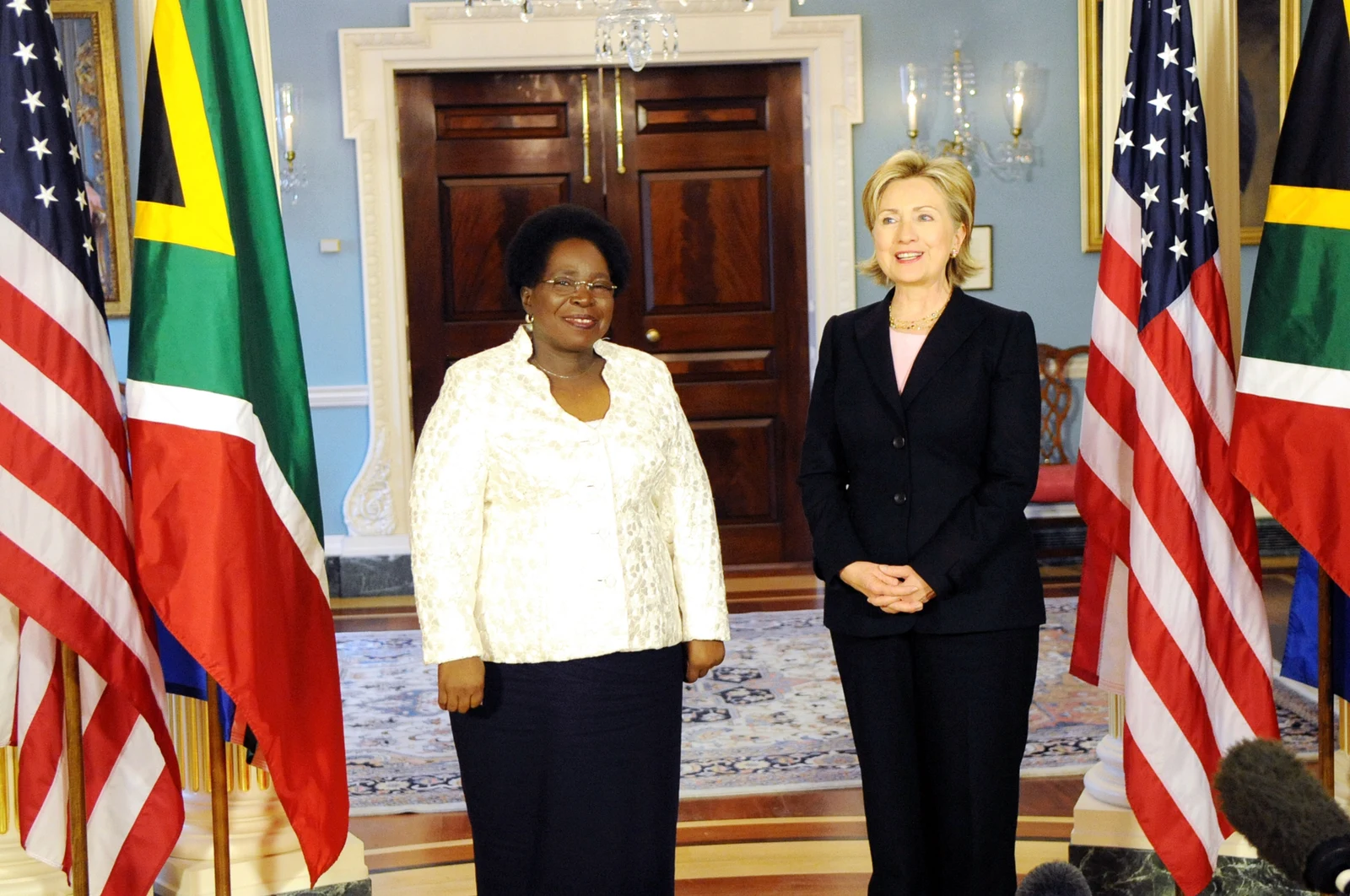
She served as foreign affairs minister from 1999 to 2009, under Mbeki and then Motlanthe, before moving to Home Affairs. This sequence took her from international representation to a department handling everyday documentation and migration administration.
Contemporary reporting about her 2012 departure from Home Affairs credited improvements in controls and service delivery and raised questions about who would sustain them. That concern is revealing: an administrative turnaround needs systems and staff that continue beyond the minister. Praise for leadership is not proof that every departmental problem has been permanently resolved.
An AU election brought a different kind of executive role
African leaders elected Dlamini-Zuma to chair the AU Commission on 15 July 2012 after an earlier inconclusive contest with Jean Ping. The next day, Ping received his successor and discussed a transition lasting up to ninety days. The formal handover followed on 15 October.
She was the first woman to hold this office. It was continental administrative leadership, not election as president of Africa or appointment to the AU’s separate rotating political chair. Her acceptance speech emphasised cooperation with member states and the wider significance of women’s participation.
Returning to domestic politics did not make her head of state
After the Commission term she contested the ANC presidency at Nasrec in 2017, losing a close vote to Cyril Ramaphosa. This was a party leadership election, not a direct public ballot for South Africa’s presidency. She subsequently returned to cabinet responsibilities, including the women, youth and persons with disabilities portfolio.
In January 2024 she declined nomination for another parliamentary term. SAnews later identified Sindisiwe Chikunga as her successor in that ministerial portfolio. As reviewed on 24 October 2026, she is described here as a former minister; retiring from Parliament is not treated as withdrawal from every form of public or political activity.
Quick answers
Frequently asked questions about Nkosazana Dlamini-Zuma
- Was Dlamini-Zuma the president of Africa?
- No. She chaired the AU Commission, an executive and administrative institution within the African Union.
- When did she take over the Commission?
- She was elected in July 2012; the formal handover was on 15 October.
- Is she described here as a current cabinet minister?
- No. The dated record identifies the end of her cabinet service in 2024 and her decision not to seek another parliamentary term.
Keep exploring
Lives connected to this story
- Nelson Mandela
His first democratic cabinet appointed her to the health portfolio.
- Thabo Mbeki
Her decade in foreign affairs overlapped principally with his presidency.
- Cyril Ramaphosa
Their 2017 party leadership contest preceded further cabinet service.
Sources and further reading
Explore the evidence
These references support the biography and offer further reading. Official records, first-person accounts and independent reporting provide different perspectives; image records document attribution and licensing.
- 1. The Presidency, South AfricaDlamini Zuma: selected education, exile and ministerial chronology
Historical profile: its “current position” heading refers to an earlier appointment, not October 2026.
- 2. South African History OnlineNkosazana Clarice Dlamini-Zuma: selected public-service record and controversies
Selected historical passages; its older office-status wording is not used as current evidence.
- 3. Nickolaus Bauer / Mail & Guardian16 July 2012: Home Affairs administration and succession questions
- 4. Business Day18 December 2017: Ramaphosa defeats Dlamini-Zuma in ANC leadership vote
- 5. Kgothatso Madisa / TimesLIVE13 January 2024: Dlamini-Zuma declines another parliamentary term
Contemporary reporting of the letter declining a further parliamentary term.
- 6. SAnews2 July 2024: Chikunga succeeds Dlamini-Zuma in the women’s portfolio
- 7. Gabe Joselow / Voice of America15 July 2012: Dlamini-Zuma elected Commission chairperson
- 8. African Union Commission16 July 2012: Ping receives the chairperson-elect
- 9. Nkosazana Dlamini Zuma / African Union16 July 2012 acceptance speech: selected representation and cooperation passages
- 10. Nkosazana Dlamini Zuma / African Union15 October 2012 handover address: opening three pages
- 11. African Union Commission and New Zealand MFATAfrican Union Handbook 2021: selected Commission functions, pages 94–95
- 12. U.S. Department of State / FlickrSecretary Clinton meeting Dlamini-Zuma, 19 March 2009
A 2009 diplomatic photograph, not an image of the 2012 AU election.