In this biography
Quick facts
- Born
- 11 February 1930
- Died
- 13 April 2023
- Birthplace
- Blackheath, London, England, United Kingdom
- Country
- United Kingdom
- Nationality
- British
- Known for
- Building a fashion and cosmetics business through Bazaar, Ginger Group, manufacturing partnerships and licensing
- First boutique
- Bazaar, King’s Road, Chelsea, 1955
- Founding partners
- Mary Quant, Alexander Plunket Greene and Archie McNair
- Wholesale expansion
- Ginger Group, 1963
- Cosmetics launch
- 1966, with Gala Cosmetics
Why this life matters
Quant connects design with the organization of retail, production and branding. Her influence came through a wider culture of customers, models, photographers and competing designers, rather than a securely documented invention of the miniskirt by one person.
Timeline
Key moments
Blackheath and art education
Born on 11 February 1930; studies at Goldsmiths and graduates in 1953 before working in millinery.
Bazaar opens
Quant, Plunket Greene and McNair establish the Chelsea boutique, with Alexander’s restaurant below.
A second boutique
Bazaar expands to Knightsbridge; Quant marries Plunket Greene that year.
A wider distribution network
A JC Penney design contract precedes the 1963 Ginger Group line.
Cosmetics and recognition
The make-up range launches; Quant receives an OBE and publishes Quant by Quant.
An international product brand
Cosmetics demonstrations, Japanese distribution and products beyond clothing widen the business.
Later honours and death
Becomes a dame in 2015 and receives a Companion of Honour appointment in the 2023 honours; dies on 13 April 2023.
An art education before a fashion business
Barbara Mary Quant was born on 11 February 1930 and grew up in Blackheath, London, the daughter of Welsh teachers. She studied illustration at Goldsmiths, where she met Alexander Plunket Greene. After graduating in 1953 with an art-education diploma, she worked with the milliner Erik of Brook Street. Her route into fashion combined visual training, practical observation and subsequent learning about making clothes.
Goldsmiths later honoured her with a fellowship. Its history project preserves the advice she gave graduates in 1993: careers required flexibility as opportunities changed. That was an apt description of her own movement from a London shop into cosmetics and international business. The familiar photograph of a designer with a bob haircut captures only one stage of a much longer commercial life.
Bazaar was the work of three partners
Bazaar opened on the King’s Road in Chelsea in 1955. Quant founded it with Plunket Greene and Archie McNair, a former lawyer and photographer. Alexander’s restaurant occupied the basement. Quant increasingly concentrated on clothing design, Plunket Greene contributed promotion and entrepreneurial energy, and McNair supplied legal and commercial skills. The partners worked together rather than occupying completely sealed departments.
The boutique combined unusual window displays, music and informal sociability with selling clothes. A second shop opened in Knightsbridge in 1957. Quant and Plunket Greene also married that year. The location and atmosphere mattered: customers could encounter a way of being young in the city as well as individual garments. A retail setting helped make the designs intelligible and desirable.
Design depended on production and materials
Quant moved from buying wholesale stock towards selling designs of her own, learning cutting and adapting patterns as she developed. Small runs kept the shop fresh but also demanded constant work. As the enterprise grew, designers’ choices had to connect with the capacities of workrooms, fabric suppliers and outside manufacturers. A sketch alone did not put a dress on a rail.
Jersey helped make less formally fitted clothing easier to produce and wear. Hosiery was another collaboration: Quant worked with the Nylon Hosiery Company to develop colours and styles that coordinated with her clothes. She also recalled technical difficulties sewing PVC, which required different needles and methods. These examples reveal innovation as a negotiation with materials and manufacturing expertise, not simply the announcement of a new look.
The name travelled beyond the boutique
A design contract with the American retailer JC Penney in 1962 and the Ginger Group line in 1963 brought Quant’s work to larger markets. The distinction is important: wider availability depended on commercial arrangements and repeatable production. Not every woman who wore a Quant product had visited Bazaar or bought one of its early, more expensive designs.
Cosmetics extended the coordinated look. Quant worked with Stanley Picker’s Gala Cosmetics, and the range launched in 1966. Products, packaging, demonstrations and the daisy emblem gave buyers another way into the brand. The Japanese company chronology separately records an exclusive cosmetics distribution agreement in 1970 and retail sales beginning in 1971, showing how international expansion required local organizations and contracts.
A cultural influence without a single-inventor myth
Short skirts became Quant’s most durable association, but the evidence does not establish one conclusive inventor of the miniskirt. André Courrèges and other designers also promoted short hemlines. Customers, models, photographers and popular music helped spread the look. Quant’s achievement lay substantially in making a recognizable style available and attractive through a functioning business.
Angela McRobbie’s Goldsmiths tribute emphasizes the new mobility and public confidence associated with Quant’s clothing and the shopping spaces around it. Those interpretations should not become a claim that one designer liberated all women. The fashionable image could be narrow in body type, and experiences differed with age, money and circumstance. Commercial participation and social change were connected without being identical.
Later products, recognition and surviving evidence
Quant’s business developed products beyond dresses, including household goods and an expanding cosmetics range. London Museum records her resignation as a company director after a Japanese purchase in 2000. Later honours recognized a contribution that joined design and industry: she became a dame in 2015 and was appointed a Companion of Honour in the 2023 honours. She died on 13 April 2023.
Surviving garments and packaging provide evidence alongside the celebrity story. London College of Fashion’s archive includes make-up, kits and carrier bags; museum collections preserve clothes and customers’ memories. Such objects help explain how the brand entered daily life. They also encourage a history attentive to the people who made, sold, bought and wore the products, as well as the founder whose name appeared on them.
Quick answers
Frequently asked questions about Mary Quant
- Who founded Bazaar with Mary Quant?
- Quant opened the boutique with Alexander Plunket Greene and Archie McNair in 1955. Their design, marketing and business contributions supported a shared enterprise.
- Did Mary Quant invent the miniskirt?
- She was an influential populariser. Museum accounts do not establish a single conclusive inventor, and other designers and wearers contributed to the trend.
- What was Ginger Group?
- It was the wholesale and more affordable fashion line launched in 1963, allowing Quant designs to reach shoppers beyond her own boutiques.
Keep exploring
Lives connected to this story
- Thomas Lipton
Compare a much earlier consumer brand’s retail chain and control of supply with Quant’s contracts and licensing.
- James Dyson
Explore another British business in which design had to become a manufacturable product.
Sources and further reading
Explore the evidence
These references support the biography and offer further reading. Official records, first-person accounts and independent reporting provide different perspectives; image records document attribution and licensing.
- 1. Victoria and Albert MuseumIntroducing Mary Quant
V&A overview supplies education and the three founding partners. Its second-shop sentence locates the 1957 expansion on King’s Road; London Museum and Goldsmiths identify Knightsbridge, which this profile follows.
- 2. London MuseumHow Mary Quant revolutionised 1960s fashion
- 3. Victoria and Albert MuseumSix revolutionary designs by Mary Quant
- 4. Victoria and Albert MuseumBeatrice Behlen, The story of Mary Quant make-up
- 5. Goldsmiths, University of LondonAngela McRobbie, How Dame Mary Quant helped changed the world
- 6. Goldsmiths, University of LondonMary Quant: honorary fellow biography and recollections
- 7. Goldsmiths History ProjectMary Quant: the entrepreneurial fashion legend
- 8. Mary Quant Cosmetics Ltd.Company history: Japanese distribution and incorporation chronology
Japanese company chronology distinguishes the March 1970 distribution agreement, November 1970 incorporation and March 1971 retail launch. It is an interested corporate source used for those specific dated transactions.
- 9. London College of Fashion Archives / University of the Arts LondonMQ: Mary Quant Make-up Collection catalogue
Catalogue description read, not the physical collection. Its biography retains an older 1934 birth year and gives conflicting expansion dates. Those dates are not adopted; current museum accounts and the obituary support 1930 and 1963.
- 10. The Irish TimesVeronica Horwell, Mary Quant obituary, 29 April 2023
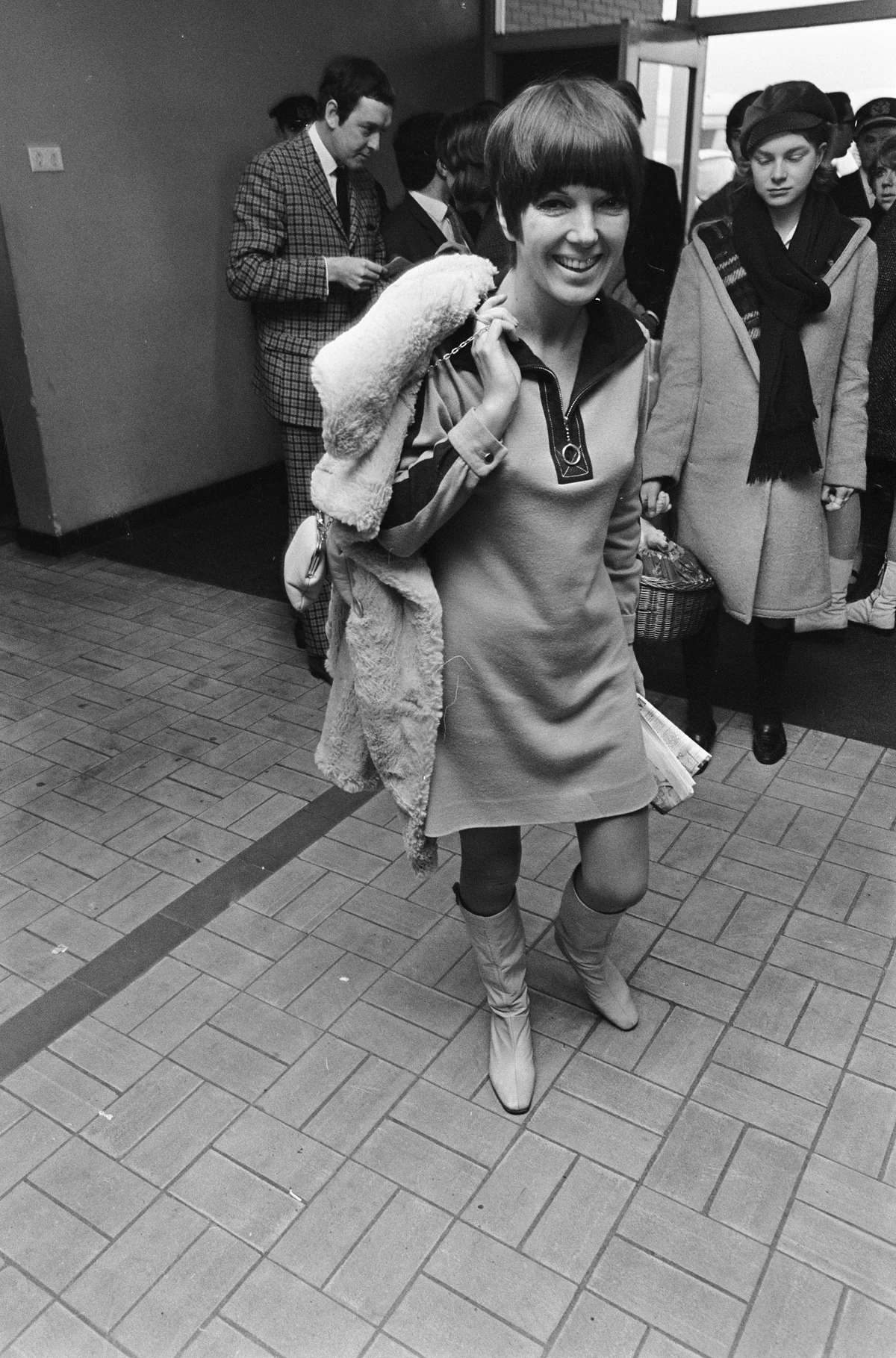
- 11. Nationaal Archief / Wikimedia CommonsMary Quant at Schiphol, 16 December 1966: complete negative 919-8890 and CC0 licence
Exact full original archival frame used, not the extracted portrait or minidress crops. Commons identifies Mary Quant, photographer Jack de Nijs/Anefo, date, archive number and CC0 release.