In this biography
Quick facts
- Born
- 10 February 1973
- Birthplace
- London, England, United Kingdom
- Country
- United Kingdom
- Nationality
- British
- Known for
- Co-founding Lastminute.com with Brent Hoberman and advocating accessible, responsible digital services
- Lastminute.com
- Co-founded with Brent Hoberman in 1998
- Flotation
- March 2000
- Public digital work
- Digital-inclusion champion from 2009; UK Digital Champion appointed in 2010
- House of Lords
- Introduced as a crossbench peer on 26 March 2013
Why this life matters
Her career connects early online commerce with the social consequences of technology. It also shows why a company’s share price, operating performance and founder’s later public service require separate examination.
Timeline
Key moments
Born in London
Born on 10 February; later studies ancient and modern history at Magdalen College, Oxford.
Lastminute.com founded
Co-founds the online travel and leisure business with Brent Hoberman; the UK website launches later that year.
Public flotation
The company enters the stock market in March, near the peak of dotcom enthusiasm.
A change in working life
Leaves executive duties in 2003, survives a serious 2004 road accident and remains on the board until the 2005 sale.
Digital inclusion and government
Takes on digital-inclusion work; her 2010 Directgov review helps set the direction for government digital reform.
Parliament and university service
Enters the Lords in 2013 and is installed as Open University chancellor in September 2014.
Doteveryone
Establishes the responsible-technology organization; it closes in 2020, passing work to other institutions.
History, consulting and a business partnership
Martha Lane Fox was born in London on 10 February 1973. She attended Oxford High School and Westminster School, then studied ancient and modern history at Magdalen College, Oxford. In her Archives of IT interview, she credits an entrepreneurial mother and an academic father with encouraging confidence and ambition. Her path into technology did not begin with a computing degree.
She joined Spectrum Strategy Consultants, working on media and communications, and later worked on Carlton’s digital initiatives. The 2000 Lastminute.com prospectus records this experience before the start-up. At Spectrum she met Brent Hoberman. Their partnership combined knowledge of media markets, negotiation and business development with the work of software specialists, suppliers and colleagues needed to turn an online idea into a service.
Lastminute.com sold time-sensitive opportunities
Lane Fox and Hoberman co-founded Lastminute.com in 1998. Its proposition brought unsold travel, leisure and entertainment opportunities to customers through a website. A room or theatre seat loses its selling opportunity when the night or performance passes. The internet offered a way to match that expiring supply with customers willing to make a late decision.
The business also required less glamorous work: supplier agreements, payment handling, customer service, brand building and reliable technology. The prospectus named Lane Fox as co-founder and chief operating officer. It is misleading to make her merely the company’s publicity face, just as it is misleading to assign its creation to her alone. Hoberman, the executive team and the organization behind the site belonged to the same operating story.
A flotation was followed by an operating test
The March 2000 flotation placed Lastminute.com among the most visible British businesses of the dotcom boom. The company announced an offer price of 380 pence per ordinary share and an initial market capitalization of about £571 million. These were prices for ownership and expectations about the future, rather than the money customers had paid for bookings or the income the company retained.
As technology shares fell, the founders’ public success became associated with disappointed expectations. Yet the company continued trading and expanding. Lane Fox left executive duties in 2003 and remained a director until its 2005 sale. The useful distinction is between the speculative market surrounding the flotation and the continuing task of running a travel business; neither story cancels the other.
Recovery changed how she worked
A serious road accident in Morocco in 2004 left Lane Fox with lasting injuries and a prolonged recovery. In a later parliamentary interview she described having to rebuild her working life. This was not a brief interruption followed by an unchanged routine. It helps explain the move towards a portfolio of business, charitable and public-service commitments.
She founded the karaoke business Lucky Voice in 2005 and developed the Antigone grant-giving foundation. Board service added experience of larger institutions. Her public account of disability and recovery also gives particular weight to questions of accessibility: a digital service may exist and still be difficult for some people to use. Access involves design, support and circumstances, as well as an available internet connection.
Digital inclusion met the machinery of government
In 2009 she became a government digital-inclusion champion; the UK Digital Champion appointment followed in June 2010. Her work encouraged people to go online and challenged public services to improve. The distinction between those dates avoids merging two related appointments. Race Online 2012 and later Go ON UK organized partnerships around the barriers facing adults without digital skills.
Her 2010 Directgov review helped set in motion the Government Digital Service and the move towards GOV.UK. The GDS account names Tom Loosemore, Transform, Directgov staff and civil servants who developed that change. Lane Fox supplied influential direction, while implementation depended on teams. Digital delivery also created an enduring policy tension: moving services online could simplify access for many people while requiring support for those still excluded.
Parliament, learning and responsible technology
Lane Fox entered the House of Lords as a crossbench life peer on 26 March 2013. She stepped down as UK Digital Champion later that year and was installed as the Open University’s sixth chancellor in September 2014. These dated milestones describe public service beyond the original start-up without assuming that every historical board or institutional role continues today.
Doteveryone, imagined in her 2015 Dimbleby Lecture, extended the argument from internet access to the consequences of technology. It investigated public expectations and encouraged responsible practice. The organization closed in 2020, passing work to the Ada Lovelace Institute and Open Data Institute. Her wider significance lies in connecting commerce with scrutiny: asking who benefits from digital change, whose experience is missed and how institutions should answer for the services they create.
Quick answers
Frequently asked questions about Martha Lane Fox
- Did Martha Lane Fox found Lastminute.com in 2000?
- She and Brent Hoberman founded it in 1998. March 2000 was the stock-market flotation, a separate event.
- Did she build GOV.UK alone?
- Her 2010 review helped establish the direction for reform. Civil servants, designers, developers, Directgov staff and the new Government Digital Service carried out the work.
- Is Doteveryone still operating?
- Doteveryone announced its closure in May 2020 and passed work to other organizations. Its preserved research should not be mistaken for an active current organization.
Keep exploring
Lives connected to this story
- Alan Sugar
Compare another entrepreneur whose commercial prominence led into government advice and the House of Lords.
- James Dyson
Contrast an online service venture with a business built around physical product development and manufacturing.
Sources and further reading
Explore the evidence
These references support the biography and offer further reading. Official records, first-person accounts and independent reporting provide different perspectives; image records document attribution and licensing.
- 1. Archives of ITInterview with Martha Lane-Fox: early life and education
Read the accessible interview’s early-life and education text; its introductory current-role wording is historical and is not treated as a 2026 role check.
- 2. The IndependentMartha Lane Fox on digital inclusion, 2010: dated biographical background
- 3. Lastminute.com plcMarch 2000 prospectus: selected operating, accounting and management passages
Read selected founding, directors, trading-model, risk and accounting passages, especially printed pp.23–31, 61 and 93. This is not a complete prospectus or audit review.
- 4. Lastminute.com plc / GlobeNewswirePricing of ADSs in Lastminute.com IPO, 14 March 2000
- 5. Lastminute.com plc / OTC Markets filing archive2002 Form 20-F: historical operating and financial statements
- 6. The GuardianLane Fox steps down as head of Lastminute, 20 November 2003
- 7. UK GovernmentMartha Lane Fox appointed UK Digital Champion, 18 June 2010
- 8. Government Digital ServiceA GDS Story: 2010
- 9. UK GovernmentMartha Lane Fox resignation letter, November 2013
- 10. UK ParliamentIntroduction of new crossbench peers, 26 March 2013
- 11. UK ParliamentHouse of Lords podcast: Martha Lane Fox on recovery and digital public service
- 12. The Open UniversityChancellor: installation on 10 September 2014
Used for the dated September 2014 installation only. Historical web biographies can retain obsolete present-tense descriptions, so no continuing chancellorship is asserted.
- 13. DoteveryoneFive years fighting for better tech for everyone: closure and transfer of work, May 2020
- 14. Wikimedia Commons / Government Digital ServiceMartha Lane-Fox at Sprint14: original upload and CC BY 2.0 licence
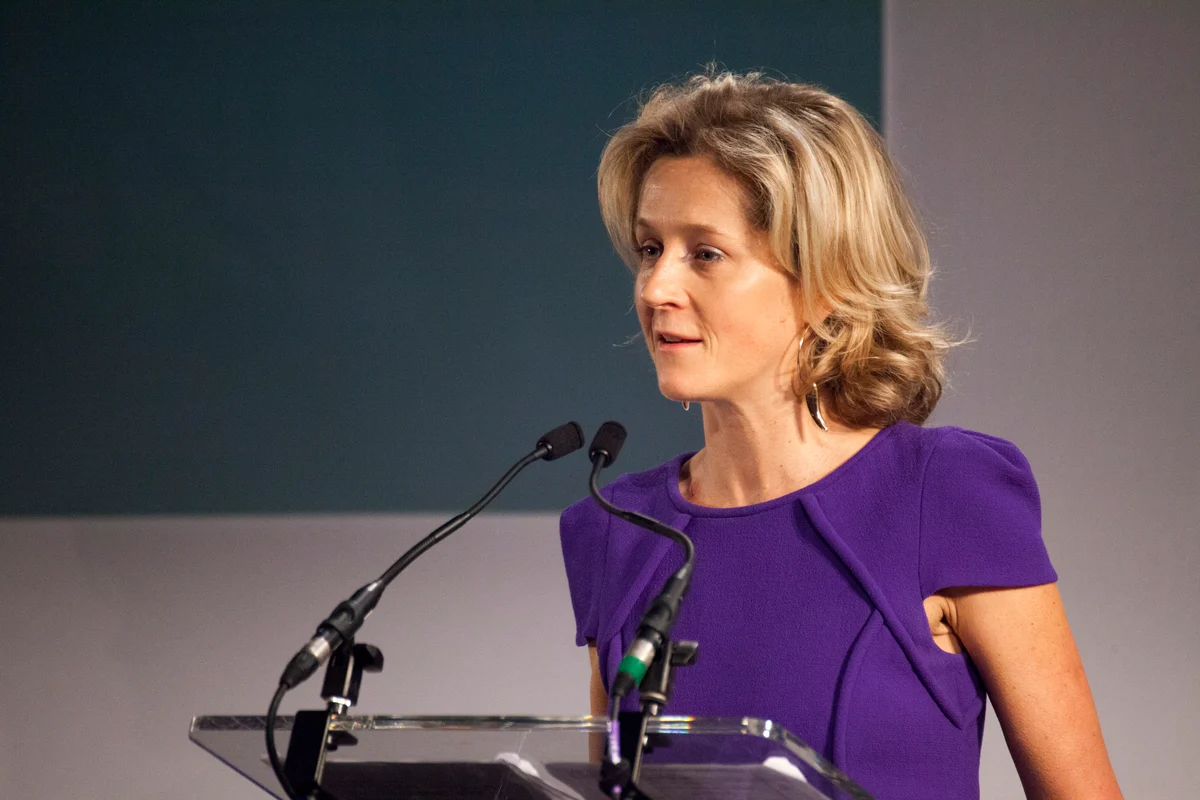
CC BY 2.0 and GDS identity checked; the pre-crop original revision is used. The 2014 speaker photograph is contextual, not an image of the 2000 flotation.
- 15. Creative CommonsAttribution 2.0 Generic