In this biography
Quick facts
- Born
- 21 September 1934
- Died
- 7 November 2016
- Birthplace
- Westmount, Quebec, Canada
- Country
- Canada
- Nationality
- Canadian
- Known for
- Suzanne, Hallelujah, Songs of Leonard Cohen, poetry and two novels
- University
- McGill University, BA 1955
- First poetry collection
- Let Us Compare Mythologies, 1956
- Novels
- The Favourite Game, 1963; Beautiful Losers, 1966
- Debut studio album
- Songs of Leonard Cohen, 27 December 1967
- Lifetime Grammy honour
- Recording Academy Lifetime Achievement Award, 2010
Why this life matters
His work allows a song to sound like a private address while its revisions, arrangements and other interpreters keep its meanings open beyond a single biography.
Timeline
Key moments
Born in Westmount
A Jewish upbringing in the Montreal area formed part of his literary and musical world.
McGill and a first book
A BA was followed by Let Us Compare Mythologies.
Novels and poems
The Favourite Game and Beautiful Losers appeared before the debut studio album.
Suzanne reaches record audiences
Judy Collins’s recording preceded Cohen’s own version on Songs of Leonard Cohen.
Hallelujah and changing production
Various Positions and I’m Your Man helped define later phases of his recording life.
A renewed touring period
Concerts returned his songs to audiences with a seasoned ensemble.
Lifetime recognition
The Recording Academy honoured his career.
A final studio album and death
You Want It Darker preceded his death in Los Angeles on 7 November.
Westmount, McGill and a first literary audience
Leonard Norman Cohen was born on 21 September 1934 in Westmount, Quebec, in the Montreal area. He grew up in a Jewish family. Religious language would remain an imaginative resource throughout his career, rather than a subject confined to one period or a single song.
He received a BA from McGill University in 1955. Student publication and the encouragement of poets and teachers helped establish an early literary audience. Let Us Compare Mythologies appeared in 1956, inaugurating the McGill Poetry Series. Music already had a place in his life: he played in the country-influenced Buckskin Boys before becoming a recording artist.
The novelist and poet before the record contract
The Favourite Game appeared in 1963 and Beautiful Losers in 1966. Poetry collections also built a Canadian reputation. The book-writing years included time on the Greek island of Hydra, a setting in the working life of a writer whose later career would cross Europe and North America.
In a 1986 BBC interview, Cohen recalled that favourable responses to his books did not provide a reliable living. His turn towards music was not the sudden acquisition of an entirely new skill: he had long sung and played guitar. He considered Nashville before New York’s folk scene offered a route towards recording.
Suzanne and the move into recorded song
Judy Collins helped bring his songs to a wider audience before his own debut album. Suzanne appeared in her repertoire and on record in 1966. Cohen’s Songs of Leonard Cohen followed on 27 December 1967, opening with his own version. His relatively late entry into the recording business followed an established literary career, not an undocumented apprenticeship as a teenage pop star.
Cohen’s account of writing emphasised revision and the interaction of words with music. A song might take months even when the result sounded direct. That is a useful corrective to the assumption that a published poem was always completed first and then simply given a tune. Publication sequence and the sequence of composition are different questions.
Arrangements, collaborators and a changing voice
Songs from a Room and Songs of Love and Hate extended the early repertoire. The sound did not remain fixed: John Lissauer’s collaborations, Phil Spector’s much denser production and the later electronic arrangements represent different working relationships. The recording credited to a singer-songwriter is still a collaboration among performers, producers and recording personnel.
Hallelujah first appeared on Various Positions in 1984, while I’m Your Man followed in 1988. The latter’s synthesised sound was not simply the early acoustic style with an older singer. Other artists’ versions subsequently gave his compositions additional lives, demonstrating that a song’s reach need not be measured only by its writer’s original recording.
Withdrawal, return and late-career recognition
A period of Buddhist practice and seclusion at Mount Baldy in California formed part of Cohen’s middle years. It sits beside his Jewish background rather than erasing it from the record. Ten New Songs appeared in 2001. Official catalogues distinguish later concert releases from new studio albums.
Financial loss was part of the return to touring, not merely a dramatic story added afterwards. In 2005 Cohen sued former business manager Kelley Lynch, alleging that millions had been removed from his savings. Pollstar reported a $9.5 million default civil judgment in 2006 after she failed to respond. That procedural outcome is not an embezzlement conviction or a verdict following a contested trial. Jake Coyle’s 2009 Associated Press concert report explicitly identifies the losses as one reason for Cohen’s renewed touring, which had begun in 2008; money was a factor, not a complete explanation of the performances’ artistic character.
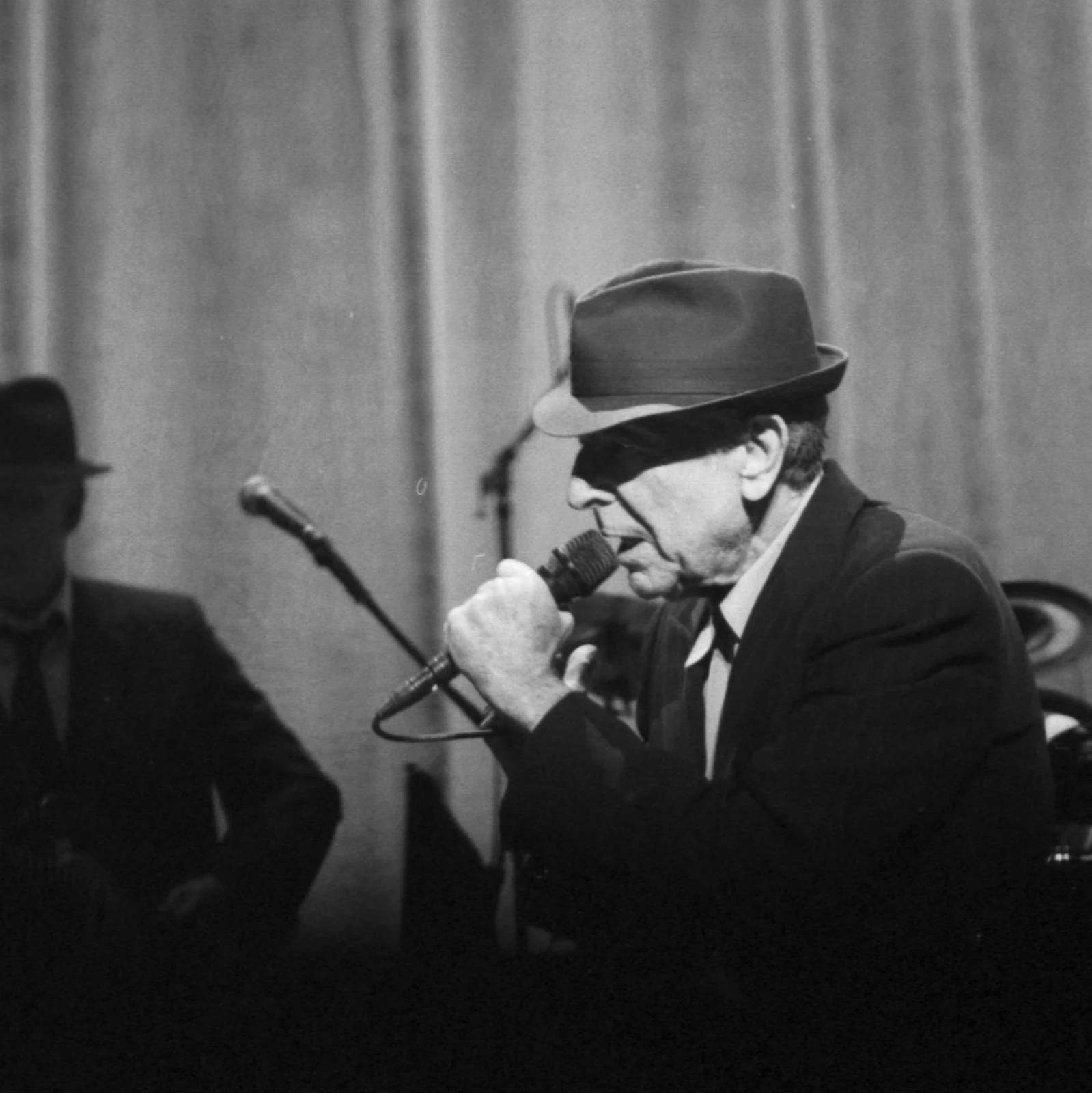
He entered the Rock and Roll Hall of Fame in 2008 and received the Recording Academy’s Lifetime Achievement Award in 2010. Literary recognition also continued: the Prince of Asturias Award for Literature and the Glenn Gould Prize came in 2011. These were different institutions recognising different dimensions of the same career, not interchangeable categories of a single music award.
Sources for this section: [6] · [7] · [11] · [12] · [5] · [3] · [1]
The final recordings and a continuing artistic life
You Want It Darker appeared in October 2016. Cohen died at home in Los Angeles on 7 November, aged 82; the public announcement followed on 10 November. Confusing the announcement with the date of death creates a misleading chronology. A posthumous Grammy for the album’s title track recognised a specific recorded performance, separate from the earlier lifetime honour.
The estate and his family have continued to present the work. In July and August 2026 the official website announced a November tribute led by Adam Cohen. At this article’s October review date those Canadian performances were scheduled, not completed, and they were family performances rather than new concerts by Leonard Cohen. His legacy also remains in books and recordings that readers and listeners can encounter without reducing their narrators to literal autobiography.
Quick answers
Frequently asked questions about Leonard Cohen
- When did Leonard Cohen die?
- He died on 7 November 2016 in Los Angeles. His death was publicly announced on 10 November; those are different dates.
- Was Leonard Cohen a writer before he became a recording artist?
- Yes. Let Us Compare Mythologies appeared in 1956, and both of his novels preceded the 1967 debut studio album.
- Did Cohen write Hallelujah?
- Yes. It first appeared on his album Various Positions in 1984. Later interpreters helped bring it to wider audiences.
- Was Suzanne first released on his 1967 album?
- Cohen’s own album version dates to 1967, but Judy Collins had recorded the song in 1966. The associated poem also appeared in 1966.
Keep exploring
Lives connected to this story
- Margaret Atwood
Explore another Canadian literary career in which poetry, narrative voice and international audiences developed across several forms.
- Elton John
Compare a different career’s division of work among lyrics, composition, performance and record production, without treating Cohen’s method as identical.
- P. K. Page
Explore a poet whose glosas make earlier writers’ lines part of a new formal response.
- Mordecai Richler
Explore another writing life connected to Montreal.
Sources and further reading
Explore the evidence
These references support the biography and offer further reading. Official records, first-person accounts and independent reporting provide different perspectives; image records document attribution and licensing.
- 1. Recording AcademyBirth, death, recorded works and Grammy distinctions
- 2. McGill ReporterNovember 2016 memorial: education, early poetry and death chronology
The memorial distinguishes 7 November death from the 10 November announcement and confirms BA 1955. Its claim that the first poetry book appeared while he was an undergraduate is not adopted.
- 3. MacmillanPublisher’s biography: books, fourteen studio albums and literary honours
- 4. Ordre national du QuébecWestmount, Jewish family background and the 2008 Grand Officer honour
- 5. Songwriters Hall of FameCareer profile: changing arrangements and late recordings
- 6. Canadian Music Hall of FameCountry music, collaborators and a period of Buddhist practice
Used for early musical activity, collaborators and Buddhist practice, not its conflicting 1968 debut-album or 2011 lifetime-Grammy dates. Official discography and Recording Academy records take priority.
- 7. Columbia/Legacy / official Leonard Cohen site2011 collection: studio and concert recordings distinguished
A 2011 catalogue, not a complete 2026 discography. Its US Various Positions listing uses February 1985; the composition’s original album year follows the Recording Academy’s 1984 record.
- 8. Official Leonard Cohen siteSongs of Leonard Cohen: 27 December 1967 and track list
- 9. BBC interview / Leonard Cohen Files transcription20 September 1986: Cohen and John Hammond on songwriting
Primary interview accessed through a named tape transcription, not the BBC audio. Its composition account is presented as Cohen’s recollection.
- 10. Official Leonard Cohen site / Adam CohenJuly–August 2026 announcements: a family-led tribute, not Cohen’s own tour
Future November 2026 tribute dates are identified as announced plans, not retrospectively reported performances.
- 11. Pollstar7 March 2006: allegations and a default civil judgment distinguished
- 12. Jake Coyle / Associated Press via The Spokesman-Review22 February 2009: financial losses and the return to touring
- 13. Wikimedia Commons / Rama2008 own-work original and CC BY-SA 2.0 France option
Rama’s own-work CC BY-SA 2.0 France grant selected; complete original frame retained. No copyrighted album artwork copied.
- 14. Judy Collins / TIME2016 recollection of hearing Cohen’s songs in 1966
- 15. Francis Mus / Canadian Review of Comparative LiteratureSuzanne as poem and song: publication and performance chronology