In this biography
Quick facts
- Born
- 28 September 1929
- Died
- 6 February 2022
- Birthplace
- Indore, Indore State, British India (now Madhya Pradesh, India)
- Country
- India
- Nationality
- Indian
- Known for
- A long multilingual playback career and Ae Mere Watan Ke Logon
- Early training
- Her father, classical singer and theatre actor Deenanath Mangeshkar
- Breakthrough recording
- Aayega Aanewala from Mahal (1949), composed by Khemchand Prakash
- Public performance
- Ae Mere Watan Ke Logon at New Delhi’s National Stadium, 27 January 1963
- Civilian honour
- Bharat Ratna, 2001
Why this life matters
Her phrasing and diction helped shape the sound of Indian popular cinema, while her career also exposed disputes over singers’ credit, earnings and influence.
Timeline
Key moments
Born in Indore
Born on 28 September and initially named Hema.
Work after her father’s death
Acted and sang in Marathi cinema while helping support her family.
Breakthrough songs
Majboor and Mahal brought wider recognition for her playback singing.
Mughal-e-Azam
Sang Naushad’s music for Madhubala’s screen performance.
A patriotic concert song
Performed the Pradeep–C. Ramchandra song Ae Mere Watan Ke Logon in New Delhi.
London concerts
Royal Albert Hall records performances in aid of the Nehru Memorial Project in Britain.
New screen generations
Continued working with younger directors and composers, including A. R. Rahman.
Honour and death
Received the Bharat Ratna in 2001; died in Mumbai on 6 February 2022.
Music and responsibility in childhood
Lata Mangeshkar was born in Indore on 28 September 1929, when the city belonged to a princely state within British India. Initially named Hema, she was the eldest of five children. Her father, Deenanath Mangeshkar, worked in classical music and Marathi musical theatre. His teaching placed singing and theatrical performance within her everyday childhood rather than treating them as distant professional ambitions.
His death in 1942 changed the family’s circumstances. Still a teenager, she took paid work and appeared in Marathi films, including Pahili Mangalagaur. Her siblings later developed musical careers of their own; Asha Bhosle became another major playback singer. Family responsibility helps explain Lata’s early employment, but her eventual profession depended on years of practice, recorded work and relationships with composers.
Finding a place in the playback studio
In Bombay, now Mumbai, Mangeshkar studied with Aman Ali Khan and received important support from composer Ghulam Haider. His work in Majboor in 1948 preceded the wider success of Aayega Aanewala in Mahal in 1949, composed by Khemchand Prakash. These recordings established a singer whose sustained notes and clear articulation could convey both intimacy and dramatic distance.
Playback separated the recorded singer from the actor shown singing on screen. Mangeshkar therefore worked within an intensely collaborative medium: a lyricist supplied words, a composer shaped melody and arrangement, musicians and engineers made a recording, and performers and directors gave it a screen life. The familiar association of her voice with Madhubala or Nargis should not erase this division of creative labour.
Different composers, different dramatic worlds
Her repertoire resisted a single emotional register. Naushad’s Pyar Kiya To Darna Kya in K. Asif’s Mughal-e-Azam placed her voice inside Anarkali’s public declaration of love. Madan Mohan’s songs for Raj Khosla’s Woh Kaun Thi?, including Lag Ja Gale, created a more intimate, uncertain atmosphere. In Guide, S. D. Burman’s music accompanied a woman’s assertion of freedom in Aaj Phir Jeene Ki Tamanna Hai.
Later collaborations reached different generations of filmgoers. Shiv–Hari’s music for Silsila and A. R. Rahman’s Jiya Jale in Dil Se and Luka Chuppi in Rang De Basanti show the breadth of those settings. Rather than reproducing one timeless screen heroine, her recordings entered changing arrangements, stories and performance styles. The songs’ continuing circulation often outlasted the original films’ theatrical lives.
Sources for this section: [3]
Languages, partners and the concert audience
Hindi cinema provided her largest public platform, but her work also included Marathi, Bengali and many other languages, devotional recordings and songs made outside film narratives. Published totals vary substantially, so no exact lifetime song count is necessary to establish that range. Her duet partners included Mohammed Rafi, Kishore Kumar, Mukesh, Manna Dey and Hemant Kumar; these were collaborations between identifiable musical personalities.
Concert performance gave the recorded voice another public setting. The Royal Albert Hall catalogue documents three March 1974 appearances for the Nehru Memorial Project in Britain. Earlier, on 27 January 1963, she had sung Ae Mere Watan Ke Logon at New Delhi’s National Stadium. Written by Kavi Pradeep and composed by C. Ramchandra after the 1962 war with China, it became closely associated with her live appearances.
Royalties and arguments about influence
Mangeshkar’s professional standing did not remove conflict over the economics of recorded music. A memoir by Mohammed Rafi’s daughter-in-law, reported by PTI, describes their disagreement about royalties: Mangeshkar sought continuing payments, while Rafi regarded the initial fee as completing the transaction. They stopped recording duets together for a period before reconciliation. The disagreement concerned working rights, not simply a personal feud.
Her dominance also attracted criticism. The BFI obituary records allegations that she and Bhosle restricted opportunities for other female singers, alongside Mangeshkar’s rejection of that claim. An accusation of monopoly is not proof that every casting decision originated with the sisters. Their influence operated within an industry in which producers and composers also selected voices and controlled employment.
Honours and a recorded legacy
National recognition included three National Film Awards, the Dadasaheb Phalke Award and the Bharat Ratna, awarded in 2001. Those honours acknowledge a career spanning film and non-film recording, but its most accessible archive remains the work itself: particular songs, named collaborators and performances that listeners can compare across decades. Her vocal identity was durable without requiring every recording to sound alike.
Mangeshkar died at Mumbai’s Breach Candy Hospital on 6 February 2022, aged 92. The government announced two days of national mourning and a state funeral. Her career joins several histories: Marathi theatre and cinema, the rise of playback as a specialised profession, multilingual popular recording, international concerts and arguments about who benefits when a song is replayed long after its first release.
Quick answers
Frequently asked questions about Lata Mangeshkar
- What was Lata Mangeshkar’s original name?
- She was initially named Hema. Lata Mangeshkar became her established name and professional identity.
- What does playback singer mean?
- A playback singer records a song that an actor performs to on screen. The recorded voice and the visible screen performer can therefore be different people.
- Did she sing only in Hindi?
- No. Her recordings included Marathi, Bengali and numerous other languages, alongside devotional and non-film music.
- When did Lata Mangeshkar die?
- She died in Mumbai on 6 February 2022, aged 92. She had received the Bharat Ratna in 2001.
Keep exploring
Lives connected to this story
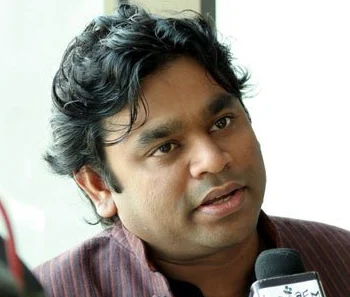
- A. R. Rahman
Read about the composer with whom she recorded Jiya Jale and Luka Chuppi.
- Satyajit Ray
Explore another filmmaker’s relationship between music, performance and the screen.
- Kishore Kumar
Read a contemporary performer’s career in the collaborative system of playback singing.
Sources and further reading
Explore the evidence
These references support the biography and offer further reading. Official records, first-person accounts and independent reporting provide different perspectives; image records document attribution and licensing.
- 1. British Film Institute / Naman RamachandranLata Mangeshkar, 1929–2022: career and industry disputes
Read career, collaborators and professional-dispute paragraphs. Its Red Fort location for the 1963 song conflicts with detailed IANS anniversary reporting; National Stadium is used. Approximate recording totals and the simplified copyright-law account are not repeated.
- 2. Ministry of Information and Broadcasting / PIBLata Mangeshkar death announcement and honours
Read the government death announcement and career summary. Sources differ about the earliest Hindi recording and its release year, so no disputed first-Hindi-song claim is made.
- 3. The Indian ExpressLata Mangeshkar’s iconic songs: composers and screen contexts
- 4. PTI / NDTVMohammed Rafi and Lata Mangeshkar: memoir account of royalties disagreement
Read PTI’s report of Yasmin Khalid Rafi’s memoir; the disagreement is attributed to that account. Its compressed reconciliation chronology is not used.
- 5. Royal Albert Hall ArchiveLata Mangeshkar performances, March 1974
- 6. IANS / NDTVAe Mere Watan Ke Logon: fiftieth-anniversary history
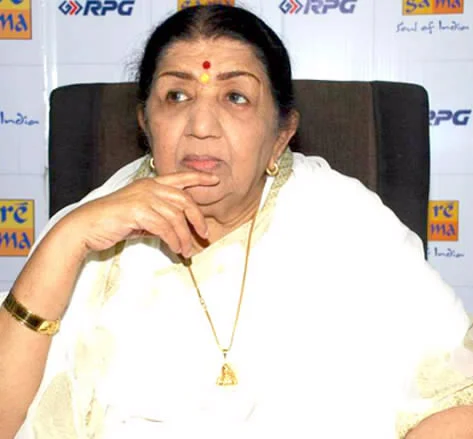
- 7. Wikimedia Commons / Bollywood HungamaLata.Mangeshkar.jpg: exact photograph and permission record
Exact photograph record and original source review read; full supplied frame retained under CC BY 3.0.
- 8. Bollywood HungamaSaregama album launch: original photograph source recorded by Commons