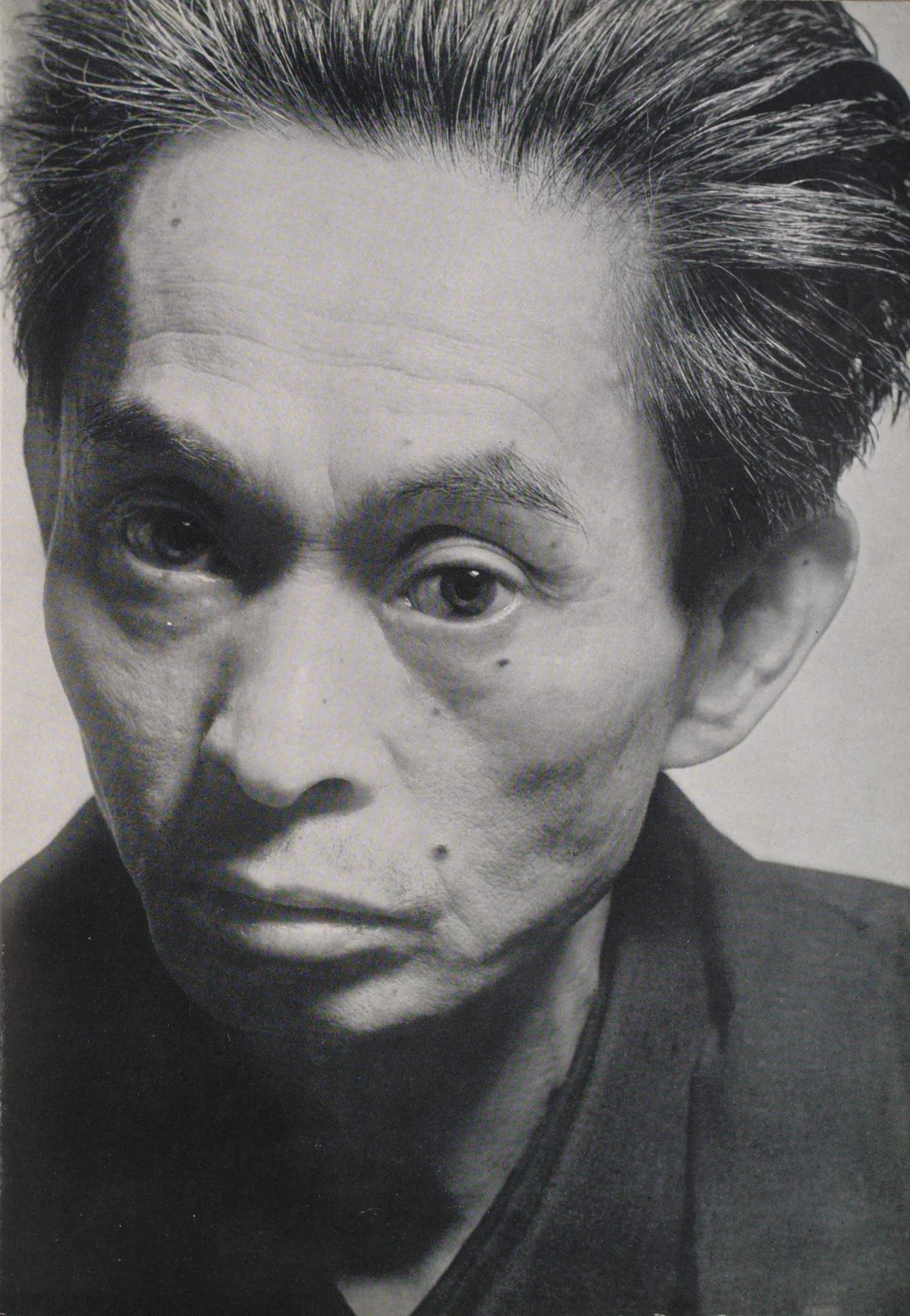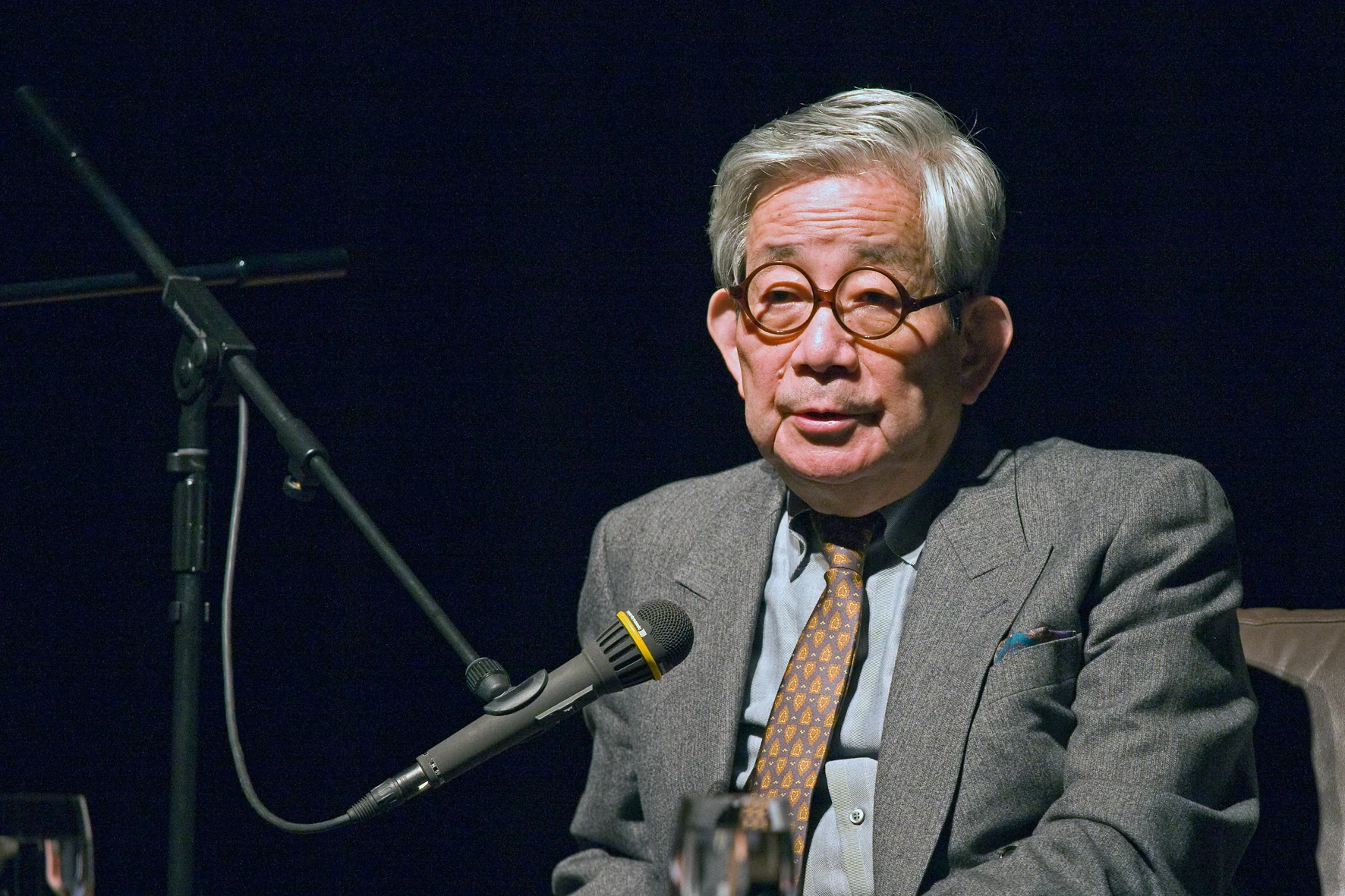
In this biography
Quick facts
- Born
- 31 January 1935
- Died
- 3 March 2023
- Birthplace
- Ōse, Ehime Prefecture, Japan; now part of Uchiko
- Country
- Japan
- Nationality
- Japanese
- Known for
- Postwar Japanese fiction, A Personal Matter and the 1994 Nobel lecture
- Studies
- French literature, University of Tokyo; pupil of Kazuo Watanabe
- Akutagawa Prize
- 1958, for Shiiku, translated as The Catch or Prize Stock
- Nobel Prize
- Literature, 1994
- Archive
- Manuscripts entrusted to the University of Tokyo in 2021
Why this life matters
Oe made the difficult relationship between private suffering and public responsibility central to a body of fiction and essays that travelled across languages.
Timeline
Key moments
Born in Shikoku
Born on 31 January in Ōse, now within Uchiko.
French literature studies
Entered the University of Tokyo’s French literature department.
University newspaper debut
The Strange Work appeared in The University of Tokyo Newspaper.
Akutagawa Prize
Received the prize for Shiiku.
A Personal Matter
Published the novel following the birth of his son Hikari.
Hiroshima Notes
Published essays about atomic-bomb survivors and their circumstances.
Nobel Prize and lecture
Delivered his Nobel lecture on 7 December.
Manuscript archive
Entrusted manuscripts and related materials to the University of Tokyo.
Death
Died on 3 March.
A forest village and competing stories
Kenzaburo Oe was born on 31 January 1935 in Ōse, a village in Ehime on the island of Shikoku, now part of Uchiko. His Nobel biographical account places the storytelling of his mother and grandmother alongside the national myths taught in wartime schools. The village supplied a world of its own, rather than a picturesque background left behind when he became a writer. Japan’s defeat in 1945 changed the terms of his education. The movement from imperial authority to democratic ideals became an enduring problem of belief and responsibility in his subsequent work.
French literature and an early public audience
Oe moved to Tokyo and entered the University of Tokyo’s French literature department in 1954. Kazuo Watanabe, a scholar and translator of Rabelais, became an important teacher. Reading across languages offered resources for reworking local stories rather than simply abandoning them. While still a student, Oe published The Strange Work in The University of Tokyo Newspaper in 1957. A university account identifies its May Festival prize and the attention it attracted from critic Ken Hirano. In 1958 his short story Shiiku won the Akutagawa Prize, establishing a literary career before his university years had ended.
Family experience changed the scale of his writing
The birth of his son Hikari, who had a disability, altered Oe’s family life and literary concerns. A Personal Matter appeared in 1964; Hiroshima Notes followed in 1965. The Nobel biography connects the family’s decisions with Oe’s attention to people living with the consequences of the atomic bombing. These connections do not make a fictional father identical to the author or turn a novel into a documentary record. They show how he carried intimate dilemmas into questions of coexistence and social obligation. Hikari also developed an independent creative life as a composer.
Sources for this section: [2]
The Nobel Prize recognised a body of work
The Swedish Academy announced Oe’s literature prize on 13 October 1994. Its presentation discussed his fiction, short stories and essays, including The Silent Cry, published in 1967. The Academy interpreted his imagined worlds through the relationship between individual experience and common human problems. That award statement is a contemporary institutional reading, rather than an exhaustive explanation of the books. It helps establish why Oe’s regional settings, international literary influences and family concerns were being considered together. The prize recognised his writing across works, rather than awarding a separate prize to one novel.
Sources for this section: [3]
A lecture addressed Japan and its listeners
Oe’s Nobel lecture of 7 December 1994 examined language, modernisation and the obligations of a postwar writer. He approached Yasunari Kawabata’s earlier lecture with both admiration and disagreement. His own argument placed Japan’s economic achievement beside its history of aggression and its commitment to peace. He also spoke about Watanabe’s humanism and Hikari’s music. The lecture is a useful entry into his public thinking because a reader can follow a complete, bounded argument in his own words. Its personal examples support that argument without standing in for the full range of his fiction.
Sources for this section: [4]
Manuscripts extended the work of reading
Oe maintained ties with his university long after becoming an internationally recognised writer. In January 2021 he entrusted roughly 18,000 items, including handwritten manuscripts, to its Faculty of Letters. The university’s 2023 memorial also recalled his concern with nuclear disarmament and the rights of people with disabilities. He died on 3 March 2023. The later university discussion of his early writing demonstrates what an archive makes possible: comparing versions, publication circumstances and critical interpretations. His legacy therefore includes both an influential body of literature and materials through which readers can question how that literature was made.
Quick answers
Frequently asked questions about Kenzaburo Oe
- When was A Personal Matter published?
- 1964. The Nobel biographical account and 1994 prize announcement support that date.
- What does Oe’s 1994 lecture offer a new reader?
- A bounded statement of his thinking about language, family, humanism and Japan’s responsibilities after the war.
Keep exploring
Lives connected to this story
- Yasunari Kawabata
Read the earlier Nobel laureate whom Oe addresses in his own lecture.
Sources and further reading
Explore the evidence
These references support the biography and offer further reading. Official records, first-person accounts and independent reporting provide different perspectives; image records document attribution and licensing.
- 1. Nobel PrizeKenzaburo Oe: dates and place
The Life paragraph incorrectly dates A Personal Matter to 1962. The 1964 date is supported by the Nobel biographical account and original 1994 Academy announcement; the erroneous fact-page date is not adopted.
- 2. Nobel FoundationBiographical account, published with the 1994 prize
- 3. Swedish Academy / Nobel PrizeSwedish Academy announcement, 13 October 1994
The press release gives study through 1958, which is not used as a graduation year. This draft states subject and institution without inventing an earned-degree date.
- 4. Kenzaburo Oe / Nobel FoundationJapan, The Ambiguous, and Myself, manuscript version
Actual English manuscript page acquired and read. Translation and arguments are attributed to the lecture; no complete novel reading is claimed.
- 5. University of TokyoOn the passing of Kenzaburo Oe, 23 March 2023
- 6. University of TokyoKenzaburo Oe’s debut work and manuscript collection, 25 October 2024