
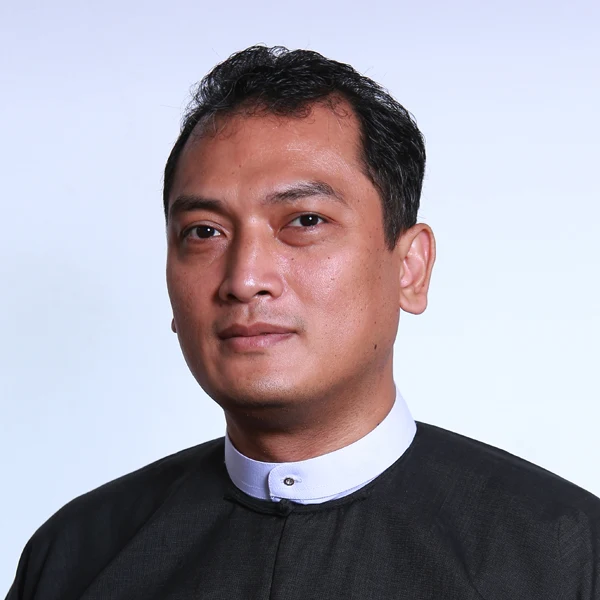
In this biography
Quick facts
- Born
- Not reliably established
- Birthplace
- Not reliably documented
- Country
- Myanmar
- Nationality
- Not independently established
- Known for
- Parami’s engineering services, LPG infrastructure and rural electricity projects
- Company beginnings
- Parami began as an engineering service provider in 2004
- Education
- Engineering degree from Yangon Institute of Technology; MBA from the National University of Singapore
- LPG infrastructure
- Parami leased state-owned facilities at Thanlyin and reported an upgrade completed in 2020
- Rural power
- Yesagyo’s first mini-grid phase connected 1,442 households in December 2019
Why this life matters
His business record illustrates the different technical, financing and distribution problems involved in supplying energy to industrial clients, urban households and off-grid communities.
Timeline
Key moments
Parami’s engineering beginnings
Started the service business that developed into a broader energy group.
Explained the local-partner model
Described Parami’s services for foreign energy companies and minority participation in an onshore exploration partnership.
Educational organisation
A contemporary account described his involvement with monastery-school conferences and a foundation supporting education.
LPG facilities lease
Oxford Business Group dates Parami’s lease of state-owned Thanlyin jetty, terminal and storage facilities to this month.
Yesagyo first phase
A solar mini-grid with 288-kilowatt peak capacity began serving 1,442 households.
Terminal upgrade reported complete
Parami announced completion of its Thanlyin LPG import-and-storage upgrade.
Engineering, enterprise and educational interests
Ken Tun, also known as Pyae Wa Tun, founded Parami Energy, whose business began in 2004 as an engineering service provider. A 2014 investment-outreach biography records an engineering degree from Yangon Institute of Technology and an MBA from the National University of Singapore, combining a technical background with business training.
His public activities also extended to education. A contemporary 2017 account described his involvement in conferences for teachers and leaders of Myanmar’s monastery schools, alongside a foundation intended to support schools and graduates through social enterprises. These initiatives formed a separate strand of his work rather than an automatic consequence of the company’s commercial energy projects.
Local services and international energy partnerships
In a July 2014 interview with The Irrawaddy, Ken explained Parami’s role supplying services to international oil and gas companies. He argued that local companies could contribute knowledge of Myanmar while overseas partners supplied technology and capital. That model positioned Parami between specialised foreign operators and the practical requirements of working locally.
He also described minority investment in an onshore exploration partnership, distinguishing Parami’s participation from the foreign company’s lead operating role. His wider argument concerned the limited place of domestic firms in the industry and the need for technology-sharing and balanced partnerships. Exploration interests and commercial ambitions did not themselves establish a producing field, proven reserves or personal ownership of a partner’s assets.
Sources for this section: [2]
LPG infrastructure and the problem of distribution
Parami later expanded into household fuel supply. Oxford Business Group records its December 2017 lease of state-owned LPG facilities at Thanlyin, including a jetty, terminal and storage infrastructure. In February 2020 the company reported that its terminal upgrade was complete, linking imports and storage with cylinders and a distribution network.
The commercial challenge was not simply obtaining fuel. In a 2020 interview, Ken emphasised underdeveloped storage and distribution, rural delivery costs and the danger of price competition undermining safety. LPG was a fossil-fuel cooking alternative to biomass and grid electricity, distinct from renewable generation. The lease and upgrade also remained separate from outright ownership of the state’s facilities.
A first mini-grid phase at Yesagyo
Rural electricity offered a different business model. A December 2019 report recorded 1,442 households connected to the first phase of Parami’s Yesagyo Island mini-grid. Its 288-kilowatt peak solar installation used diesel backup. Financing combined World Bank-supported funds channelled through the Department of Rural Development, Parami’s contribution and payments from participating villagers.
Later phases were intended to extend service to 4,097 households, but that larger figure was a plan in the selected account, not its completed first-phase result. Ken’s 2020 discussion of mini-grids acknowledged their commercial difficulties, including competition with subsidised grid tariffs. Together, these records show an effort to combine engineering, finance and local distribution without assuming that every proposed expansion was delivered or remains operational today.
Quick answers
Frequently asked questions about Ken Tun
- Who is Ken Tun?
- He is the founder of Myanmar’s Parami Energy, also documented as Pyae Wa Tun. Selected records identify him as chief executive during the group’s engineering and energy activities.
- What businesses did Parami develop?
- Its documented activities include engineering and oilfield services, exploration partnerships, LPG import and distribution infrastructure, and rural solar mini-grids.
- Did the first Yesagyo phase serve more than 4,000 households?
- No. The December 2019 account reported 1,442 connected households. The 4,097 figure described the intended coverage of later phases.
- Does the Thanlyin contract prove ownership of the terminal?
- No. The selected reporting describes a lease of state-owned facilities, followed by an upgrade managed by Parami, not an outright purchase of the state’s assets.
Keep exploring
Lives connected to this story
- Zaw Naing Thein
Compare another Myanmar technical-business career involving power projects and international partnerships.
- Musa Adnin
Explore a Brunei engineering-business career built around local capabilities and international technical partners.
Sources and further reading
Explore the evidence
These references support the biography and offer further reading. Official records, first-person accounts and independent reporting provide different perspectives; image records document attribution and licensing.
- 1. Peninsula Press · Myanmar Investment Outreach 2014Ken Tun: featured-speaker biography
Complete 2014 event biography read. Supports the company’s 2004 engineering beginnings and the two specified degrees. Leadership is historical; school/tree targets and promotional financial totals are not reported as accomplished outcomes or personal wealth.
- 2. The Irrawaddy · Kyaw Hsu Mon · 28 July 2014 · Parami archiveTime for an Energy Boost: interview with Ken Tun
Complete company-hosted republication of the 28 July 2014 Irrawaddy interview read. Supports the Pyae Wa Tun alias, local-service model and described minority onshore investment. His estimates and policy arguments remain attributed, not independent audits or proof of producing reserves.
- 3. Forbes · John Koppisch · 28 June 2017 · Parami archiveAsia’s 2017 Heroes of Philanthropy: Ken Tun entry
Full relevant Ken Tun entry and source attribution read in the company archive. Used for founder identification and specific educational activities, not ranking prestige, a wealth estimate, an inferred birth year or proof that all donation/tree targets were met.
- 4. Oxford Business Group · The Report: Myanmar 2019LPG uptake, investment and infrastructure
Complete article text returned by the web reader, lines 42–56, read. Dates the state-facility lease to December 2017. Forecast terminal throughput and government cooking-fuel targets are omitted as achieved results; neighbouring companies’ facilities are not assigned to Parami.
- 5. Parami Energy · February 2020LPG Import Terminal Upgrade Completed
Complete company statement read; news index dates it 17 February 2020. An attributed terminal-upgrade completion, not independent proof of current 2026 throughput or state-asset ownership. Its ‘clean’/transition-fuel promotional language is not adopted as a verified environmental conclusion.
- 6. Oxford Business Group · The Report: Myanmar 2020Ken Tun on the LPG ecosystem and localised generation
Complete interview text returned by the web reader, lines 44–58, read. Preserves his assessment of infrastructure, safety and mini-grid economics as a 2020 viewpoint, not contemporary verified tariffs or market penetration.
- 7. The Myanmar Times · December 2019 · Parami archiveParami brings solar power to Yesagyo Island
Complete newspaper republication read. The news index dates the item 30 December 2019. First phase: 1,442 households and 288 kWp; proposed later coverage: 4,097. World Bank-supported programme finance, Parami funds and villagers’ contributions remain separate. No completion of later phases or 2026 operating status inferred.
- 8. Wikimedia Commons · Personal82Ken Tun Headshot.jpg: original photograph and CC BY-SA 4.0 licence
Complete original Commons revision 1168067722, imageinfo and supplied metadata read. Own-work creator Personal82 explicitly grants CC BY-SA 4.0; no embedded artist or reserved-copyright contradiction and no VRT claimed. The 24 January 2017 digitisation/modification fields do not establish camera capture time; alt is undated. Root inspected the actual identified headshot and retained its entire native 600×600 square without crop or enlargement, with conversion and share-alike notice.

