In this biography
Quick facts
- Born
- 17 April 1837
- Died
- 31 March 1913
- Birthplace
- Hartford, Connecticut, United States
- Country
- United States
- Nationality
- American
- Known for
- Financing industrial consolidation, organizing private credit during the Panic of 1907 and assembling major art and manuscript collections
- Banking partnership
- Drexel, Morgan & Co., formed with Anthony Drexel in 1871
- Firm renamed
- J. P. Morgan & Co., 1895
- Industrial consolidation
- Helped organize United States Steel in 1901
- Different person
- His son J. P. Morgan Jr. lived from 1867 to 1943
Why this life matters
Morgan’s career shows how access to capital could shape corporate management and national economic policy. His ability to organize cooperation also concentrated private influence, provoking antitrust action and congressional investigation.
Timeline
Key moments
Born in Hartford
John Pierpont Morgan is born into the family of businessman Junius Spencer Morgan.
New York banking
Begins work at Duncan, Sherman & Co., developing a career connecting American business with international finance.
A banking partnership develops
Partners with Anthony Drexel in 1871; the New York firm becomes J. P. Morgan & Co. in 1895.
Consolidation and its limits
Helps organize U.S. Steel and Northern Securities; the Supreme Court upholds antitrust relief against Northern Securities in 1904.
Emergency credit
Coordinates financial institutions and industrial interests during a panic; clearing-house measures and gold inflows also contribute to stabilization.
Scrutiny and death
Testifies in the Pujo Committee’s money-trust investigation before his death in Italy on 31 March 1913.
An inherited entry into international banking
John Pierpont Morgan was born in Hartford, Connecticut, on 17 April 1837. His father, Junius Spencer Morgan, built a banking career in London. Pierpont entered finance with family connections and access to established business relationships. His later power grew from this starting position as well as from his ability to organize investors and negotiate difficult transactions.
He began working at Duncan, Sherman & Co. in New York in 1857 and subsequently represented the London interests associated with George Peabody and his father. In 1871 he joined Anthony Drexel in Drexel, Morgan & Co. The partnership served as a channel for European investment in the United States. After Drexel’s death, the New York firm was reorganized as J. P. Morgan & Co. in 1895.
Railroads, corporate control and industrial combinations
Railroads needed large sums for construction, equipment and debt. Morgan’s firms participated in reorganizations that changed both financing and control. The banking house and its predecessors worked on companies including the Erie, Reading, Northern Pacific and Baltimore & Ohio. These transactions made investment banking a source of influence over the management of businesses far beyond the bank itself.
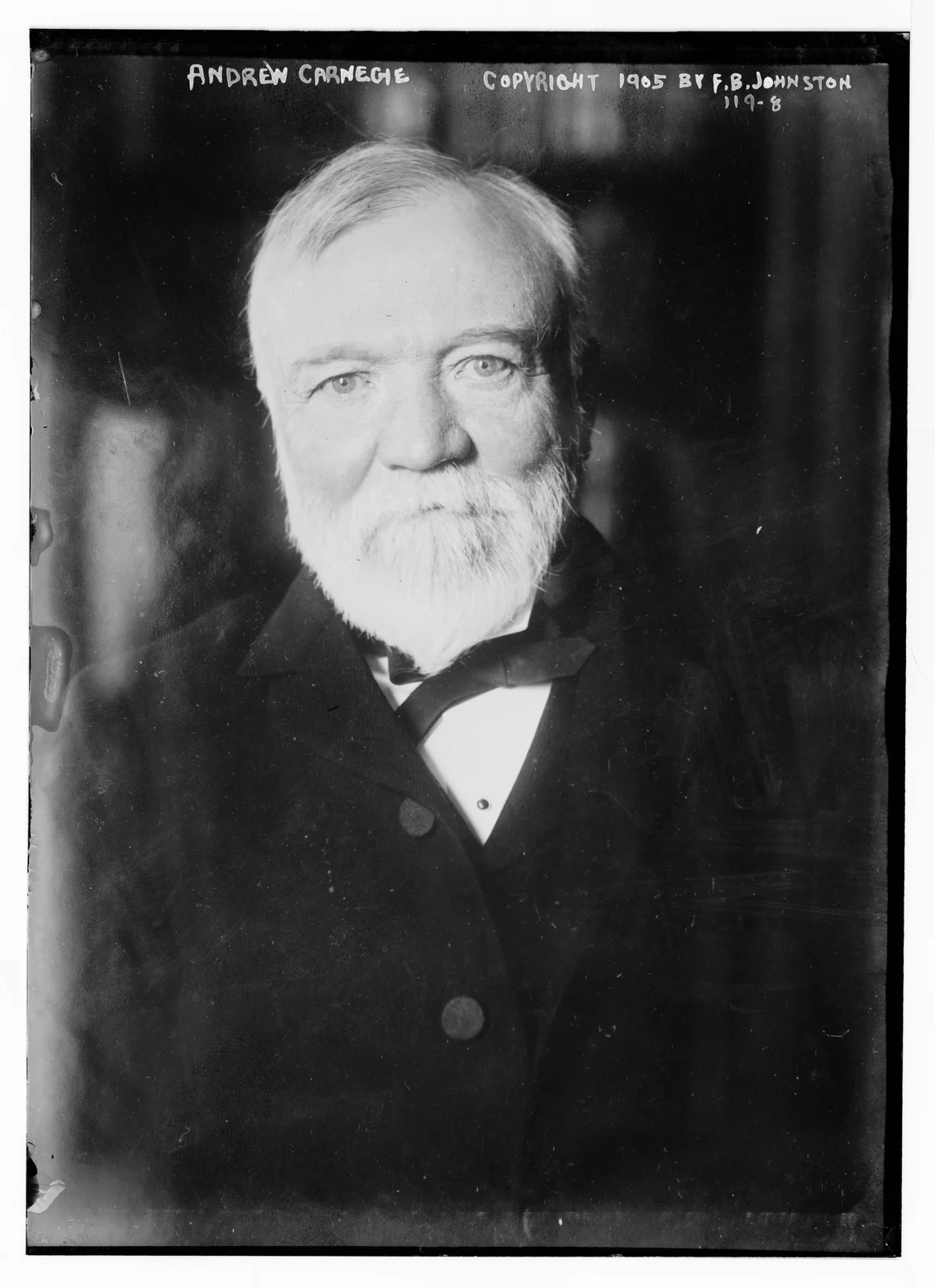
That approach extended into manufacturing and electricity. Morgan’s firm helped organize the combinations that created General Electric and, in 1901, United States Steel. The steel transaction brought together Andrew Carnegie’s business and other producers. Morgan was a financier and organizer of these combinations; he did not personally invent their technologies or perform the work of the engineers, managers and industrial workers who operated them.
Financial organization could support rescue and restrict competition
Morgan also organized cooperation when institutions faced a loss of confidence. In 1890 he persuaded nine New York banks to extend assistance to the Bank of North America. The episode demonstrated that emergency support could depend on assembling a group willing to share risk. His involvement in the Treasury’s 1895 gold crisis further increased his reputation as a financier whose private network could meet public emergencies.
The same concentration of influence attracted opposition. Northern Securities joined control over competing northern railway systems through a holding company. In March 1904 the Supreme Court upheld antitrust relief against the arrangement. The decision addressed the suppression of competition through shared ownership and control. A combination’s financial strength and organizational convenience did not place it beyond the reach of federal law.
The Panic of 1907 required a coalition
In October 1907 runs spread from troubled financial institutions to New York trust companies. Morgan requested an examination of Knickerbocker Trust, but Benjamin Strong could not establish its solvency in the time available. Morgan withheld support, and Knickerbocker suspended operations. His decisions therefore included refusing assistance, not simply rescuing every institution that approached him.
He subsequently mobilized support for other institutions and obtained funds from financial and industrial interests to sustain lending at the New York Stock Exchange. Clearing-house loan certificates, restrictions on cash payments by clearing-house banks and gold arriving from abroad also mattered. Presenting the outcome as Morgan singlehandedly saving the economy hides these mechanisms and participants. The crisis helped drive reform, culminating after his death in the Federal Reserve Act of December 1913.
The money-trust investigation questioned private authority
Morgan’s visibility during a crisis did not settle the question of who should exercise economic power. The Pujo Committee, a subcommittee of the House Banking and Currency Committee, investigated the so-called money trust in 1912–1913. Morgan appeared as a prominent witness. The inquiry examined relationships between banks, corporations and the people who held seats on their boards.
Interlocking directorships allowed influence to extend across formally separate companies. The National Archives preserves a diagram prepared for the investigation showing those connections. Such evidence helps explain contemporary concern without assuming that Morgan literally owned the entire economy. The inquiry belonged to wider Progressive Era arguments over competition, accountability and the proper relationship between private finance and public authority.
Collections, a public library and a distinct family successor
Morgan collected books, manuscripts, paintings and other art, and served as president of the Metropolitan Museum of Art from 1904 until 1913. These activities connected financial wealth with cultural institutions. His private library later became the basis of a public research institution, but that transformation involved other people and continued after his lifetime.
He died in Italy on 31 March 1913. In 1924 his son, John Pierpont Morgan Jr., known as Jack, established the library as a public institution with librarian and first director Belle da Costa Greene. Father and son should not be confused, nor should Pierpont’s partnership be treated as identical to modern JPMorgan Chase. The modern company emerged through many later mergers and predecessor institutions. Morgan’s legacy includes both enduring cultural resources and unresolved arguments about concentrated financial power.
Quick answers
Frequently asked questions about J. P. Morgan
- Was J. P. Morgan the same person as J. P. Morgan Jr.?
- No. John Pierpont Morgan lived from 1837 to 1913. His son, John Pierpont Morgan Jr., or Jack, lived from 1867 to 1943 and continued the family’s banking and cultural work.
- Did Morgan save the financial system alone in 1907?
- No. He coordinated important emergency lending, but other bankers, industrial interests, the New York Clearing House and international gold inflows also contributed to stabilization.
- What was Morgan’s role in U.S. Steel?
- His firm helped organize and finance the 1901 combination of Andrew Carnegie’s steel business and other producers. Morgan’s role was financial and organizational.
- Why was Morgan investigated by Congress?
- The Pujo Committee investigated concentrated financial influence in 1912–1913, including interlocking directorships connecting banks and major corporations. Morgan was a prominent witness.
Keep exploring
Lives connected to this story
- Andrew Carnegie
Follow the steelmaker whose business became a central part of the 1901 U.S. Steel combination.
- Thomas Edison
Explore the electrical inventor whose enterprises illustrate the connection between invention, finance and industrial organization.
Sources and further reading
Explore the evidence
These references support the biography and offer further reading. Official records, first-person accounts and independent reporting provide different perspectives; image records document attribution and licensing.
- 1. Library of CongressBanker J. P. Morgan Born: short guide and selected bibliography
Read the short guide and targeted bibliography. Its authority subject heading uses Pierpont; its narrative uses Pierpoint and loosely says Morgan purchased U.S. Steel from Carnegie. The profile uses the standard name and describes Carnegie’s business joining the new 1901 corporation, cross-checked with the historical Britannica account. No full listed book or hearing reading is claimed.
- 2. Harvard Business SchoolMorgan Hall: About the Name
- 3. Harvard Business School, Leadership InitiativeJohn P. Morgan Jr.: identity, father and 1867–1943 lifespan
- 4. Encyclopædia Britannica, historical text via WikisourceMorgan, John Pierpont: banking career and corporate combinations
- 5. Federal Reserve HistoryBanking Panics of the Gilded Age — Gary Richardson and Tim Sablik
- 6. Federal Reserve HistoryThe Panic of 1907 — Jon R. Moen and Ellis W. Tallman
Read the sequence of aid decisions and stabilization mechanisms. Distinguishes the suspension of Knickerbocker from permanent failure and credits clearing-house action and gold inflows alongside Morgan.
- 7. Federal Reserve Bank of Kansas City / Federal Reserve HistoryFederal Reserve Act Signed into Law
- 8. U.S. Supreme Court, transcribed by JustiaNorthern Securities Co. v. United States, 193 U.S. 197 (1904)
Read the original Supreme Court syllabus and relevant control/competition passages in this transcription. The profile gives the historical holding, not modern legal guidance or a claim to have reviewed every pleading.
- 9. National ArchivesCongress and the Money Trust
- 10. Museums Association / Colin B. Bailey, Morgan Library directorAccess is key for the Morgan Library & Museum, 29 October 2024
First-person institutional account by Morgan director Colin B. Bailey supports the 1924 public institution and the roles of Jack Morgan and Belle da Costa Greene. The museum’s own main site returned 403 during this research; it is not represented as fully read.
- 11. JPMorganChase Corporate History ProgramHistory: predecessor institutions and corporate archives transcript
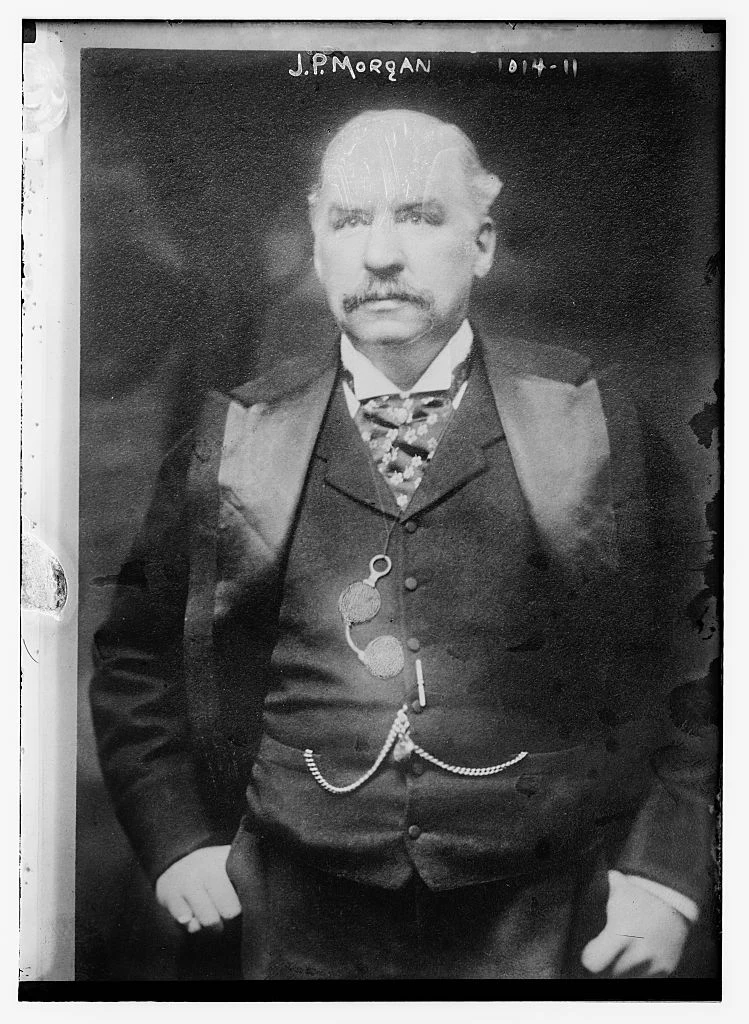
- 12. Library of CongressJ.P. Morgan, Bain negative LC-DIG-ggbain-04719
Exact Bain item identifies the publisher and negative; no exact creation date or individual photographer is recorded. Reuse relies on its item advisory and the collection policy, not government hosting or a guessed publication date. The archived 749 × 1024 Commons JPEG was visually inspected and retained; the later Commons version labeled an upscale was excluded.
- 13. Library of CongressGeorge Grantham Bain Collection: Rights and Restrictions Information