In this biography
Quick facts
- Born
- 7 June 1929
- Died
- 19 September 2020
- Birthplace
- Richmond, Surrey, England
- Country
- Canada
- Nationality
- Canadian
- Known for
- Federal justice reform, the 1984 Liberal leadership and opposition to the 1988 free-trade agreement
- University
- University of British Columbia, honours BA 1949; Rhodes scholar at Oxford
- Justice minister
- 1968–1972
- Finance minister
- 1972–1975
- Prime minister
- June–September 1984
- Later constituency
- Vancouver Quadra, 1984–1993
Why this life matters
Turner linked the reforming Liberal governments of the 1960s and 1970s with the constitutional and trade debates that shaped opposition politics in the 1980s.
Timeline
Key moments
Education and law
Born in Richmond, England; grows up in Canada, graduates from UBC, studies at Oxford and qualifies for the Quebec bar.
Parliament and cabinet
Elected in Montreal; joins Pearson’s cabinet and contests the 1968 Liberal leadership.
Justice and finance
Serves in Trudeau’s cabinet, first in justice and then finance, before resigning in 1975.
Leadership and a short premiership
Wins the Liberal leadership on 16 June, becomes prime minister on 30 June and loses government after the September election.
Opposition and Parliament
Leads opposition to Mulroney, campaigns against the free-trade agreement and remains an MP after leaving the leadership.
Death and commemoration
Dies on 19 September; a state funeral follows in Toronto.
Education and athletics preceded a Montreal legal career
John Napier Wyndham Turner was born in Richmond, Surrey, England, on 7 June 1929. After his father’s death, his mother brought the family to Canada. His upbringing included British Columbia and Ottawa. At the University of British Columbia he combined an honours BA, completed in 1949, with student journalism and competitive sprinting.
He qualified for Canada’s 1948 Olympic team but a knee injury prevented participation. A Rhodes scholarship took him to Oxford, where he studied law; further study in Paris did not lead to a completed doctorate. He returned to Canada and was called to the Quebec bar in 1954. His legal practice in Montreal came before his election to the Commons.
Parliament brought responsibility for legal reform
Turner first won a Montreal seat in 1962 and joined Lester Pearson’s cabinet in 1965. He held several responsibilities, including consumer and corporate affairs, before running for the Liberal leadership in 1968. Pierre Trudeau won that contest, but Turner remained a senior figure in the governing party.
As justice minister from 1968 to 1972, he helped carry a substantial reform program through Parliament. UBC’s honorary citation highlights his role in creating the Federal Court and the Law Reform Commission. The latter institutionalized research into changes to federal law. This part of his record concerns the machinery of legal reform as well as the better-known changes to criminal law associated with the period.
The finance ministry ended with a departure from cabinet
Turner became finance minister in January 1972, serving during inflation and international economic disruption. His political position combined support for social programs with concern about what government could afford. Historian Paul Litt presents that balance between social objectives and fiscal responsibility as a persistent feature of Turner’s politics.
He resigned as finance minister in September 1975. Later interviews attributed the decision to policy differences with Trudeau. His return to private legal practice followed, and he left Parliament in 1976. The cabinet resignation and departure from the Commons were therefore different steps, even though short retrospectives sometimes describe both as leaving politics in 1975.
Winning the party leadership did not secure an electoral mandate
Trudeau’s retirement announcement opened another leadership contest in 1984. Turner defeated Jean Chrétien on the second ballot on 16 June and was sworn in as prime minister on 30 June. He entered office without a Commons seat and then sought a mandate in a general election.
The campaign exposed the distance between support inside a party and support among voters. Patronage appointments became a damaging issue, highlighted by an exchange with Brian Mulroney in the televised leaders’ debate. On 4 September the Conservatives won a large majority, while Turner won Vancouver Quadra. His premiership ended when Mulroney took office on 17 September, but his parliamentary career continued.
Opposition leadership gave the free-trade debate a national stage
Turner remained Liberal leader after the 1984 defeat. In the 1988 campaign he challenged Mulroney’s agreement with the United States, arguing that closer economic integration could weaken Canada’s independence. The argument made him a central participant in an election fought over the country’s economic direction.
Litt’s account also emphasizes disagreement within the Liberal Party, including constitutional questions surrounding Meech Lake. Turner’s opposition career involved both confronting the government and holding together a divided party. The Conservatives won the 1988 election, and the agreement proceeded. Turner subsequently left the party leadership in 1990, while continuing to represent Vancouver Quadra until 1993.
Law, environmental interests and commemoration followed Parliament
Turner returned to legal practice after elected office and remained involved in public life. Canadian Heritage records his retirement from legal practice in 2013. His interests also included environmental organizations and the protection of lakes and rivers. Canada Post’s commemorative stamp used a family photograph of him sailing in Haida Gwaii, connecting that public record with a long-standing personal interest in the outdoors.
He died in Toronto on 19 September 2020, aged 91. A state funeral followed. The brevity of his premiership remains the most familiar fact about him, but it occupies a small part of a career that included legal institutions, senior economic office and years of parliamentary opposition.
Quick answers
Frequently asked questions about John Turner
- Was John Turner an Olympic competitor?
- He qualified for Canada’s 1948 team, but a knee injury prevented him from competing at the Games.
- Did he become prime minister by winning the 1984 general election?
- No. He first won the Liberal leadership and succeeded Trudeau in June. The Conservatives then won the September general election.
- Did his political career end after his short premiership?
- No. He led the opposition and remained Liberal leader until 1990, then continued as an MP until 1993.
- What position did he take on the 1988 trade agreement?
- He opposed Mulroney’s Canada–U.S. free-trade agreement, making concerns about Canadian economic and political independence a central campaign argument.
Keep exploring
Lives connected to this story
- Pierre Trudeau
Read about the prime minister Turner served as a minister and succeeded in 1984.
- Jean Chrétien
Follow Turner’s 1984 leadership opponent and eventual successor as Liberal leader.
- Brian Mulroney
Explore the Conservative prime minister Turner challenged over government appointments and free trade.
Sources and further reading
Explore the evidence
These references support the biography and offer further reading. Official records, first-person accounts and independent reporting provide different perspectives; image records document attribution and licensing.
- 1. Library and Archives CanadaJohn Turner fonds: biographical and administrative history
The finding-aid biography distinguishes the September 1975 cabinet resignation from the 1976 return to private life. Its summary is not a claim to have consulted the private archival files.
- 2. University of British ColumbiaUBC Magazine: John Turner, BA 1949, in memoriam
- 3. University of British Columbia ArchivesJohn Napier Turner: honorary degree citation, archived 1992–1995 citations
- 4. Canadian HeritageAbout John Turner: state-funeral commemorative biography
- 5. The Canadian Press / CKPG TodaySome highlights from the life and career of former prime minister John Turner, 19 September 2020
- 6. UBC PressPaul Litt, Elusive Destiny: The Political Vocation of John Napier Turner, selected introduction, 2011
Selected introduction pages were read, not the complete book. The author’s interpretation of political style is attributed; allegations about rivals’ private motives are not adopted.
- 7. House of Commons of CanadaParty Leaders in the House of Commons Since 1867: John Turner’s 1984 succession
- 8. United Press InternationalRobert Fife: Turner announces a 4 September election, 9 July 1984
- 9. Elections CanadaHistory of Election Outcomes: 1979, 1980, 1984 and 1988 entries
- 10. CPAC / Library of ParliamentPrime Ministers of Canada: parliamentary chronology
The chronology lists Turner through 16 September and Mulroney from 17 September. The prose uses the transition date rather than treating election day as the immediate end of the ministry.
- 11. Canada PostJohn Turner, 1929–2020: commemorative stamp, 11 June 2021
- 12. Prime Minister of CanadaStatement on the death of John N. Turner, 19 September 2020
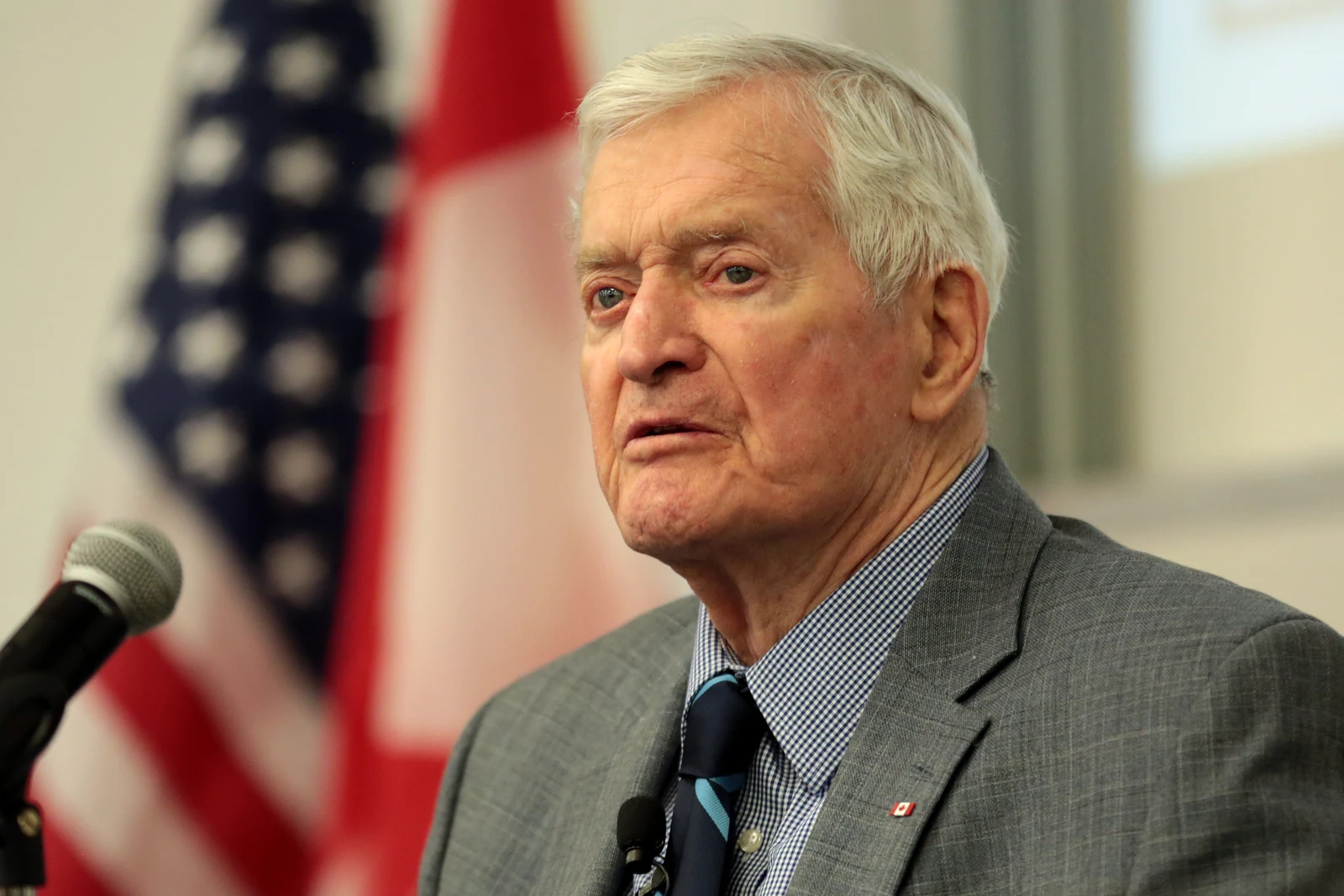
- 13. Wikimedia Commons / Gage SkidmoreJohn Turner (39436619124): complete 7 February 2018 photograph and file history
- 14. Flickr / Gage SkidmoreJohn Turner: creator’s CC BY-SA 2.0 licence for photograph 39436619124