In this biography
Quick facts
- Born
- 30 August 1943
- Birthplace
- New Brighton, Port Elizabeth, South Africa
- Country
- South Africa
- Nationality
- Not independently established
- Known for
- Sizwe Bansi Is Dead, The Island, Nothing but the Truth and international screen roles
- Full name
- Bonisile John Kani
- School
- Newell High School
- Tony recognition
- 1975 Actor (Play), jointly with Winston Ntshona
- Sole-authored debut
- Nothing but the Truth, 2002
- Selected screen characters
- T’Chaka and the voice of Rafiki
Why this life matters
Kani’s work shows how acting, workshop creation and institution-building can resist dehumanisation while continuing to ask difficult questions after political change.
Timeline
Key moments
New Brighton birth
He later acts with local community groups.
Serpent Players
He joins the group and begins a lasting collaboration with Fugard.
Workshop plays travel
South African work reaches London and Broadway; a joint Tony follows.
Market Theatre Laboratory
Its own history dates the opening to October.
Nothing but the Truth
His first sole-authored play reaches the Market Theatre.
Kunene and the King
He performs with Antony Sher in a new play he wrote.
Continuing stage work
Geffen’s production record lists him as Sam in “Master Harold”…and the Boys.
Community performance preceded international recognition
Bonisile John Kani was born on 30 August 1943 in New Brighton, Port Elizabeth. After Newell High School, he performed with local groups in schools and community halls. The national-honour citation dates his joining the Serpent Players to 1965, when his association with Athol Fugard began.
The work developed under apartheid, where collaboration and access to audiences were politically constrained. It drew on performance and improvisation rather than only a playwright handing a finished script to a cast. The experiences of the actors helped shape what reached the stage.
Training extended the work beyond his own performances
Kani’s long association with Johannesburg’s Market Theatre included work with Barney Simon. The Laboratory’s history credits Simon’s training vision and Kani’s fundraising from the Rockefeller Foundation. It dates the opening to October 1989; an older government citation supplies 1990.
The institution offered practical and theoretical training to people excluded from established opportunities. This was a different contribution from winning a role or touring a successful production: it helped create a setting in which other performers could develop. Its own account also acknowledges financial pressures, rather than presenting artistic education as automatically secure.
Sole-authored plays asked questions beyond apartheid’s end
Nothing but the Truth opened at the Market Theatre in 2002. NYU Press’s author record identifies it as Kani’s debut as sole playwright, not his first involvement in writing theatre. The distinction leaves the earlier collaborations properly credited.
Kunene and the King followed in 2019 through an RSC and Fugard Theatre co-production directed by Janice Honeyman. Kani played nurse Lunga Kunene opposite Antony Sher’s actor Jack Morris. Their encounters bring care, racial experience and Shakespeare together, using an intimate relationship to examine a society still negotiating change.
Screen recognition did not replace the stage career
International audiences also know Kani as T’Chaka in Captain America: Civil War and Black Panther, and as Rafiki’s voice in The Lion King (2019) and Mufasa: The Lion King. These character credits belong alongside the plays rather than standing in for the whole career.
The Geffen Playhouse’s 2026 record lists him as Sam in “Master Harold”…and the Boys. It documents continuing theatre work, not a new permanent institutional office. From community halls to collaborative drama and large screen productions, the through-line is a working actor and writer engaged with other artists, audiences and the conditions that shape a performance.
Quick answers
Frequently asked questions about John Kani
- Did John Kani write The Island alone?
- No. The credited writers are Kani, Winston Ntshona and Athol Fugard.
- What was his 1975 Tony for?
- Acting in Sizwe Bansi Is Dead and The Island, jointly recognised with Ntshona.
- Was Nothing but the Truth his first writing?
- It was his first sole-authored play, after the earlier collaborations.
- Who does he play in Black Panther?
- T’Chaka; his Rafiki work is a separate voice role in the Lion King films.
Keep exploring
Lives connected to this story
- Zakes Mda
Compare another South African writer’s work across theatre and fiction.
- David Kramer
Explore a different collaborative South African stage tradition.
- Nelson Mandela
Place prison drama beside the political history it invokes.
Sources and further reading
Explore the evidence
These references support the biography and offer further reading. Official records, first-person accounts and independent reporting provide different perspectives; image records document attribution and licensing.
- 1. South African GovernmentBonisile John Kani — Order of Ikhamanga citation; selected early-life and historical passages
- 2. Encyclopaedia of South African Theatre, Film, Media and Performance / Stellenbosch UniversitySizwe Bansi is Dead — collaboration, spelling, early performances and 1974 publication
- 3. Royal Court Theatre / Living ArchiveSizwe Bansi is Dead — 1972 South African premiere context and 20 September 1973 London production
- 4. National Theatre / Black Plays ArchiveSizwe Bansi is Dead — 1973 production, original role assignments and 1974 edition
- 5. National Theatre / Black Plays ArchiveThe Island — 1973 Royal Court production and selected edition record
- 6. Tony Awards1975 winners — Actor (Play): John Kani and Winston Ntshona
The 1975 award date is separate from the 1974 US tour mentioned in the honour citation.
- 7. Market Theatre LaboratoryHistory — community training, fundraising and October 1989 opening
The Laboratory’s explicit October 1989 opening takes precedence over the older honour citation’s 1990 summary.
- 8. NYU Press / Wits University Press author recordJohn Kani — Nothing but the Truth as his 2002 sole-authored debut
- 9. Royal Shakespeare CompanyKunene and the King — 2019 production, cast, creative credits and premise
- 10. Geffen PlayhouseJohn Kani — 2026 production biography, screen roles and theatre credits
The April–May 2026 production is a dated credit, not a claim that it is still running in October.
- 11. National Theatre / Black Plays ArchiveJohn Kani — selected biography and publication records, not every first edition
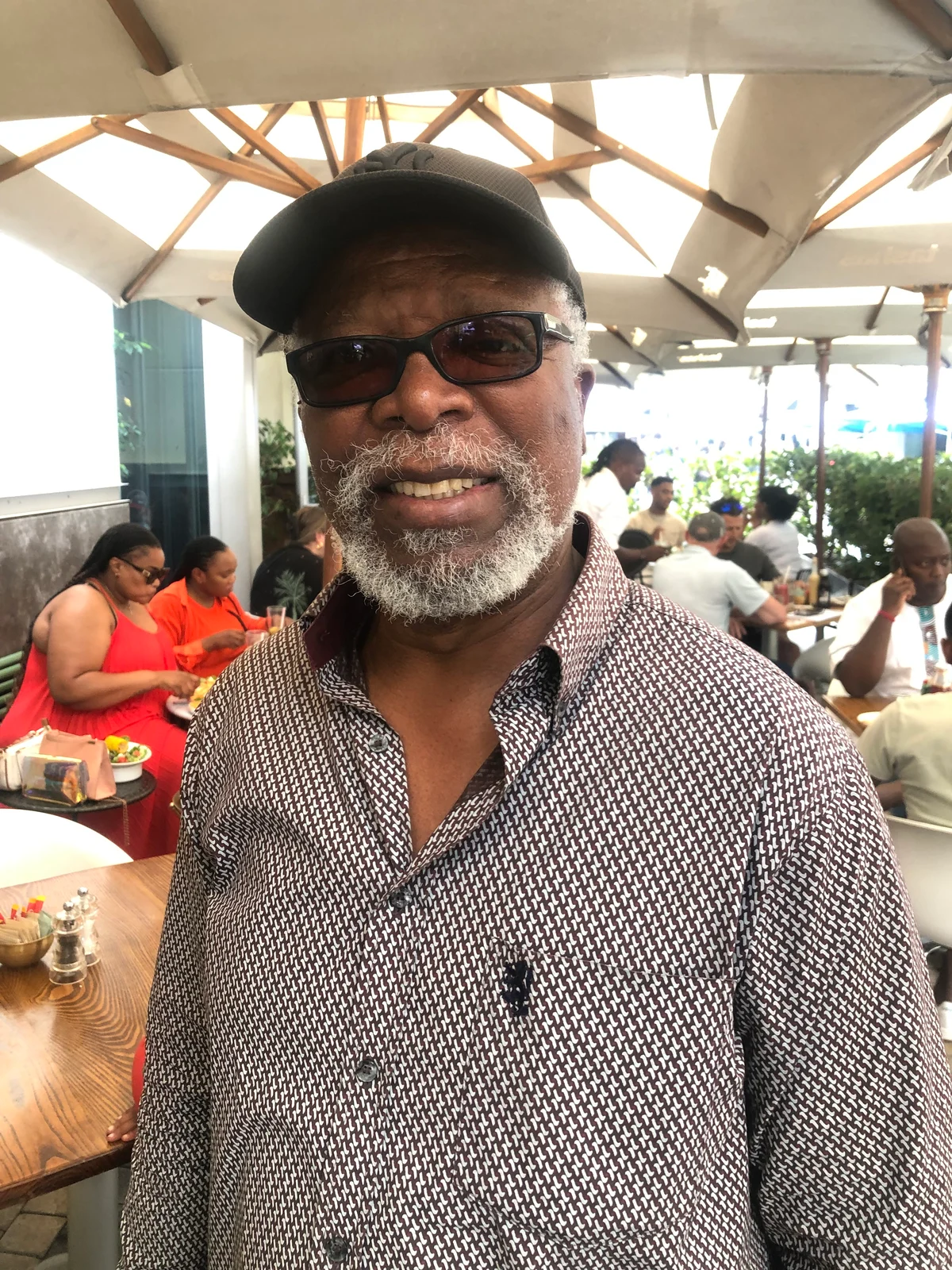
- 12. Bobbyshabangu / Wikimedia CommonsJohn Kani in Rosebank, 8 December 2023 — own photograph, CC0