In this biography
Quick facts
- Born
- 18 October 1929
- Died
- 11 November 2021
- Birthplace
- Butler, Pennsylvania, United States
- Country
- United States
- Nationality
- Not independently established
- Known for
- Fairchild’s early integrated-circuit development group and Amelco
- Earned degrees
- BS, optics, Rochester, 1951; PhD, physics, MIT, 1956
- Fairchild
- Co-founder, 1957; integrated-circuit development leader
- Amelco
- Joined Teledyne venture in 1961
- Honorary degree
- University of Rochester, 2011
Why this life matters
Last’s career makes fabrication teams, optical tools and the preservation of technical and visual culture visible alongside famous chip inventions.
Timeline
Key moments
Born in Pennsylvania
Born on 18 October.
Optics and physics
Graduated from Rochester and completed an MIT doctorate.
Shockley laboratory
Joined the silicon-device research group.
Fairchild
Became one of its eight technical founders.
Integrated-circuit development
Built and led a group investigating isolation, fabrication and circuit operation.
Amelco
Moved to a new venture associated with Teledyne.
Hillcrest Press
Established a publishing business devoted to art and graphic history.
Honorary recognition
Received an honorary Rochester degree.
Death
Died on 11 November.
Optical training entered a silicon laboratory
Jay Taylor Last was born in Butler, Pennsylvania, on 18 October 1929. He earned a BS in optics at the University of Rochester in 1951 and a PhD in physics at MIT in 1956. These were earned degrees, distinct from Rochester’s honorary degree of 2011. William Shockley recruited him while he was completing doctoral work, and Last joined the California laboratory developing silicon semiconductor technology. His optics background later proved useful in patterning devices. It gave him a specific contribution to a multidisciplinary enterprise rather than making him a specialist in every aspect of transistor manufacture.
A founding team had to build a production capability
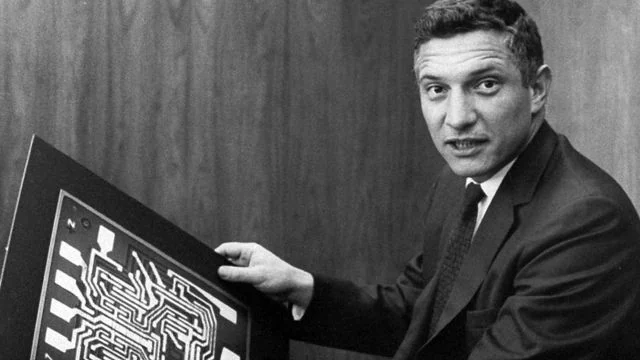
Last was one of eight colleagues who left Shockley and founded Fairchild Semiconductor in 1957. In his 2007 interview he describes an initially cooperative group dividing work among people with different strengths. He and Robert Noyce worked on a step-and-repeat camera and photoresist processes. Others addressed silicon crystals, diffusion, equipment, applications and organisation. The company needed packaging and testing as well as devices on a wafer. Rock and Coyle helped arrange external backing. The practical problem was to produce something dependable and saleable, not merely to demonstrate that silicon could perform an electronic function.
Integrated circuits required a development team
After work on Fairchild’s early transistors, Last organised a group to investigate integrated circuits. Noyce’s interconnection concept and Hoerni’s planar process did not by themselves resolve electrical isolation and reproducible fabrication. Last’s interview distinguishes experimental mechanical isolation from diffused isolation, and names Lionel Kattner and Isy Haas as important contributors. Robert Norman and colleagues worked on circuit applications and testing. The group’s results became a product family as engineering and production work continued after Last left. This history makes room for the people between a patent drawing and a manufactured circuit, including those whose names rarely appear in short commemorations.
A new venture offered a different technical setting
In 1961 Last joined a new Amelco venture within Teledyne with colleagues including Jean Hoerni and Sheldon Roberts; Kleiner helped with early business arrangements. Last later served as a Teledyne technology executive. He recalled wanting an organisation where integrated circuits had a central role, while Fairchild’s established transistor business had its own priorities. Amelco faced financial and manufacturing constraints of its own. Its close connection to specialised systems work did not automatically produce a mass-market semiconductor business. Last’s account is a participant’s recollection, useful for the choices he perceived rather than a complete record of every commercial or classified project.
Publishing and collecting formed a second career
After leaving Teledyne in the late 1970s, Last pursued other ventures and established Hillcrest Press in 1982. He collected African art and American commercial lithography, wrote The Color Explosion and published books on art and graphic history. His interest in printing brought technology and visual form together, but these works should not be treated as semiconductor research. He also helped establish the Archaeological Conservancy in 1980. A 2015 memoir, African Art and Silicon Chips, connects the fields in its title; this profile uses institutional accounts of the book rather than claiming to have read the complete memoir.
Preservation included access, cataloguing and people
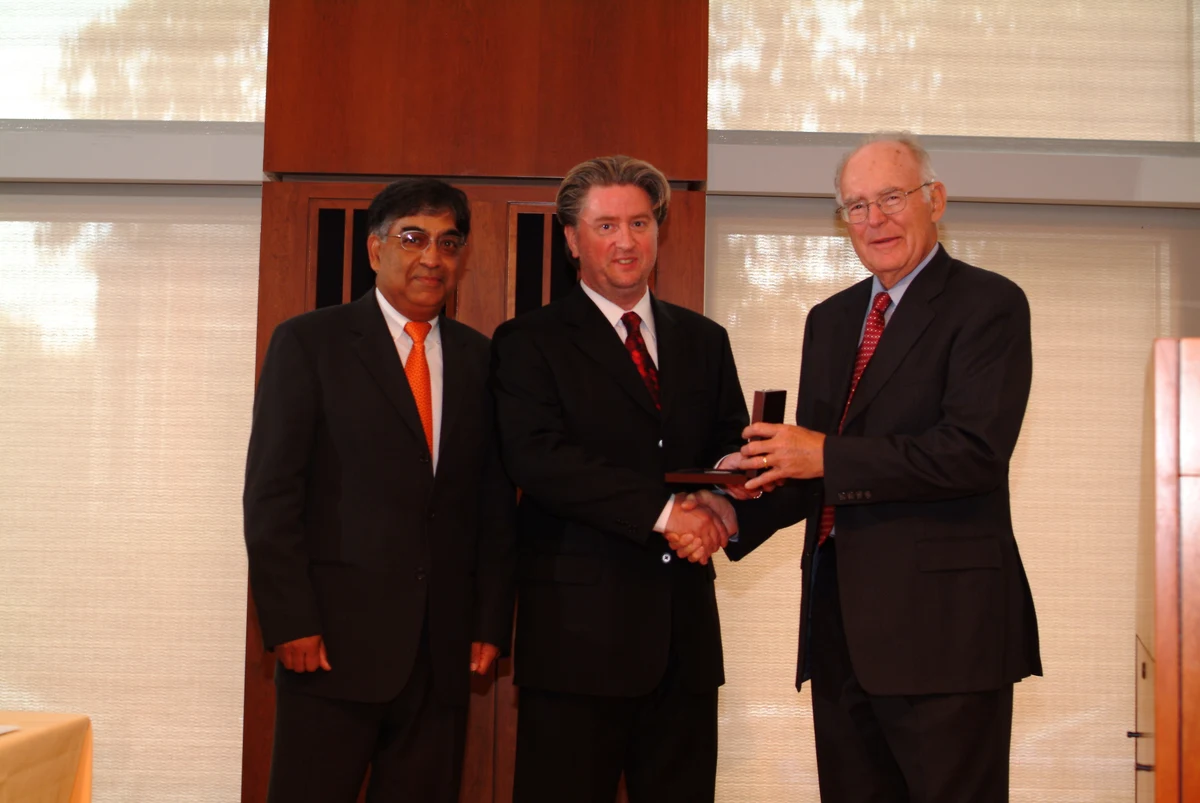
Last’s donations to The Huntington included lithographed material and support for curatorial work, cataloguing and digitisation. The institution explains that collecting objects was only part of making them useful: researchers also needed descriptions, storage and access. He supported the American Antiquarian Society and the University of Rochester, which awarded its Hutchison Medal in 1999 and an honorary degree in 2011. Last died on 11 November 2021. His business and cultural work share an attention to the infrastructure that allows an idea or object to become usable, while the evidence also preserves colleagues’ distinct contributions and the limits of retrospective memory.
Quick answers
Frequently asked questions about Jay Last
- Was Last’s 2011 Rochester degree earned through a new dissertation?
- No. It was honorary. His earned degrees were the 1951 optics BS and 1956 physics PhD.
- Did Last personally do all Fairchild integrated-circuit work?
- No. He led a group whose members and neighbouring applications team contributed isolation, diffusion, optical patterning, circuit design and testing.
Keep exploring
Lives connected to this story
- Robert Noyce
Read the Fairchild colleague with whom he worked on optical patterning and integrated circuits.
- Arthur Rock
Explore the organiser’s role in arranging support for the eight technical founders.
Sources and further reading
Explore the evidence
These references support the biography and offer further reading. Official records, first-person accounts and independent reporting provide different perspectives; image records document attribution and licensing.
- 1. Computer History Museum, X4158.2008Oral History of Jay Last, Craig Addison, 15 September 2007
Original 16-page transcript acquired; selected education, startup, integrated-circuit and Amelco passages read. SEMI publishes the same interview, so those two URLs are not treated as independent witnesses.
- 2. SEMIOral History Interview: Jay T. Last, Craig Addison, 2007
- 3. University of RochesterTribute: Jay Last ’51, 2022
Institutional memorial read. It dates the Hutchison Medal to 2005, while the official provost recipient list and 1999 university announcement place it in 1999. The official award chronology is used.
- 4. The Huntington Library, Art Museum, and Botanical GardensAn Enduring Legacy: Jay T. Last
Institutional donor account read for collection and access work. Collection totals differ across institutional notices and are omitted.
- 5. American Antiquarian SocietyJay Taylor Last: member memorial
Member memorial read. Its reference to the 2015 memoir is not a claim that the full memoir was accessed.
- 6. Ephemera Society of AmericaJay T. Last obituary and colleagues’ recollections, The Ephemera Journal 24(2), 2022, pp. 3 and 12
Original journal obituary, printed page 3 and its continuation context, read for birth and death dates and colleagues’ first-person memories. No photograph reuse permission is inferred.
- 7. University of Rochester, Office of the ProvostHutchison Medal: official recipient chronology
Official recipient list read for the 1999 Hutchison Medal. This award is separate from the 2011 honorary degree.
- 8. Fairchild Camera and Instrument Corporation; Computer History Museum archiveFairchild Camera and Instrument annual reports, 1958–1961: original corporate records
- 9. Computer History MuseumThe Relics of St. Bob: Noyce notebook and the development team, David Laws, 2013
- 10. Family notice published in the San Francisco Chronicle, via LegacyJay T. Last: family obituary, 2021
Family notice’s indexed text read for Butler birthplace and exact birth and death dates; its portrait has no verified commercial grant and is not selected.