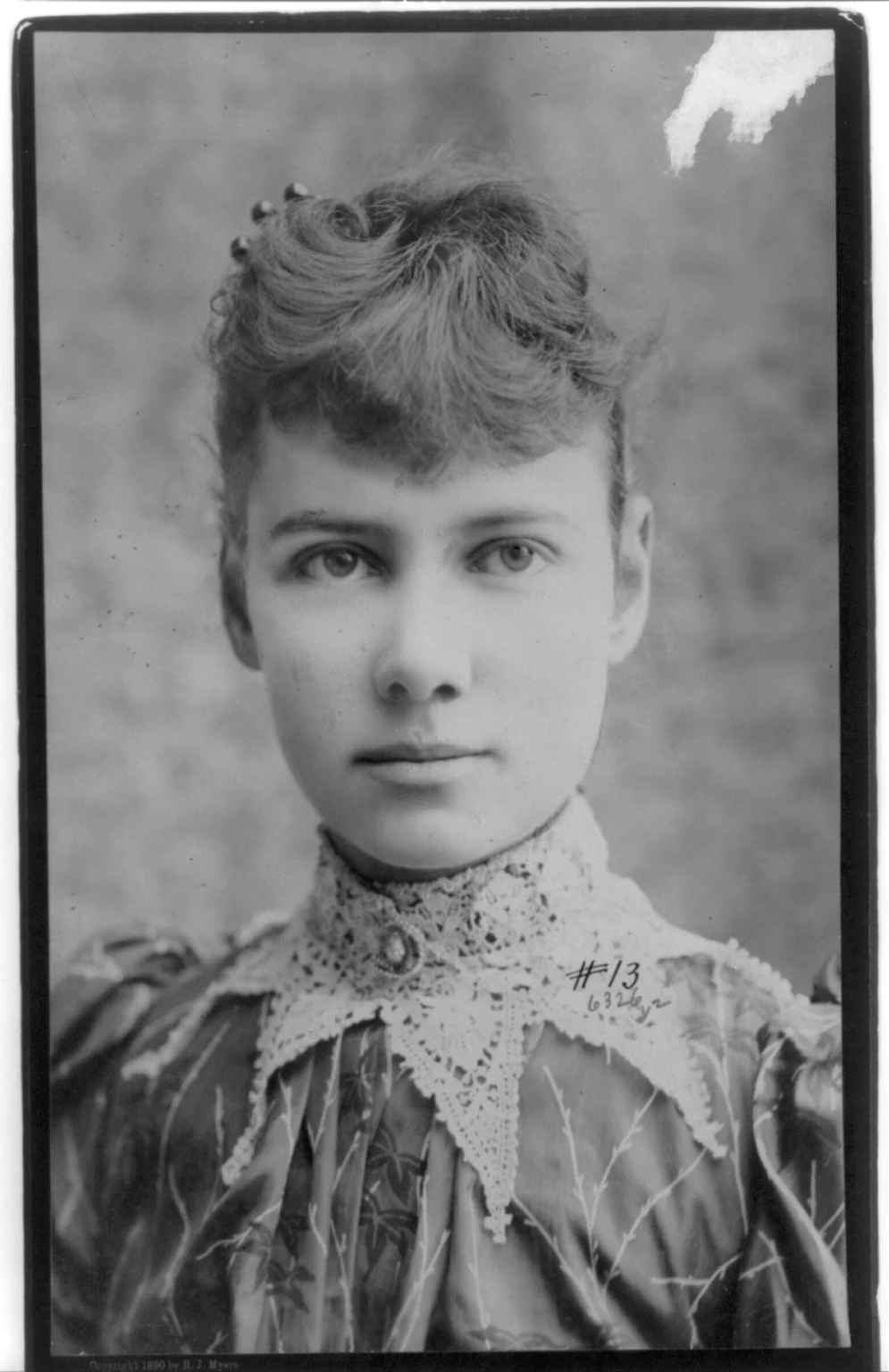
In this biography
Quick facts
- Born
- 5 November 1857
- Died
- 6 January 1944
- Birthplace
- Hatch Hollow, Pennsylvania, United States
- Country
- United States
- Nationality
- American
- Known for
- Investigating Standard Oil for McClure’s Magazine and writing biographies of Abraham Lincoln and other historical figures
- Education
- Allegheny College, class of 1880
- Magazine investigation
- Standard Oil series, November 1902–October 1904
- Book publication
- The History of the Standard Oil Company, 1904
- Autobiography
- All in the Day’s Work, 1939
Why this life matters
Tarbell made documentary investigation accessible to a mass readership. Her work helped expose concentrated economic power, but her reporting was separate from the government’s antitrust case, and her opposition to woman suffrage complicates a simple account of her as a reformer.
Timeline
Key moments
Born in Pennsylvania
Ida Minerva Tarbell is born in Hatch Hollow on 5 November and grows up in the state’s developing oil region.
Graduates from Allegheny
Completes college before teaching in Ohio and entering magazine work in Pennsylvania.
Paris and historical biography
Researches Madame Roland in France and develops a relationship with McClure’s Magazine, joining its staff in 1894.
Investigates Standard Oil
A nineteen-part magazine series appears, followed by a two-volume book in 1904.
Reporting and litigation follow separate paths
Tarbell helps establish the American Magazine; the federal Standard Oil case begins in 1906 and reaches the Supreme Court in 1911.
Later Connecticut years
Makes Easton her permanent home, continues writing and publishes her autobiography in 1939; dies in Bridgeport on 6 January 1944.
Growing up inside Pennsylvania’s oil economy
Ida Minerva Tarbell was born on 5 November 1857 in Hatch Hollow, Pennsylvania. Her father worked in the oil industry, making storage tanks and later producing and refining oil. She therefore encountered industrial expansion through a family livelihood, not only through stories about distant businessmen. Disputes over railway arrangements and the South Improvement Company formed part of her early understanding of the industry.
Tarbell studied at Allegheny College and graduated in 1880. She was among its early women graduates, but the familiar description of her as the only woman in the graduating class needs qualification: the college records other women who entered on a different timetable and graduated that year. Her education preceded a working life that moved from science teaching into editing and historical research.
Teaching, Paris and a career in biography
After teaching in Ohio, Tarbell worked for The Chautauquan in Pennsylvania. Editing and writing offered a different way to pursue questions that had first drawn her toward science. In the early 1890s she went to Paris to research Madame Roland, supporting herself with articles for American publications. Reporting from abroad helped connect her with Samuel S. McClure.
She joined McClure’s Magazine in 1894 and developed historical biographies, including work on Napoleon and Abraham Lincoln. This matters to her later reputation: she was an established researcher and storyteller before the Standard Oil series. The investigation was not her first professional assignment, and her subsequent career did not consist solely of writing about Rockefeller.
What the Standard Oil investigation examined
The History of the Standard Oil Company appeared in nineteen installments in McClure’s between November 1902 and October 1904, then as a two-volume book in 1904. Tarbell traced the development of a particular industrial organization rather than merely listing Rockefeller’s possessions. Railway rates, agreements with competitors, refining, pipelines and the accumulation of control all entered her account.
Her criticism distinguished commercial achievement from the means of securing privileged access to markets. In a chapter on the company’s legitimate strengths, she discussed centralized management, information gathering, economical production and effective organization. Recognizing those abilities did not make her accept exclusionary practices. That distinction gave the argument more substance than a claim that a business must be objectionable simply because it was large.
Documents, interviews and the limits of a reporter’s account
In her preface, Tarbell explained that the editors wanted readers to understand how an industry passed from dispersed ownership into concentrated control. She described using public investigations, testimony, legal records and conversations with people connected to the business. She also acknowledged discussing important episodes with company officers. Her narrative should not be mistaken for a report written without contact with the organization it criticized.
Those materials served different purposes. A witness’s recollection, a railway agreement and a reporter’s interpretation were not interchangeable evidence. Tarbell’s reconstruction combined them into an argument for a general readership; a later reader still needs to distinguish documents she reproduced from conclusions she drew. The book is an important historical source and an interested contemporary investigation, not a substitute for independently reading every underlying record.
Sources for this section: [3]
A famous exposé was not itself a court order
Tarbell’s reporting helped make Standard Oil’s conduct a public issue. It did not give her the authority to dissolve the company. The federal government filed its antitrust case in November 1906; a lower-court decree followed in November 1909, and the Supreme Court decided the appeal in May 1911. Reporting, enforcement and judicial remedies involved different people and institutions.
Keeping that sequence clear preserves her achievement without inventing a single-handed victory. Readers can value the investigation’s influence while recognizing that a legal judgment required a separate case. The 1904 book also predates those federal proceedings; its contents should not be described as a retrospective explanation of the 1911 ruling.
Later work and a contradiction over women’s rights
In 1906 Tarbell helped establish the American Magazine. She continued writing about business, tariffs and public affairs instead of treating the Standard Oil series as a final assignment. Her bibliography includes The Tariff in Our Times, The Business of Being a Woman and further Lincoln writing. She declined an offer to serve on the Tariff Commission rather than giving up her writing career.
Tarbell’s own professional independence did not translate into support for woman suffrage. Allegheny’s historical assessment documents her opposition and her restrictive arguments about women’s roles. These views should not be concealed because her career challenged occupational barriers. Nor should they erase the research she accomplished: both belong to an account of a complicated individual rather than a uniformly progressive heroine.
Connecticut, autobiography and an enduring research legacy
Tarbell bought a home in Easton, Connecticut, in 1906 and made it her permanent residence in 1924. She continued to write and published All in the Day’s Work in 1939. She died in Bridgeport on 6 January 1944, aged eighty-six. Her papers and published work remain resources for studying journalism, business and the ways historical lives were constructed for mass audiences.
Her lasting significance is not that an exposé automatically produces reform. It is that a reporter made an elaborate business system understandable, invited readers to examine its methods and left a documentary argument that could be checked and challenged. Reading the investigation alongside the later litigation reveals more than reducing either to a contest between two personalities.
Quick answers
Frequently asked questions about Ida Tarbell
- What is Ida Tarbell best known for?
- Her investigation of Standard Oil, serialized in McClure’s Magazine in 1902–1904 and published as a two-volume book in 1904. She also wrote historical biographies and other works about business and public life.
- Did Ida Tarbell personally break up Standard Oil?
- No. Her reporting contributed to public scrutiny. Federal officials brought a separate case in 1906, and the courts issued the dissolution judgments.
- Was Ida Tarbell the only woman to graduate from Allegheny in 1880?
- That common shorthand is misleading. Allegheny distinguishes her entry cohort from other women who followed a different timetable and also graduated in 1880.
- Did Ida Tarbell support women’s suffrage?
- No. Despite her independent professional career, she opposed the suffrage campaign and expressed restrictive views about women’s roles.
Keep exploring
Lives connected to this story
- John D. Rockefeller
Read the life of the businessman whose organization Tarbell investigated, separating his career from her interpretation.
- Theodore Roosevelt
Place Progressive Era journalism beside the presidency during which the federal antitrust case began.
- Abraham Lincoln
Explore the president who was also the subject of Tarbell’s historical biography.
- Rachel Carson
Compare a later writer’s investigation of industrial practices and public consequences, without treating the two campaigns as identical.
- Nellie Bly
Compare documentary investigation with Bly’s firsthand undercover reporting and her different position on women’s suffrage.
Sources and further reading
Explore the evidence
These references support the biography and offer further reading. Official records, first-person accounts and independent reporting provide different perspectives; image records document attribution and licensing.
- 1. Allegheny CollegeIda M. Tarbell: institutional biography, bibliography and historical assessment
Read the institutional biography, bibliography and historical assessment. Retains the college’s graduation-cohort qualification and suffrage criticism; does not repeat its Peace Ship year or turn its causal praise into a judicial finding.
- 2. PBS American ExperienceThe Rockefellers: Ida Tarbell
- 3. Ida M. Tarbell / Project GutenbergThe History of the Standard Oil Company: preface and selected chapters; first published 1904
Read the preface, publication statement and selected passages, including the chapter on the company’s organizational strengths. This is an electronic transcription of an early impression recording November 1904 publication, not a claim to have read all archives or verified every underlying allegation.
- 4. Connecticut HumanitiesIda Tarbell: The Woman Who Took On Standard Oil, updated 2024
- 5. U.S. Department of JusticeLegacy Antitrust Judgment: Standard Oil Company of New Jersey, et al.
- 6. Library of Congress / Wikimedia CommonsIda M. Tarbell, No. 1: Purdy’s 1904 photograph and revision history
Exact file history identifies the current upload as an upscale. Uses the earlier native full scan. LOC catalog access was restricted; expired-term evidence is item-specific, not an inference from library hosting.