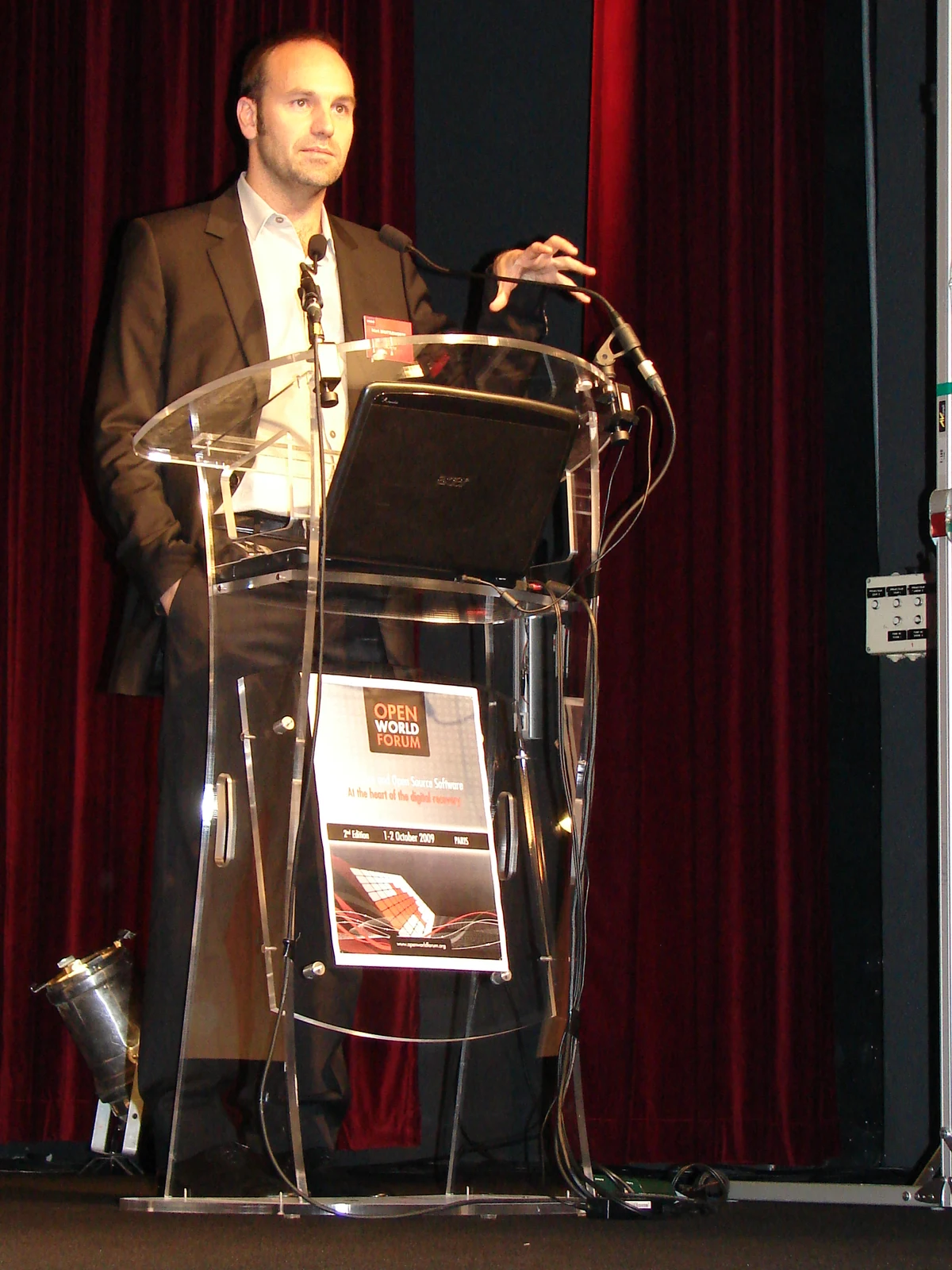
In this biography
Quick facts
- Born
- Not independently verified
- Birthplace
- Calgary, Alberta, Canada (upbringing; exact birthplace unverified)
- Country
- Canada
- Nationality
- Not independently established
- Known for
- StumbleUpon, the early Uber concept and the startup studio Expa
- Education
- Electrical engineering and graduate software-engineering studies at the University of Calgary
- First major company
- StumbleUpon, developed with a founding team in the early 2000s
- Uber role
- Co-founder and early product designer, not its operating CEO
- Later work
- Expa founder; listed as a founding partner on its current team page
Why this life matters
His work links Canadian engineering education with Silicon Valley product development, while the careers of co-founders, engineers and operating executives complicate a one-inventor account.
Timeline
Key moments
Calgary and engineering
Studies engineering and researches collaborative information discovery.
StumbleUpon begins
The MIT award profile dates the team’s initial work to this year.
California and changing ownership
Moves to San Francisco; eBay acquires StumbleUpon before founders and investors buy it back.
The early Uber project
Develops the car-service concept with technical and operating collaborators.
Expa and Mix
Builds a startup studio and later shifts web-discovery work from StumbleUpon to Mix.
A different Uber relationship
Announces a move from director to board observer and product-strategy work.
Calgary supplied a setting for technical and creative interests
Garrett Camp grew up in Calgary in a household where design and self-employment were familiar. In a 2016 interview, he recalled borrowing an uncle’s Macintosh as a child and described parents involved in building, architecture, art and design. The account establishes his upbringing, but the sources reviewed here do not independently establish an exact birthday or birthplace.
He studied electrical engineering at the University of Calgary, followed by graduate work in software engineering. Research into information retrieval, collaborative interfaces and evolutionary algorithms led towards a practical question: how could software help people find worthwhile material they had not already thought to search for?
StumbleUpon was a collaborative answer to online discovery
The 2007 MIT Technology Review award profile dates Camp and friends’ initial work to 2001. StumbleUpon let users select interests, encounter a suggested webpage and respond positively or negatively. Their reactions helped refine subsequent recommendations. It offered exploration rather than a conventional list of search results.
Camp supplied research and architectural work, but did not build the enterprise alone. Contemporary reporting names Geoff Smith and Justin LaFrance, describing Smith’s programming and LaFrance’s business contribution. Camp remained a student while developing the service. Later recollections sometimes date his college project to 2002; the earlier award account supports the 2001 beginning used here.
The eBay years exposed the limits of an acquisition
The company moved from Calgary to San Francisco in the mid-2000s, gaining investors and a larger commercial network. eBay acquired StumbleUpon in May 2007. The change offered resources, but did not produce a lasting integration with eBay’s main businesses.
In April 2009, Camp, Smith and investors including Sherpalo Ventures, Accel and August Capital bought the company back. eBay said the businesses had few long-term strategic synergies and did not disclose resale terms. Camp later described hiring restrictions and a preference for recovering startup flexibility. His account explains his motivation, rather than proving that independent ownership guaranteed success.
Uber combined an initial concept with other people’s execution
Camp’s later account dates the UberCab idea and an initial pitch deck to 2008. The project developed during 2009 while he was again leading StumbleUpon. It began with access to an on-demand car service, not the entire range of later Uber operations.
Travis Kalanick’s founding account credits Camp’s initiative, Oscar Salazar’s prototype work and Ryan Graves’s operating contribution. Graves helped organize the San Francisco launch before Kalanick became full-time CEO in December 2010. Camp’s position as co-founder and product contributor should therefore not be confused with responsibility for every subsequent executive decision. The service emerged through technical, financial and operational collaboration.
Growth brought governance questions as well as new products
Uber’s expansion made workplace culture and the treatment of drivers central to its public scrutiny. In June 2017, Camp acknowledged that the company had neglected culture and failed to build some systems needed for growth. He called for better listening to employees and riders and greater priority for drivers. This was his own assessment of organizational failures, not a judicial finding of personal misconduct.
In March 2020, he announced a move from Uber director to board observer, with a focus on product strategy alongside Dara Khosrowshahi and the technology leadership. That dated change is more precise than treating an older board title as indefinitely current.
Expa and later projects broadened his working model
Camp describes conceiving Expa in late 2013 to help entrepreneurs develop products with experienced builders. Its first financing followed in March 2014. The studio model combined early ideas with design, operational support and capital, rather than merely assembling a portfolio of passive investments. Expa’s current team also credits fellow founding partners Roberto Sanabria and Vitor Lourenço.
In 2018 he announced the transition of StumbleUpon accounts to Mix, a different discovery and collection product. His official biography, checked in October 2026, identifies him as Expa’s founder and CEO and describes Camp.org, the Giving Pledge, music and collecting. These activities extend beyond Uber without supplying a verified measure of his current personal wealth.
Quick answers
Frequently asked questions about Garrett Camp
- Did Garrett Camp found Uber alone?
- No. His early concept and design work belonged to a collaboration that included co-founder Travis Kalanick, prototype developer Oscar Salazar and operating leader Ryan Graves.
- Was Camp Uber’s CEO?
- He was a co-founder and product contributor. Graves and then Kalanick held the early operating CEO role discussed here.
- Why did StumbleUpon leave eBay?
- eBay cited limited strategic fit. Camp also described restrictions on hiring and sought greater independence; founders and investors bought it back in April 2009.
- Is Mix simply the same service under a new name?
- No. Camp announced an account transition to Mix in 2018, describing contextual collections and social and semantic personalization rather than only the original stumble button.
Keep exploring
Lives connected to this story
- Stewart Butterfield
Compare another Canadian software founder whose consumer-web work preceded a different collaborative product.
- Tobias Lütke
Explore a contrasting Canadian technology career focused on merchant software and a long-serving operating CEO.
Sources and further reading
Explore the evidence
These references support the biography and offer further reading. Official records, first-person accounts and independent reporting provide different perspectives; image records document attribution and licensing.
- 1. Stephen M. Baldwin / Report on BusinessMay 2016: Calgary upbringing, engineering studies and the early StumbleUpon team; selected passages in the author-hosted six-page feature
Read selected extracted passages on upbringing, education and early development from the author-hosted Report on Business feature, not every page or underlying interview record. Popular exact birthdays and inferred citizenship are withheld.
- 2. MIT Technology Review / Innovators Under 35Garrett Camp: 2007 award profile, work beginning in 2001 and the recommendation interface
The 2007 award profile places initial work in 2001; Camp’s 2018 retrospective calls it a college project in 2002. The discrepancy is retained rather than converted into an invented exact launch day.
- 3. EntrepreneurCollege Startup Success Story, Revisited: original interview on graduate research and discovery
- 4. San Francisco Chronicle / SFGATE24 June 2007: Company Stumbles its way to $75 million; founders, investors and the move
The contemporary report names Camp, Smith and LaFrance. It is not treated as an exhaustive incorporation record; additional founding-name claims were not resolved through primary documents.
- 5. April Joyner / Inc.5 July 2011: Buying Back the Company, an interview with Camp about the 2009 spinout
- 6. eBay / Richard Brewer-HayeBay Confirms Sale of StumbleUpon: limited strategic fit and undisclosed resale terms
- 7. Stephen Lawson / Computerworld14 April 2009: Investors buy back StumbleUpon from eBay
- 8. Travis Kalanick / Uber22 December 2010: Uber’s Founding, including Camp, Oscar Salazar and Ryan Graves
- 9. Ryan Graves / Uber22 December 2010: 1 + 1 = 3, announcing Kalanick as full-time CEO
- 10. Garrett Camp / Medium23 August 2017: The Beginning of Uber, dating the idea and pitch deck to 2008
- 11. Garrett Camp / Medium20 June 2017: Uber’s path forward, acknowledging neglected culture and systems
- 12. Garrett Camp / Medium31 March 2020: Shifting Gears, moving from Uber director to board observer
- 13. Garrett Camp / Medium15 March 2019: Expa Turns Five, the late-2013 idea and March-2014 financing
- 14. Garrett CampOfficial biography: Expa, Camp.org, music and the Giving Pledge; accessed 23 October 2026
Current personal biography calls him founder and CEO; Expa’s current team calls him a founding partner. Both dated descriptions are retained without endorsing user totals, valuations or impact claims.
- 15. ExpaTeam: Camp, Sanabria and Lourenço as founding partners; accessed 23 October 2026
- 16. Garrett Camp / Medium24 May 2018: SU is moving to Mix, account migration and a different curation model
- 17. Joi Ito / Wikimedia CommonsGarrett Camp (3839207848).jpg: photographer, CC BY 2.0 review and sole original history
The exact photograph credits Joi Ito and has a CC BY 2.0 Flickr review and one original version. The complete frame is resized and format-converted only; Commons structured-data CC0 is not its image licence.
- 18. Joi Ito / FlickrGarrett Camp: exact photograph 3839207848
- 19. Creative CommonsAttribution 2.0 Generic: commercial reuse with credit and licence conditions