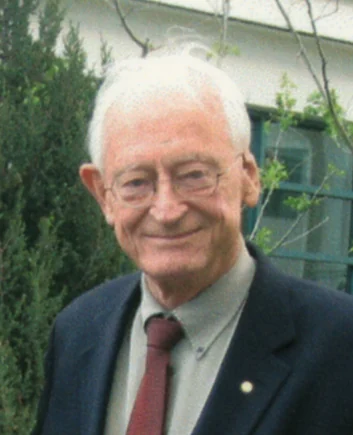
In this biography
Quick facts
- Born
- 20 July 1919
- Died
- 11 January 2008
- Birthplace
- Auckland, New Zealand
- Country
- New Zealand
- Nationality
- Not independently established
- Known for
- The first confirmed Everest ascent with Tenzing Norgay and work with the Himalayan Trust
- Everest summit
- 29 May 1953, with Tenzing Norgay
- Antarctic journey
- South Pole, 4 January 1958
- Education project
- Khumjung school classrooms, 1961
- Honour
- Order of New Zealand, 1987
Why this life matters
The ascent and its aftermath link individual climbing skill to expedition labour, shared credit and institutions built through local requests and continuing cooperation.
Timeline
Key moments
Auckland birth
Born on 20 July and grows up in Tūākau.
Technical training
Develops climbing skills in New Zealand, including with guide Harry Ayres.
Everest
Reaches the summit with Tenzing Norgay on 29 May.
South Pole
Arrives with the New Zealand tractor party on 4 January.
Khumjung school
Supports the first classrooms following a local request.
Formal charitable institution
NZ History dates establishment of the Himalayan Trust to 1964; its school work began earlier.
Death
Dies on 11 January; the Trust’s work continues.
Practical work and training preceded Everest
Edmund Percival Hillary was born in Auckland on 20 July 1919 and grew up in Tūākau. A school trip to Mt Ruapehu helped awaken his enthusiasm for mountains. He later worked in the family beekeeping business, combining physical work with climbing opportunities. Fitness alone did not supply every technical skill. In the years after the Second World War, climbing with guide Harry Ayres helped develop his ability on demanding New Zealand terrain. This apprenticeship gives the Everest story a longer foundation. The celebrated ascent followed learned judgement, partnerships and previous expeditions, rather than appearing as a sudden feat by an untrained beekeeper.
Sources for this section: [1]
The expedition’s achievement extended beyond the final pair
Hunt and Michael Westmacott’s 1953 narrative identifies Gregory, Lowe and Ang Nyima carrying toward the highest camp. Charles Wylie’s later retrospective makes the Sherpa team’s high-altitude supply work central to the outcome. These records restore responsibilities often lost in a single summit photograph. Hillary’s 30 May diary excerpt, published by Auckland Museum, continues the account into exhaustion, food, drinks and encounters with the expedition below. The diary entry is a record of the return rather than a summit-day description. Read together, these sources connect the famous moment to the people and resources that made a safe arrival and return possible.
Antarctica brought achievement and disagreement
Hillary led the New Zealand party supporting the Commonwealth Trans-Antarctic Expedition. Its work included establishing Scott Base and laying supply depots for Vivian Fuchs’s crossing. The tractor journey reached the South Pole on 4 January 1958. NZ History’s thematic account places that arrival in the wider expedition, avoiding the misleading claim that Hillary’s party completed Fuchs’s entire transcontinental crossing. His life continued to involve writing and public speaking as well as expeditions. The official honours citation lists books through which he helped shape public understanding of exploration. Such publications belong to the history of his reputation, alongside the journeys themselves.
A local request began a lasting educational relationship
Himalayan Trust Nepal traces the Khumjung school project to a 1960 request from local Sherpas for education for their children. The first two-room classroom building followed in 1961. The account gives the community an initiating role and credits both Edmund and Louise Hillary in the wider relationship. School construction was followed by sustained work in education, health and infrastructure. Different sources attach different years to the origins and formal organisation of the Trust; the school’s documented chronology is clearer than compressing all those stages into one founding date. The importance lay in recurring cooperation, rather than a single donation after a celebrated expedition.
Fame carried responsibilities through loss and change
Hillary’s public life included family bereavement, further journeys and diplomatic work. Official honours recognised him in New Zealand and overseas; membership of the Order of New Zealand came in 1987. He died on 11 January 2008. The institutional citation and biography record the scale of his public standing without explaining away every difficult episode or later argument about climbing ethics. His reputation rested increasingly on what he did after Everest. The continuing work in Nepal made a durable relationship part of that reputation, while local institutions and the people working in them carried responsibilities beyond those of the original founder.
The school’s later history shows a continuing partnership
In 2023 the original Khumjung classroom building became the Sir Edmund Hillary Visitor Centre. Himalayan Trust Nepal’s project report identifies the school management committee, local participants, the Hillary family and contributors in Nepal and New Zealand. The centre was designed to preserve history while supporting the school. This later chapter is useful because it makes inheritance an active process: buildings require repair, displays require decisions and schools require continuing resources. Remembering Hillary can therefore involve recognising Tenzing, the expedition team and the communities with whom he worked. Those relationships give the life a fuller shape than the image of one climber standing above the world.
Sources for this section: [6]
Quick answers
Frequently asked questions about Edmund Hillary
- Who reached Everest with Edmund Hillary?
- Tenzing Norgay reached the summit with him on 29 May 1953. The first confirmed ascent is credited to both climbers within Hunt’s larger expedition.
- Did Hillary’s South Pole arrival complete the Antarctic crossing?
- No. His New Zealand party laid depots and reached the pole. Vivian Fuchs led the expedition’s transcontinental crossing.
Keep exploring
Lives connected to this story
- Ernest Rutherford
Compare another New Zealand public figure whose international achievement depended on sustained collaboration.
Sources and further reading
Explore the evidence
These references support the biography and offer further reading. Official records, first-person accounts and independent reporting provide different perspectives; image records document attribution and licensing.
- 1. Dictionary of New Zealand Biography / Manatū TaongaEdmund Percival Hillary, Shaun Barnett, 2010
The complete printable biography supplies the early training, expedition context, Antarctic dispute, family history and death. Its statement concerning Tenzing and the 1951 reconnaissance conflicts with specialist chronology and is not adopted here.
- 2. Edmund Hillary / Alpine JournalEverest, 1953: (4) The Last Lap, 1954, printed pp 235–237
Complete 3-page article acquired and text read, including M. P. Ward editorial note, summit and descent. Contemporary published account, edited after author’s departure; not raw diary or unmediated transcript.
- 3. John Hunt and Michael Westmacott / Alpine JournalEverest, 1953: (1) Narrative of the Expedition, 1953, printed pp 107–122
Full 23-page scan acquired (includes photographic plates); opening printed p 107 and second-assault account pp 120–121 read. Underlying speech recording and whole journal not inspected; pp 120–121 bear all guide claims.
- 4. Charles Wylie / Himalayan Journal 50, reprinted from Alpine Journal 1993Tenzing Norgay 1914–1986 and the Sherpa Team
Opening logistics discussion and Tenzing biography read. Author name rendered WYUE by page OCR; author is Charles Wylie. Counts are the participant’s retrospective figures, not newly audited load records. Other team biographies not claimed fully inspected.
- 5. Auckland War Memorial Museum – Tāmaki Paenga HiraHillary’s Everest diary entry for 30 May, 2013 publication
Complete 30 May transcript and provenance caption read. Original handwritten ring-binder leaf not independently transcribed or visually inspected. Quotation in manuscript avoided.
- 6. Himalayan Trust NepalSir Edmund Hillary Visitor Centre
Complete project report read: local 1960 school request, 1961 classrooms, 2023 conversion, school committee and Nepal/New Zealand collaboration. No exhibits visited or project impact metrics independently audited.
- 7. Department of the Prime Minister and Cabinet, New ZealandSir Edmund Hillary, KG, ONZ, KBE: citation prepared 1987
The official citation supports the honour, published books and death. Its 1964 trustee-formation date describes a different stage from the broader 1960 origins found elsewhere; conflicting appointment dates are withheld.
- 8. NZ History / Manatū TaongaFrom Everest to the South Pole
The thematic account distinguishes the 1951 and 1952 expeditions, the 1953 partnership, the 1958 pole journey and formal 1964 Trust date.