In this biography
Quick facts
- Born
- 1943-03-15
- Birthplace
- Toronto, Ontario, Canada
- Country
- Canada
- Nationality
- Canadian
- Known for
- Videodrome, The Fly, Dead Ringers, Crash and A History of Violence
- Born
- 15 March 1943, Toronto
- Early commercial feature
- Shivers (1975)
- The Fly
- 1986; screenplay credited to Charles Edward Pogue and Cronenberg
- Crash at Cannes
- 1996 Special Jury Prize for audacity
Why this life matters
The label body horror describes a central part of his work, but does not exhaust a career ranging from experimental cinema to literary adaptation, psychological drama and films about grief.
Timeline
Key moments
Born in Toronto
Born on 15 March.
From university to experimental film
Literature study and short films precede independent features.
Shivers controversy
A horror film triggers debate over public film funding.
A distinctive international reputation
Scanners, Videodrome, The Fly and Dead Ringers develop different body-and-mind narratives.
Adaptations and recognition
Crash, A History of Violence and Eastern Promises broaden the public picture of his work.
The Shrouds
The film appears at Cannes in 2024; a 2025 interview explores its relation to grief and fiction.
Toronto, science and a literary education
David Cronenberg was born in Toronto on 15 March 1943 and grew up in a Jewish family engaged with science and the arts. He began university in science before turning to literature at the University of Toronto.
In a later Fresh Air interview he recalled expecting to become a writer, following the example of his father. Filmmaking emerged at university rather than through an inherited place in a film studio.
An experimental beginning
Transfer and From the Drain were early shorts. Stereo and the original Crimes of the Future then explored feature-length experimental forms. These precede the larger casts and commercial distribution associated with his better-known work.
Science, institutions and unstable identity were already available subjects. The career was not simply a sequence of ever-more-elaborate monster effects: it began with experiments in what a film could withhold, imply and make an audience imagine.
Sources for this section: [1]
Horror and the argument over public money
Shivers in 1975 brought notoriety as well as attention. Its use of horror and sexuality provoked criticism of public investment in Canadian cinema, including debate in Parliament. That dispute was about the legitimacy of a kind of filmmaking as well as the taste of individual viewers.
Scanners and Videodrome consolidated an international reputation. For Cronenberg, bodily transformation could be a way of considering ordinary vulnerability, rather than an escape into a world where mortality no longer mattered.
The Fly and the collaborative adaptation
The Fly in 1986 combined Jeff Goldblum and Geena Davis’s performances with a scientist’s gradual transformation. Charles Edward Pogue and Cronenberg share the screenplay credit. AFI’s production history specifically preserves Pogue’s contribution to the metamorphosis, even while documenting Cronenberg’s extensive rewrite.
Dead Ringers, Naked Lunch and Crash approached different source materials and psychological problems. The controversy around Crash coexisted with its 1996 Cannes Special Jury Prize; recognition did not mean the arguments about the work had simply disappeared.
Violence without a visible monster
A History of Violence and Eastern Promises made identity, secrecy and physical danger central without requiring the kind of visible mutation associated with The Fly. TIFF’s account identifies an underlying continuity: a past can betray a person as forcefully as a body.
The distinction helps explain why a less effects-driven film is not necessarily a rejection of earlier concerns. Acting, dialogue and adaptation became other ways to investigate the border between a stable public identity and the forces that disturb it.
Grief, technology and the limits of autobiography
The Shrouds competed at Cannes in 2024. Its bereaved entrepreneur invents a technology for observing the dead. In a 2025 Sight and Sound interview, Cronenberg connected the project to his wife’s death in 2017, while explicitly distinguishing the invented character and business from his own life.
He also described music and performance as working together to convey emotion beneath restraint. The later film therefore extends questions of bodily existence into grief and digital mediation; it is not evidence that his fiction should be read as a literal private diary.
Quick answers
Frequently asked questions about David Cronenberg
- Where is David Cronenberg from?
- He was born in Toronto, Ontario, on 15 March 1943.
- Did Cronenberg write The Fly alone?
- No. Charles Edward Pogue and Cronenberg share the screenplay credit, and Pogue’s transformation structure is preserved in the production history.
- Are all his films body-horror films?
- No. His career also includes experimental films, literary adaptations and psychological or crime dramas such as A History of Violence and Eastern Promises.
- Is The Shrouds a factual autobiography?
- No. Cronenberg acknowledged a connection with personal grief but explained that the screenplay becomes fiction, with a character and technology distinct from his life.
Keep exploring
Lives connected to this story
- Denis Villeneuve
Compare another Canadian director’s movement from early work to international literary and science-fiction adaptations.
- Margaret Atwood
Explore another Canadian artist’s use of speculative situations to examine power and embodied experience.
- Alanis Obomsawin
Compare fiction with a Canadian documentary tradition rooted in recorded testimony.
Sources and further reading
Explore the evidence
These references support the biography and offer further reading. Official records, first-person accounts and independent reporting provide different perspectives; image records document attribution and licensing.
- 1. TIFF / Canadian Film EncyclopediaBirth, education, early work, controversy and later adaptations
The entry was updated in 2013; its historical career-length wording is not repeated as a current total.
- 2. Terry Gross / Fresh Air Archive2005 interview transcript: writing, mortality and The Fly
Relevant published transcript passages were read; no full new audio listening is claimed. The archive warns that the audio is the authoritative record.
- 3. American Film InstituteThe Fly: credited collaborators and production history
- 4. Festival de CannesThe Shrouds: 2024 competition and production record
Cannes establishes the 2024 production/competition date; later distribution and interview dates are not substituted for it.
- 5. Erika Balsom / Sight and Sound2025 director interview: grief, technology and fiction
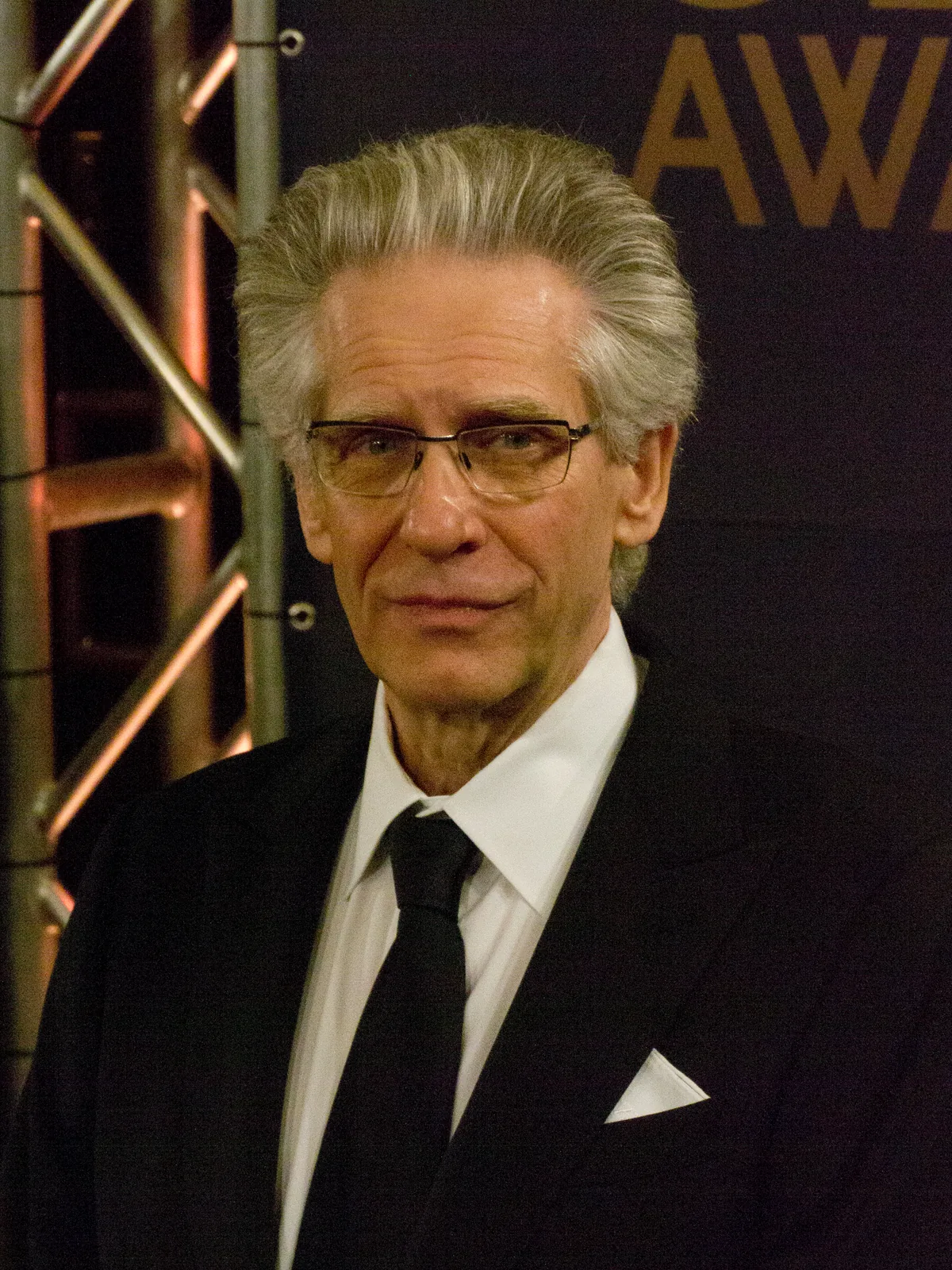
- 6. Alan Langford / Wikimedia Commons2012 Genie Awards portrait and own-work CC BY-SA 3.0