

In this biography
Quick facts
- Born
- 6 July 1972
- Birthplace
- Williamstown, Victoria, Australia
- Country
- Australia
- Nationality
- Not independently established
- Known for
- Victorian social reform, transport investment and pandemic government
- Born
- 6 July 1972, Williamstown
- Education
- Galen College and Monash University
- Electorate
- Mulgrave, 2002–2023
- Health minister
- 2007–2010
- Premier
- 4 December 2014–27 September 2023
- Status at review
- Former premier and former MP
Why this life matters
His career shows how repeated electoral victories can coexist with divisive policy choices and institutional scrutiny. Understanding his government requires separating its reform program, the machinery implementing it and the independent findings about its failures.
Timeline
Key moments
Schooling and politics
Born in Williamstown, schooled in Wangaratta and educated at Monash, he joins Labor in 1993.
Mulgrave
He wins a Legislative Assembly seat and becomes parliamentary secretary for health.
Ministerial work
Consumer affairs and gaming responsibilities precede the health portfolio.
Opposition leadership
He leads Victorian Labor back into government.
Assisted-dying legislation
Parliament passes the law in 2017; implementation follows before its June 2019 operation.
Pandemic and scrutiny
Public-health restrictions, quarantine failures and major project decisions prompt intense debate.
Resignation
The Governor accepts his resignation as premier on 27 September.
A regional upbringing preceded party and parliamentary work
Andrews was born in Williamstown on 6 July 1972 and attended school in Wangaratta. He later studied at Monash University. Party work, rather than a career outside politics followed by sudden election, shaped his route into parliament: he worked as an electorate officer and then in the Victorian Labor organisation.
The parliamentary handbook records those occupations and his schooling. ABC’s retrospective dates his Labor membership to 1993. Together they place his later public image as a determined executive within a much longer apprenticeship in constituency work, campaigning and party administration.
Ministerial responsibility came before the leadership
Elected for Mulgrave in November 2002, Andrews became parliamentary secretary for health. Cabinet appointments followed in 2006, including consumer affairs and gaming, and he became health minister in August 2007.
After Labor lost government in 2010, he became party and opposition leader. He returned Labor to office in 2014 and became premier on 4 December. The roles were distinct: winning a local seat, leading a parliamentary party and receiving a commission as premier were connected stages, not separate statewide elections to the premiership.
Infrastructure and pandemic government brought both support and scrutiny
Transport investment was prominent in his government’s program, but projects also generated arguments about priorities, disruption and cost. Regional reporting records similarly divided responses to decisions affecting timber communities and transport users.
During the pandemic, restrictions and hotel quarantine placed exceptional demands on government. A parliamentary committee’s account of the quarantine inquiry identified failures in establishing the program and gaps in ministerial oversight. Those findings concern public responsibility and administration; they should not be converted into an unsupported personal criminal finding against Andrews.
Withdrawal from the Games complicates the record of delivery
The government withdrew in July 2023 from hosting the 2026 Commonwealth Games. A later Auditor-General’s report put the cost of securing, planning and withdrawing from the event at more than $589 million, including a $380 million settlement.
The audit found the original business case underestimated costs and overstated benefits. It also found the government’s published $6.9 billion withdrawal estimate overstated costs. Both findings matter: the record supports criticism of planning and advice without simply accepting every figure used in the political argument.
Sources for this section: [8]
His resignation ended the premiership, not assessment of it
Andrews announced his departure in September 2023; the Governor formally accepted his resignation on 27 September. Parliament’s current former-member record identifies him as a former premier and former Mulgrave MP.
Monash later recorded a student address drawing on his experience in office. That establishes a specific post-office activity, not a continuing government position. At the October 2026 review, this biography makes no claim about a new current job, private health or every later controversy. His record remains one of policy change, electoral durability and contested uses of power.
Quick answers
Frequently asked questions about Daniel Andrews
- When was Daniel Andrews premier?
- From 4 December 2014 until 27 September 2023. He represented Mulgrave from 2002 to 2023.
- Was he previously health minister?
- Yes. Parliament records his term as Minister for Health from August 2007 to December 2010.
- Did assisted dying start when the bill passed?
- No. Parliament passed the bill in November 2017; the scheme began operating in June 2019 after implementation work.
- Is he described here as a current premier?
- No. His formal resignation and Parliament’s former-member record establish that he is a former premier and MP.
Keep exploring
Lives connected to this story
- Annastacia Palaszczuk
Compare another long-serving state premier whose reform agenda and pandemic decisions produced both support and controversy.
- Julia Gillard
Compare state executive leadership with the different parliamentary constraints of Gillard’s federal government.
Sources and further reading
Explore the evidence
These references support the biography and offer further reading. Official records, first-person accounts and independent reporting provide different perspectives; image records document attribution and licensing.
- 1. Parliament of Victoria / archived handbook58th Parliamentary Handbook, page 19: Daniel Michael Andrews
Selected handbook entry supplies birth, education and earlier occupations. No graduation year is asserted because the archived handbook and a Monash alumni list differ.
- 2. Parliament of VictoriaDaniel Michael Andrews: electorate, ministries, leadership and resignation
Country association is Australia. Optional nationality/citizenship fields are omitted rather than inferred solely from office or a generic web biography.
- 3. ABC NewsDaniel Andrews: political achievements and criticism, 27 September 2023
- 4. ABC NewsAndrews and regional Victoria: contested decisions, 27 September 2023
- 5. Monash UniversityDaniel Andrews addresses Politics, Philosophy and Economics students after office
- 6. Victoria Government GazetteGovernor accepts Daniel Andrews’s resignation, 27 September 2023
- 7. Parliament of VictoriaPublic Accounts and Estimates Committee: hotel-quarantine findings, chapter 10, page 312
- 8. Victorian Auditor-General’s OfficeWithdrawal from 2026 Commonwealth Games: audit conclusions, 2024
The dated audit examines agencies, advice and costs. Its criticism is not recast as a personal criminal finding or as endorsement of the government’s disputed withdrawal estimate.
- 9. ABC NewsConscience vote passes Victoria’s lower house, 20 October 2017
- 10. ABC NewsVictorian Parliament agrees to amended assisted-dying bill, 29 November 2017
- 11. Victorian Department of HealthVoluntary Assisted Dying Act: passage, commencement and later amendments
- 12. Victorian Department of HealthVoluntary Assisted Dying Review Board: monitoring, reporting and limits
- 13. Bentleigh electorate / Wikimedia CommonsMcKinnon Secondary College, 10 October 2018: complete own-work CC BY-SA 4.0 photograph
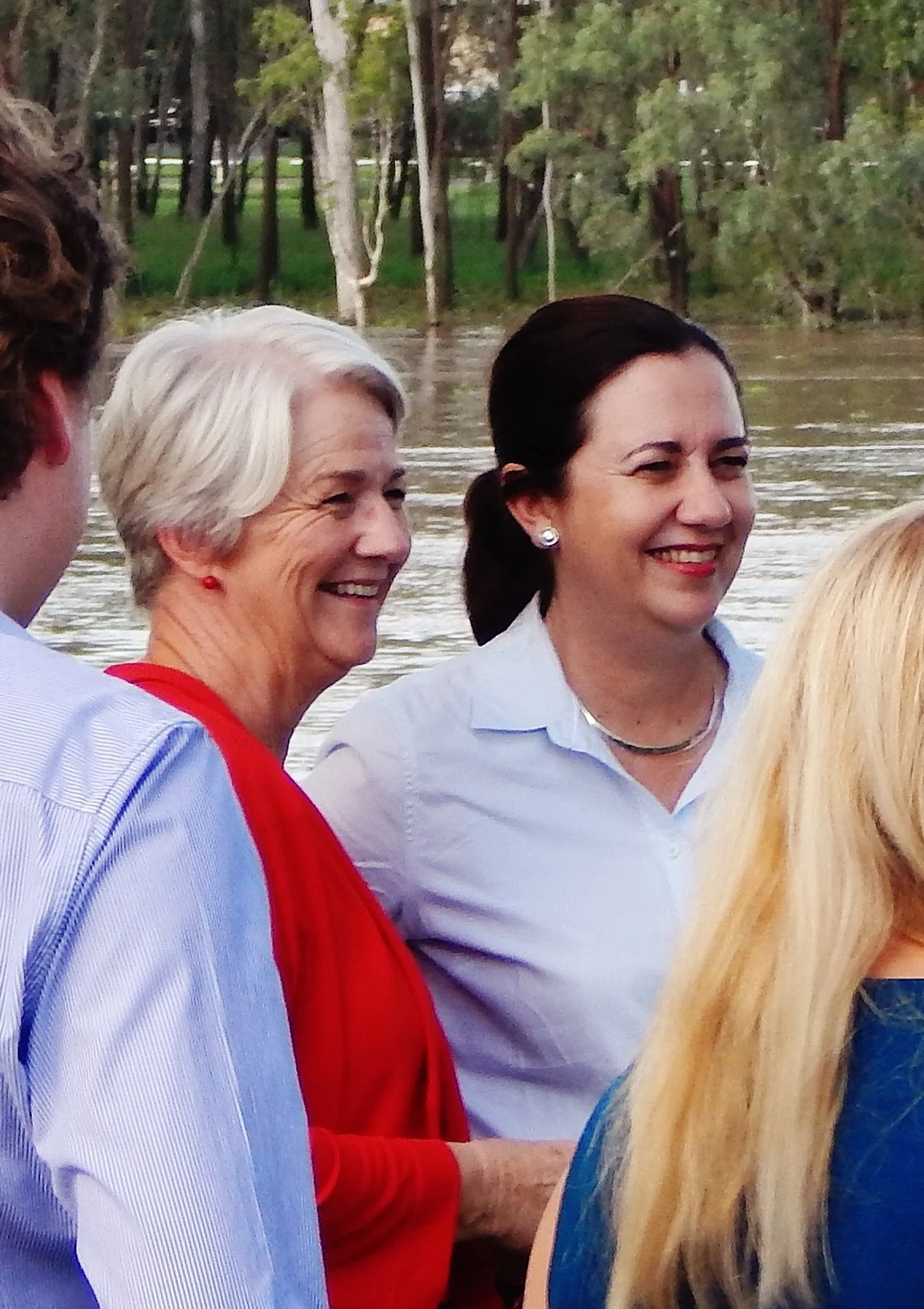


Social reform depended on parliament as well as the premier
Andrews’s government pursued substantial social-law changes. Assisted dying became a particularly visible example: he supported the proposal, but MPs divided across party lines in conscience votes. Health Minister Jill Hennessy and the parliamentary process were central to its development and passage.
The 2017 vote did not begin the scheme immediately. The period before June 2019 was used to establish oversight and prepare services. This distinction prevents a leader’s announcement from standing in for all the legislative and administrative work required to make a reform operate.
Sources for this section: [9] · [10] · [11] · [12]