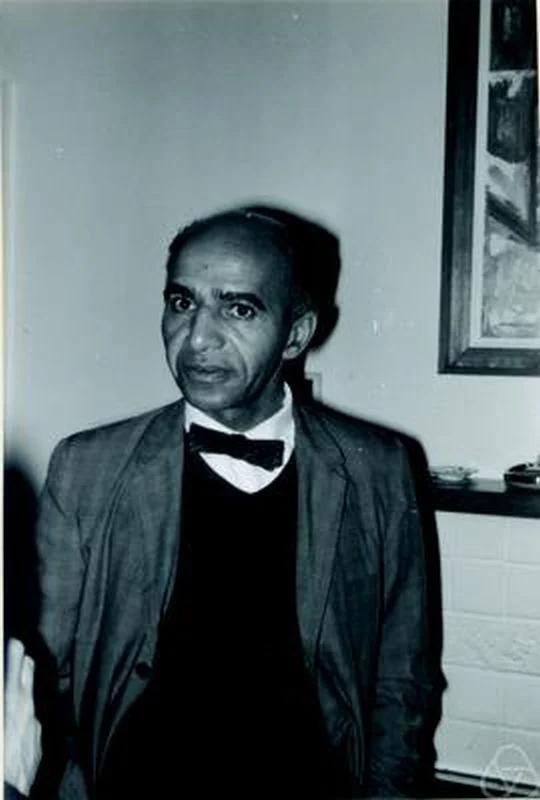
In this biography
Quick facts
- Born
- 1956
- Died
- 20 February 2022
- Birthplace
- Nigeria
- Country
- Nigeria
- Nationality
- Not independently established
- Known for
- Process control, statistical methods and engineering education
- Education
- Lagos BSc 1976; Wisconsin MS and PhD 1981
- DuPont
- 1989–2002
- Delaware
- Full-time faculty from 2002
- Death
- 20 February 2022
Why this life matters
His papers, textbook and teaching show how mathematical models support decisions while still depending on assumptions and experimental checks.
Timeline
Key moments
Birth
Born in Nigeria.
First degree
Graduated in chemical engineering at Lagos.
Graduate degrees
Completed statistics and chemical-engineering degrees at Wisconsin–Madison.
DuPont
Moved into industrial research.
Delaware faculty
Joined full-time after an earlier adjunct association.
Controller paper
Coauthored an analysis and simulation study with Kapil Mukati.
College leadership
Served as Delaware engineering dean, including an initial interim appointment.
Death
Died on 20 February.
Chemical engineering and statistics developed together
The Ife Institute of Advanced Studies’ memorial records his birth on 26 March 1956. Ogunnaike earned a first-class chemical-engineering degree at the University of Lagos in 1976. His curriculum vitae records a statistics master’s degree in April 1981 and a chemical-engineering doctorate in July 1981, both at the University of Wisconsin–Madison. That combination helps explain the later career: he worked with models of physical processes while paying attention to variability, estimation and what measurements can support. Returning to Lagos, he spent six years as an assistant professor. This was an academic and educational foundation for his industrial work, rather than a story in which a single invention suddenly created his entire reputation.
Industrial experience and a continuing university connection
He worked at DuPont from 1989 to 2002. The Delaware memorial describes research across process control, mathematical modelling and statistical analysis. An adjunct association with Delaware began in 1996, before he joined its full-time faculty in 2002. These overlapping dates distinguish a university connection from a later employment change. His work also reached readers through Process Dynamics, Modeling, and Control, coauthored with W. Harmon Ray. A textbook can organise a field and train practitioners, but its existence is not evidence that every controller discussed there was invented by its authors. The record supports a career spanning teaching, industrial problems and the development of analytical methods.
A research paper makes the collaborators and test setting visible
A 2004 conference paper names Kapil Mukati and Babatunde Ogunnaike as coauthors of a study of a next-generation regulatory controller. It investigates stability and tuning, then illustrates the approach through a simulated polymerisation reactor. That is more specific than describing a controller as automatically superior in every factory. The paper separates set-point tracking, disturbance rejection, robustness and overall aggressiveness. Its examples show how a change that improves one response can approach a stability boundary. The linked learning guide explains those distinctions and provides a separate, invented feedback exercise; it does not reproduce the research controller as an operating procedure.
Sources for this section: [5]
Leadership and teaching were part of the same career
Delaware records his appointment as William L. Friend Professor in 2004. His 2019 CV distinguishes that professorship from the William L. Friend Chair, which he held from September 2008. It also separates service as interim dean from July 2011 to June 2013 and dean from July 2013 to October 2018. The Science History Institute memorial agrees with those chair and deanship dates; the records describe different titles and stages, rather than a conflict. The university memorial also emphasises teaching and mentoring. His work extended into systems biology, where mathematical models address a different experimental setting from industrial reactors.
Professional service extended beyond one institution
The Max Planck Institute for Dynamics of Complex Technical Systems records his scientific advisory-board service from 2018 to 2022. The Science History Institute identifies him as a trustee from 2017. Such appointments show participation in research and historical institutions, while election and service are distinct from proof of a particular technical claim. His professional recognition included the US National Academy of Engineering and Nigerian engineering bodies. A separate part of his early life was contributing one of the entries used to compose Nigeria’s then national anthem. That historical contribution should not be described as authorship of every line or as the unchanged present-day anthem.
Death and a legacy that can be examined in the work
Ogunnaike died on 20 February 2022. Institutional tributes emphasise his intellectual range and generosity as a mentor. The surviving papers allow readers to examine a more concrete legacy: how he and collaborators framed control problems, stated assumptions and compared responses. The 2004 example is particularly useful because it labels the reactor work as simulation and identifies the uncertainties considered. Respecting those boundaries strengthens the account of his achievement. It also makes room for the contributions of coauthors, industrial colleagues, students and experimental researchers instead of turning a broad career into a claim of solitary invention.
Quick answers
Frequently asked questions about Babatunde Ogunnaike
- Where did Ogunnaike earn his doctorate?
- At the University of Wisconsin–Madison in 1981; he also earned a statistics master’s degree there that year.
- Was the 2004 controller paper a factory trial?
- Its stated illustration was a simulation of an isothermal polymerisation reactor. It should not be relabelled as a live industrial trial.
Keep exploring
Lives connected to this story
- William C. Campbell
Compare industrial research and collaboration in a different scientific field.
Sources and further reading
Explore the evidence
These references support the biography and offer further reading. Official records, first-person accounts and independent reporting provide different perspectives; image records document attribution and licensing.
- 1. University of Delaware College of EngineeringIn Memoriam: Babatunde Ogunnaike,March 2022
Education, career and death paragraphs read. The obituary’s broad 2011–2018 leadership description includes interim service; the CV supplies the appointment stages. Anthem contribution is historical; no lyrics reproduced.
- 2. University of Delaware Department of Chemical and Biomolecular EngineeringBabatunde A. Ogunnaike: curriculum vitae,2019 hosted version
Page 1 education and page 2 employment chronology read: named Professor from January 2004, named Chair from September 2008; interim dean July 2011–June 2013, dean July 2013–October 2018. The hosted 2019 CV is not evidence of a current role.
- 3. Science History InstituteScience History Institute Mourns Death of Board Member Babatunde Ogunnaike
Short substantive memorial read. Its 2008 named chair, 2011 interim deanship and 2013–2018 deanship agree with the CV. The 2004 named professorship is a distinct title, not a conflicting chair date.
- 4. Max Planck Institute for Dynamics of Complex Technical SystemsNachruf: Babatunde Ogunnaike,24 February 2022
Substantive institutional memorial read, dated 24 February 2022; scientific advisory-board service 2018–2022 and research context. Does not itself supply the exact date of death.
- 5. Kapil Mukati and Babatunde Ogunnaike; University of Delaware; NTNU proceedings archiveStability analysis and tuning strategies for a novel next generation regulatory controller,ACC 2004
Actual 6 page paper acquired; pages 1,4,5 selected text read. Research claim is analysis plus nonlinear-reactor simulation, not universal factory performance or independent replication.
- 6. Ife Institute of Advanced StudiesBabatunde Ogunnaike memorial: IIAS newsletter, printed page 11
Read only the memorial’s opening identity/date sentence on printed page 11 (PDF page index 10, lines 719–723): born 26 March 1956; died 20 February 2022. No other newsletter career, schooling or family claims adopted. Filename 2020–2021 is not treated as publication of the later memorial before his death.