
The short answer
Zoo City combines a missing-person investigation with a supernatural Johannesburg. This introduction distinguishes the book’s premise from the real city, its different publication dates and later critical readings. It describes the setup without revealing the resolution.
Chronology
A timeline of the turning points
Earlier novel
Moxyland precedes Zoo City; the books are not a numbered series.
Zoo City appears
South African publication and Angry Robot’s September UK entry.
US edition
Angry Robot records a later territorial release.
Clarke recognition
Zoo City wins the award.
Critical studies
Scholars continue examining representation and genre.
Different edition dates do not identify different novels
The scholarly publication record identifies Jacana’s Johannesburg edition in 2010. Angry Robot’s list dates its UK release to September 2010 and the US edition to January 2011. A reader encountering either year should check territory rather than assume there are two successive books.
Moxyland came earlier. Its 2008 South African publication and later foreign releases illustrate the same problem. Neither publisher chronology makes Zoo City a sequel requiring a numbered reading sequence; the relevant connection is the author’s developing body of work.
Zinzi’s investigation supplies the narrative engine
Zinzi December has an animal companion, a sloth, and a gift for locating lost things. Her precarious income includes email fraud. A music producer’s commission to find a missing young singer pulls her into a case that is less predictable than retrieving objects.
The premise joins detective work to a supernatural social order. The animal companions are not zoological observations or a real classification of Johannesburg residents. Treating them as an invented device preserves the difference between the novel’s moral questions and the history of actual people.
Sources for this section: [4]
The book also constructs a world through documents
Orthofer’s review describes a largely first-person narrative interrupted by invented documentary material, including scientific and encyclopaedic forms. Those inserts offer information about the fictional world without turning the work into a factual reference source.
This is a useful reading distinction: ask who is speaking and what kind of document a passage imitates. The narrator’s experience, a purported explanatory entry and an outside critic’s analysis need not carry the same authority. That approach avoids mistaking a world-building detail for an established social fact.
Sources for this section: [5]
Johannesburg is more than an interchangeable backdrop
Lisa Propst’s abstract examines representations of poverty and precarious lives in Hillbrow. It argues that the novel both offers insight and unsettles the reader’s confidence in possessing privileged knowledge about other people’s suffering. This is her critical argument, not a universal account of how every reader responds.
The distinction also prevents a simplistic decoding in which each animal or character must represent one real population group. A recognisable urban setting can organise questions of exclusion without functioning as a one-to-one map. Fictional invention and historical context remain related but separate forms of evidence.
An award establishes recognition, not unanimous interpretation
The official Clarke archive names Zoo City as its 2011 winner. The prize date follows publication and should not replace the book’s 2010 date. It recognises a novel; it is not a lifetime award for all Beukes’s writing.
Recognition did not end criticism. Orthofer admired the narrative voice while finding aspects of the plot and its ending less convincing. Read the award record for the institutional result and criticism for a reasoned response. Neither requires presenting acclaim as proof that the book has no weaknesses.
Biography context
Explore Johannesburg, South Africa through connected lives
Lauren Beukes
Connect the novel with journalism and collaborative screen work.
Explore the biographiesGenre comparisonBenny Griessel reading order
Compare another South African crime-fiction publishing history.
Explore the biographiesDifferent formBorn a Crime
Distinguish a speculative novel from retrospective memoir.
Explore the biographiesConnected biographies
The author beyond one novel
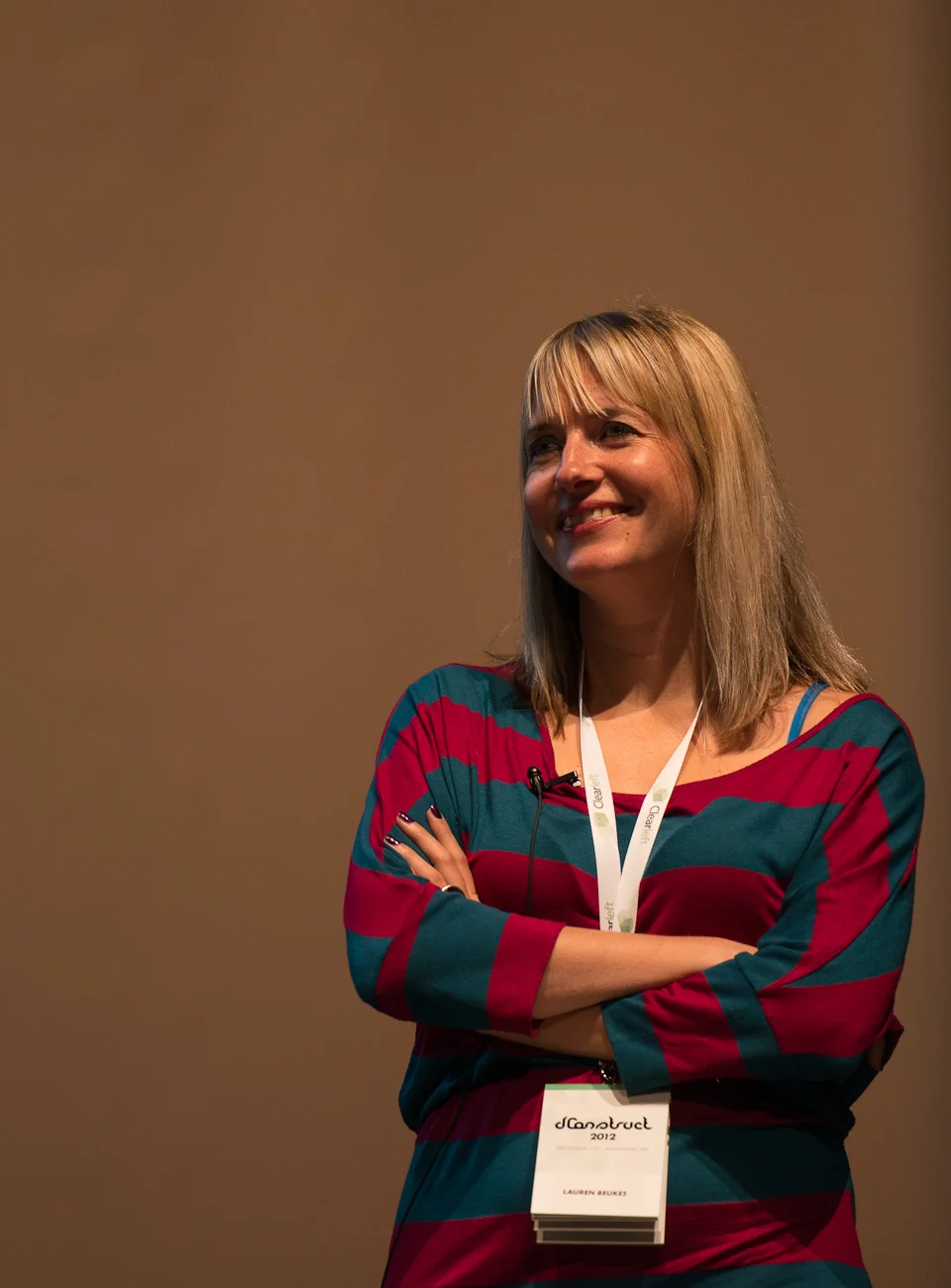
1976–
Lauren Beukes
Novelist, journalist, comics writer and screenwriterLauren Beukes uses speculative fiction and crime to examine power, urban life and violence. Journalism preceded international recognition for Zoo City. Her work also extends to animation, documentary and comics, while The Shining Girls became a separately credited television adaptation.Read biographyQuick answers
Common questions
- Is Zoo City set in a real Johannesburg?
- It uses a recognisable city but invents characters and a supernatural social order.
- Is it a Moxyland sequel?
- No numbered sequence is required; these are separate novels.
- Why do 2010 and 2011 both appear?
- Different territories published editions at different times; the Clarke win was in 2011.
- Does this guide reveal the ending?
- No. It discusses the premise, form and reception rather than the resolution.
Primary and institutional sources
How this history was checked
Author synopsis, publisher dates, official award record and selected critical passages or indexed abstracts. No complete novel, inaccessible journal article or reproduced press quotation is claimed read. This article was reviewed on 24 October 2026.
- Joy Hayward-Jansen / Scrutiny22020 — Queering the Lost Child and the Politics of Failure in Zoo City: indexed opening and metadata only
- Angry RobotComplete Book Publication List — selected 2009–2011 territorial entries
- Jacana MediaFiction catalogue — indexed Moxyland entry and 2008 publication metadata
- Lauren BeukesZoo City — publisher-style premise, not the complete novel
- M. A. Orthofer / The Complete Review3 December 2011 — Zoo City: original review, not its reproduced press quotations
- Lisa Propst / Journal of Postcolonial WritingInformation glut and conspicuous silence in Zoo City — indexed abstract only; direct page returned 403
- Arthur C. Clarke AwardOfficial winner archive — 2011 Zoo City entry
- happy.apple / Flickr / Wikimedia CommonsLauren Beukes at dConstruct, 7 September 2012 — complete original photograph, CC BY 2.0