
The short answer
Silkroad connects Yo-Yo Ma’s career to a collective musical experiment rather than a conventional soloist’s backing band. Its history becomes clearer when the founding idea, the ensemble’s formation and later artistic leadership are treated as related but different developments.
Chronology
A timeline of the turning points
A founding idea
Ma conceives Silkroad, using the historical trade routes as a model for cultural exchange.
Musicians meet at Tanglewood
A Silk Road Project workshop in Massachusetts brings together many of the ensemble’s early musicians.
An early institutional account
The Smithsonian Folklife Festival describes a repertoire combining commissions, traditions and collaborative arrangements.
Recording recognition
Sing Me Home wins Best World Music Album at the 59th Grammy Awards.
A different artistic leadership
Rhiannon Giddens begins her tenure as artistic director, following the ensemble’s co-director period.
American Railroad album
The project releases a live album recorded in California on 17 and 18 November 2023.
Why both 1998 and 2000 appear in Silkroad’s history
Silkroad’s organizational history dates Ma’s conception of the project to 1998. He looked to the historical Silk Road as an example of exchange across borders, then brought musicians together to explore what their different practices could generate. This was a modern arts initiative inspired by those connections, not a reconstruction of one ancient musical tradition.
The performing ensemble took shape in 2000. The Smithsonian’s contemporary festival account locates an important early workshop at the Tanglewood Music Center in Lenox, Massachusetts, in July that year. Thus 1998 identifies the project’s beginnings, while 2000 identifies the ensemble’s formation; neither date needs to erase the other.
A changing ensemble, not one nation’s representative orchestra
Silkroad’s artist directory describes performances ranging from small groups to larger concert ensembles. Different configurations matter because the organization is not a fixed orchestra in which every listed musician appears at every event. A particular album’s personnel or a concert program is better evidence of who actually participated than a general roster.
The Smithsonian’s early account similarly describes combinations of performers appearing with and without Ma. Its repertoire included new commissions, traditional material, Western classical works with cross-cultural influences and jointly developed arrangements. Collaboration involved decisions about listening, instrumentation and interpretation, rather than merely placing unfamiliar instruments beside a cello.
How to use Sing Me Home as a listening starting point
The Recording Academy lists Sing Me Home as the winner of Best World Music Album at its 2017 awards. That ceremony recognized recordings released during an eligibility period ending in September 2016. An award year is therefore not automatically an album’s release year, and the historic category name should not be silently replaced with its later name.
The Academy credits Yo-Yo Ma and the Silk Road Ensemble, with Kevin Killen as producer and Jody Elff and Killen as engineers and mixers. Those credits offer a practical listening method: follow the people making and shaping the recording, rather than attributing every musical or production choice to its most famous performer.
Sources for this section: [4]
Teaching the process as well as presenting concerts
Education provides a concrete example of how the collaborative approach moves beyond touring. New England Conservatory’s July 2022 announcement describes a five-day Global Musician Workshop with rehearsals, faculty-led sessions, elective classes and public performances. It names cellist Mike Block as director and pipa player Wu Man as co-leader.
The conservatory’s account also describes learning between participants, not simply instruction flowing from established artists to students. This distinction helps explain the workshop’s purpose: musicians try unfamiliar approaches while bringing their own knowledge into the room. The 2022 program is a documented example, not a promise that future workshops have identical schedules, faculty or fees.
Sources for this section: [5]
Founder and artistic director are different roles
Ma’s founding role should not make every later Silkroad initiative appear to be his personal project. The organization’s leadership chronology lists him as ensemble artistic director from 2000 to 2017, then identifies a co-director period involving Jeffrey Beecher, Nicholas Cords and Shane Shanahan. Rhiannon Giddens’s artistic directorship began in 2020.
That sequence makes a collective institution visible beyond its founder. Reading an older Ma biography alongside a later project requires attention to dates: his continuing association with Silkroad does not establish that he directed, performed on or commissioned each subsequent release.
Sources for this section: [3]
American Railroad connects exchange to American history
The organization’s October 2024 announcement presents American Railroad as a Giddens-led exploration of people whose labor and experiences were marginalized in railroad narratives. Its musical program includes work by Silkroad artists and commissions from Cécile McLorin Salvant, Suzanne Kite and Wu Man, connecting the broad theme to specific creative contributors.
The album was recorded at California concerts on 17 and 18 November 2023 and scheduled for release on 15 November 2024. The announcement names Giddens, Kaoru Watanabe and Jody Elff as co-producers. These separate recording, release and leadership facts help listeners place the work correctly without treating an artistic interpretation as a complete historical account.
Sources for this section: [6]
Biography context
Explore United States through connected lives
Connected biographies
The founder’s life beyond Silkroad
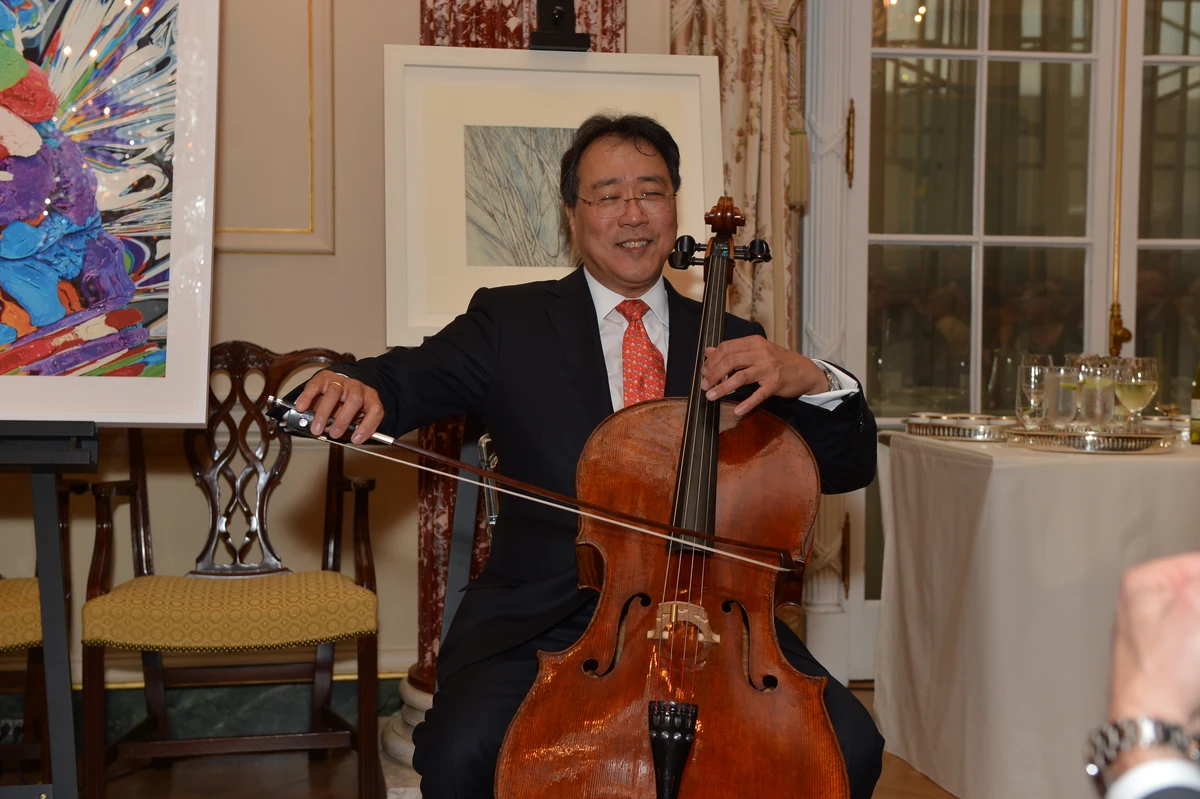
1955–present
Yo-Yo Ma
Cellist and cultural collaboratorA Paris-born cellist associated with American musical life whose performances, recordings and collaborative projects connect classical repertoire with wider cultural exchange.Read biographyQuick answers
Common questions
- Did Yo-Yo Ma start Silkroad in 1998 or 2000?
- The project was conceived in 1998; the performing ensemble formed in 2000, with an early workshop at Tanglewood that July.
- Does every Silkroad concert include Yo-Yo Ma?
- No. The ensemble performs in changing configurations, and its early Smithsonian account already described performances with and without him.
- When did Sing Me Home win its Grammy?
- It won Best World Music Album at the 2017 Grammy Awards. The award year is distinct from the recording eligibility period.
- Was American Railroad directed by Yo-Yo Ma?
- It was a Rhiannon Giddens-led initiative. Its 2024 album credits Giddens, Kaoru Watanabe and Jody Elff as co-producers.
Primary and institutional sources
How this history was checked
Contemporary institutional accounts, program information, recording credits and the organization’s own leadership and release documentation distinguish the project, ensemble and later initiatives. The Smithsonian account was available through its indexed full text when direct retrieval failed; the other cited pages were read directly. This article was reviewed on 21 October 2026.
- SilkroadAbout Silkroad: the 1998 founding idea
- Smithsonian Folklife FestivalThe Silk Road Ensemble: 2002 festival account
- SilkroadEnsemble artists and artistic leadership chronology
- Recording AcademyBest World Music Album: 2017 winner and recording credits
- New England ConservatorySilkroad to return for the 2022 Global Musician Workshop
- SilkroadAmerican Railroad album and podcast announcement, 1 October 2024