
The short answer
The Women’s Social and Political Union made suffrage an urgent national confrontation. Founded in Manchester in 1903, it developed branches, fundraising and publicity alongside increasingly militant tactics. Understanding the organisation means looking beyond its most famous leader to the work that sustained it and the disagreements that divided it.
Different routes to representation
The WSPU was one organisation within a movement
Shared support for votes did not remove disagreements about leadership or methods.
| Organisation | Approach | Important distinction |
|---|---|---|
| WSPU | Mass publicity, demonstrations and increasingly militant action. | Leadership became concentrated around Emmeline and Christabel Pankhurst. |
| Women’s Freedom League | Non-violent militancy, including resistance to taxation. | Formed after the 1907 dispute over the WSPU’s internal governance. |
| NUWSS | Constitutional campaigning, meetings, petitions and parliamentary pressure. | A separate network associated with Millicent Fawcett, not a WSPU branch. |
Chronology
A timeline of the turning points
A new women’s organisation formed
Emmeline Pankhurst and fellow campaigners founded the WSPU in Manchester.
A meeting protest drew national attention
Christabel Pankhurst and Annie Kenney disrupted a Liberal meeting and were imprisoned after refusing fines.
Headquarters moved to London
Campaigning became more directly concentrated on government and Parliament.
Dissenters formed the Women’s Freedom League
A dispute over leadership and internal democracy created a separate organisation.
The Albert Hall hosted a major WSPU meeting
Speeches, ticket sales and donations helped finance and publicise the campaign.
Prison protest and state response intensified
Hunger strikes, force-feeding and temporary release became central conflicts.
The leadership suspended militancy
Emmeline and Christabel supported Britain’s war effort; other activists took different positions.
A political demand needed offices, income and organisers
The WSPU began amid frustration with the political priority given to women’s votes. Its later reputation for spectacular protest can obscure the ordinary work of an organisation: maintaining offices, circulating information, collecting money and supporting local activity. A national campaign needed continuity between public demonstrations.
A WSPU leaflet reproduced by the National Archives identifies a head office, publishing arrangements, treasurer and newspaper. The Royal Albert Hall’s record of its March 1908 meeting shows another part of that machinery: paid tickets, multiple speakers and appeals for donations. The same event could recruit supporters, display solidarity with released prisoners and pay for the next phase of campaigning.
Militant tactics developed rather than arriving fully formed in 1903
The 1905 disruption of a Liberal meeting by Christabel Pankhurst and Annie Kenney was an important turning point. The campaign subsequently included interruptions, demonstrations and confrontations with police, followed by property damage and arson. Treating the founding meeting as the start of every later tactic compresses years of changing decisions into one moment.
Militancy secured attention but also generated disagreement about risk, public support and political effectiveness. The organisation’s highly visible actions cannot alone establish how much each tactic advanced the final legislative settlement. Constitutional suffragists continued to organise and lobby through other networks, making the movement broader than the WSPU’s methods or membership.
Prison became a struggle over political status and bodily control
Hunger strikes challenged the imprisonment of suffrage campaigners and demanded recognition of their political cause. Authorities used force-feeding against many prisoners. Contemporary campaign literature describing the procedure sought both to document suffering and to mobilise opposition; it must be read as an intervention in that conflict.
The 1913 law known as the Cat and Mouse Act allowed temporary discharge on grounds of ill health, followed by renewed detention. Some activists used release to evade arrest and continue campaigning. This was a struggle involving prisoners, doctors, police and supporters outside prison, with differing individual experiences rather than one uniform sentence or treatment.
Internal democracy and social priorities produced lasting splits
In 1907 dissenting members challenged the WSPU committee’s conduct and formed what became the Women’s Freedom League. LSE Library’s account, drawing on its League archive, describes a dispute about unconstitutional leadership as well as an alternative organisation that practised non-violent militancy, including tax resistance. The alternatives were more varied than peaceful suffragist versus violent suffragette.
Later disagreements with Sylvia Pankhurst concerned working women’s needs and political strategy. In 1914 the WSPU leadership’s support for war created another dividing line. The organisation helped make suffrage visible, but it did not speak for every campaigner, dictate all wartime activity or secure equal voting terms by itself.
Continue the chronology
Related history guides
Biography context
Explore United Kingdom through connected lives
Connected biographies
Read a life within the wider suffrage movement
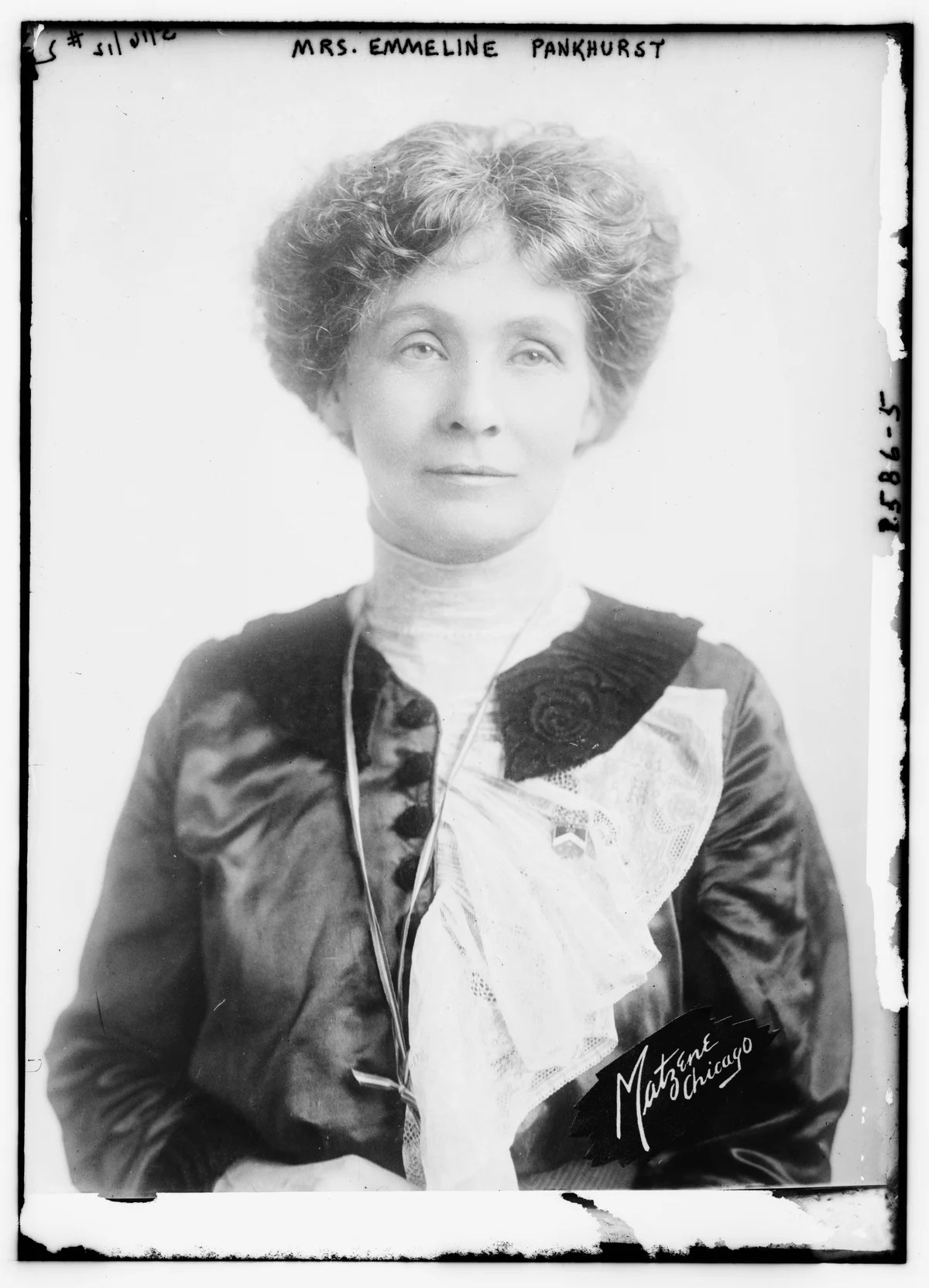
1858–1928
Emmeline Pankhurst
British suffrage campaigner and WSPU leaderEmmeline Pankhurst was a British suffrage campaigner who founded the Women’s Social and Political Union in Manchester in 1903. Her speeches, imprisonment and support for militant tactics made her a prominent, contested leader within a much wider movement for women’s votes.Read biographyQuick answers
Common questions
- What does WSPU stand for?
- Women’s Social and Political Union, founded in Manchester in 1903.
- Were the WSPU and NUWSS the same organisation?
- No. The WSPU became associated with militant suffragettes. The National Union of Women’s Suffrage Societies pursued constitutional campaigning under Millicent Fawcett.
- Why did the Women’s Freedom League split from the WSPU?
- The 1907 dispute concerned concentrated leadership and the organisation’s internal constitution. The League developed its own non-violent militant methods.
- Did the WSPU alone win votes for women?
- No. Local activists, constitutional suffragists, other militant organisations, parliamentary allies and wartime electoral negotiations also shaped the outcome. The 1918 settlement still excluded many women.
Primary and institutional sources
How this history was checked
Institutional histories and the Royal Albert Hall’s event record are read alongside displayed extracts from the National Archives teaching resources and LSE Library’s account of its League archive. Some archive pages returned access errors on direct opening; their indexed extracts are the stated limit of inspection. No complete Home Office files or League archive are claimed as read. The portrait is contextual and was made years after the founding. This article was reviewed on 23 October 2026.
- Historic EnglandTomb of Emmeline Pankhurst: historical account and final years
- UK ParliamentWomen’s suffrage campaigners: Emmeline Pankhurst
- The Royal ParksEmmeline Pankhurst: campaign and First World War
- Royal Albert Hall ArchivesWSPU meeting, 19 March 1908: event and personal authority records
- Library of Congress / Wikimedia CommonsMrs. Emmeline Pankhurst, LCCN2014691830: photograph and rights
- Creative CommonsPublic Domain Mark 1.0
- The National ArchivesWhat methods did the Suffragettes use to gain the vote? Teaching resource and leaflet extract
- The National ArchivesCats and mice: organisations, prison protest and the 1913 law
- London MuseumWhy did Suffragettes go on hunger strike?
- Gillian Murphy / LSE LibraryDare to be Free: the Women’s Freedom League