
The short answer
Women Talking makes collective deliberation the centre of a feature film. Sarah Polley’s adaptation of Miriam Toews’s novel asks how women can make a future together when the institutions around them have made safety and belief seem incompatible.
Chronology
A timeline of the turning points
The novel appears
Miriam Toews publishes an imagined response to violence in a Bolivian Mennonite community.
Ontario production
Polley and the ensemble shoot in Toronto and southern Ontario under pandemic protocols.
Festival audiences
The film screens at Telluride, Toronto and other festivals before theatrical distribution.
Theatrical release
The release crosses calendar years; the 2023 British release is distinct from the 2022 festival film.
Adapted-screenplay award
The Academy honours Polley’s screenplay at its ceremony for 2022 films.
A novel responds to real events through fiction
Miriam Toews’s 2018 novel arose from violence against women in a Mennonite community in Bolivia. The book imagines a discussion through which women consider whether to remain, resist or leave. The film preserves that central decision while leaving its colony unnamed and approaching the setting as a fable.
Those layers matter. The film is not a documentary record of the people whose experiences helped inspire the novel. Journalist Jean Friedman-Rudovsky, who reported from the actual community, later argued that discussion of the adaptation should keep those women and the continuing realities of their lives visible.
Changing the narrator changes the perspective
The novel presents the women’s deliberations through minutes kept by the schoolteacher August. Polley retains August, played by Ben Whishaw, but moves the film’s narration to the teenage Autje, played by Kate Hallett. A male witness remains in the room while a younger woman frames the story for its future audience.
Ona, Salome and Mariche do not begin with a shared position. Rooney Mara, Claire Foy and Jessie Buckley give the debate different emotional pressures. Judith Ivey’s Agata and Sheila McCarthy’s Greta bring another generation into it. Conversation becomes an action in which people listen, interrupt, revise and discover the limits of agreement.
Ontario production brought an ensemble together
Frances McDormand optioned the novel and developed the project with Plan B. She produced with Dede Gardner and Jeremy Kleiner and also appeared as Scarface Janz. Orion backed the film, which was shot in Toronto and southern Ontario in late summer 2021. Its production location should not be confused with the unnamed colony in the story.
The AFI credits identify Luc Montpellier’s cinematography, Peter Cosco’s production design and editing by Christopher Donaldson and Roslyn Kalloo. Building a feature around a debate required coordinated work across performance, space and rhythm. Polley’s screenplay and direction organize that work, but the finished production has many credited contributors.
Image and music give the debate a scale
Polley described the desaturated images as a deliberate departure from realism. She wanted the women’s conversation to seem like a turning point from which their old world could already be regarded as past. The restricted palette is therefore an interpretation of the story, rather than evidence of what a particular Bolivian community looked like.
Hildur Guðnadóttir composed the score. The film also moves beyond the hayloft into fields, domestic spaces and images of children, connecting the immediate argument with the lives affected by its outcome. These choices ask a viewer to experience words alongside bodies, silence and surroundings, rather than treating the screenplay as a transcript to be illustrated.
Recognition did not produce critical agreement
The 2022 Telluride programme placed Women Talking within Polley’s established filmmaking career. Its festival premieres came before later theatrical releases and the March 2023 Oscar for adapted screenplay. An awards date can therefore be later than the year attached to the film without identifying a different version.
Reception included substantial disagreement. Gabrielle Marceau in Sight and Sound found the film emotionally affecting while criticizing its formulaic dialogue and blue-tinted images. That tension is useful to a reader: an urgent subject and an award do not settle whether a dramatic method succeeds. The adaptation invites discussion both of the women’s dilemma and of the form chosen to represent it.
Continue the chronology
Related history guides
Biography context
Explore Ontario, Canada, and an unnamed fictional Mennonite colony inspired by events in Bolivia through connected lives
Sarah Polley’s wider career
From childhood acting to literary adaptation, documentary, television and essays.
Explore the biographiesEarlier collaboratorAtom Egoyan
The director of The Sweet Hereafter, in which Polley’s performance helped establish her adult career.
Explore the biographiesAnother adapted writerMargaret Atwood and Alias Grace
Read about a writer whose work Polley adapted for television with director Mary Harron.
Explore the biographiesConnected biographies
Filmmakers connected by performance and adaptation
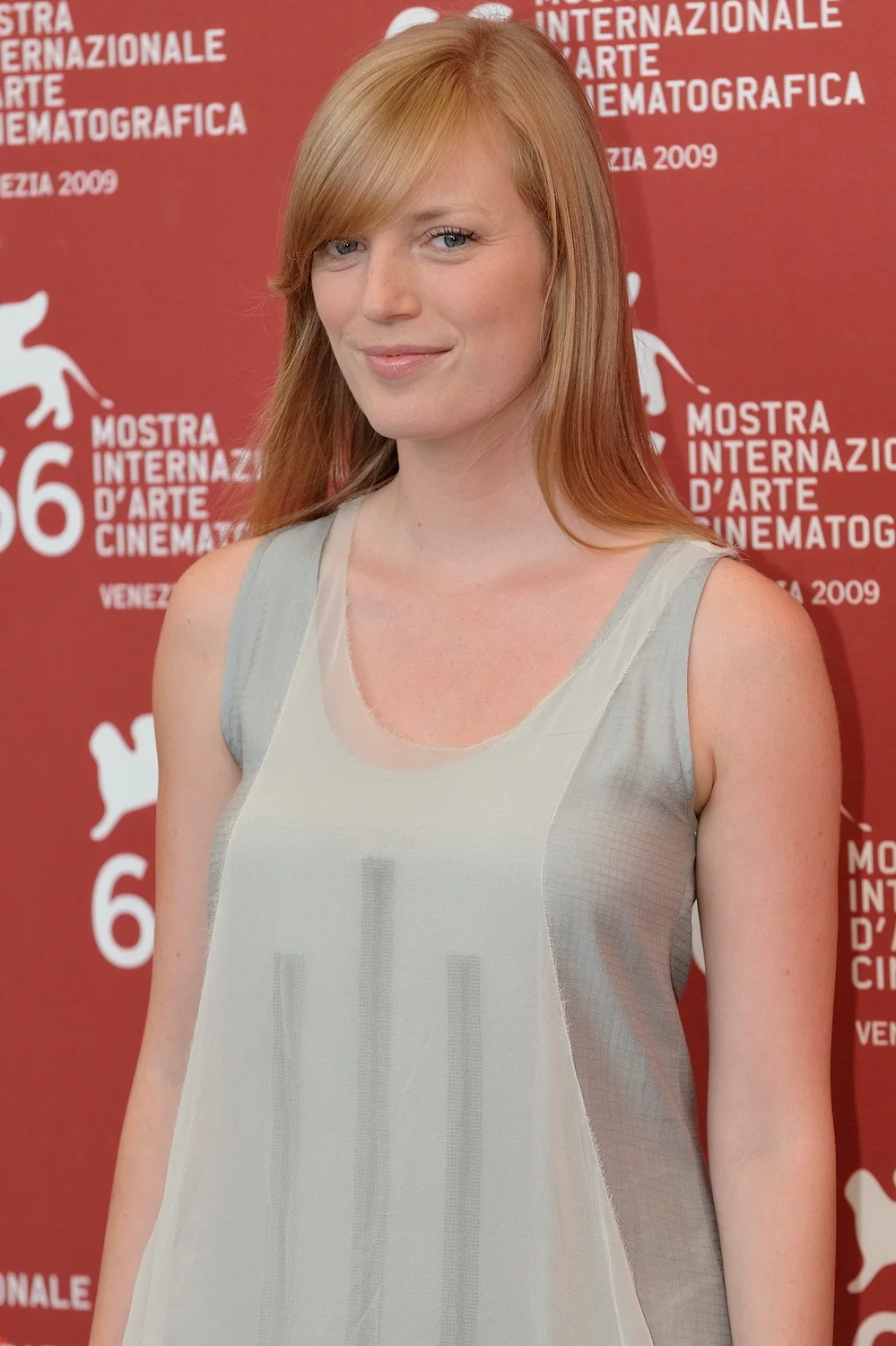
1979–
Sarah Polley
Filmmaker, screenwriter, actor and essayistSarah Polley is a Toronto-born filmmaker whose career runs from childhood television and film acting to literary adaptation, an NFB documentary, television writing and the Oscar-winning screenplay for Women Talking.Read biography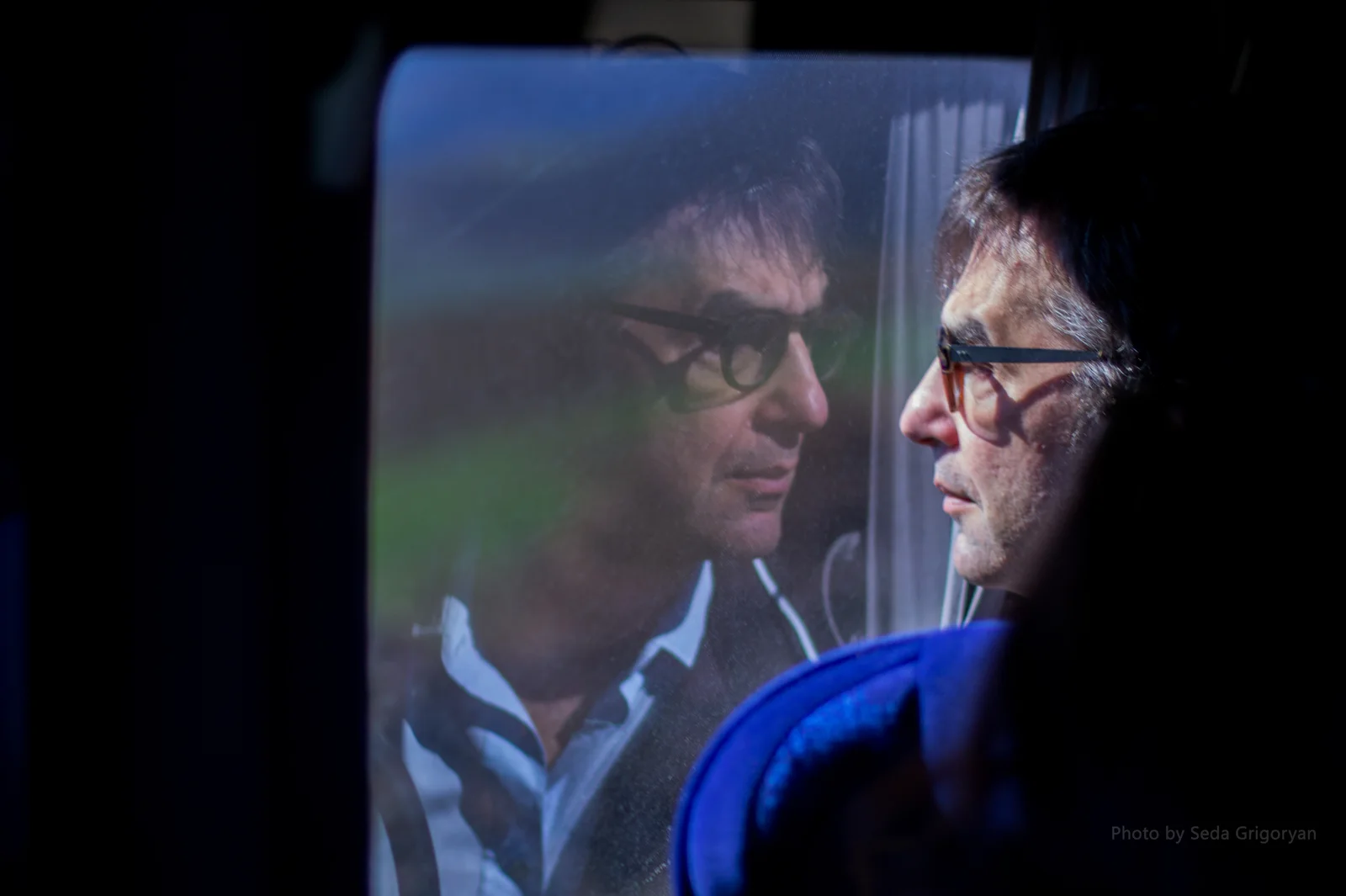
1960–
Atom Egoyan
Film and stage director, screenwriter and visual artistAtom Egoyan is a Cairo-born Canadian filmmaker of Armenian heritage, raised in Victoria, whose films and stage work examine memory, mediated experience, displacement and the fragile bonds between people.Read biographyQuick answers
Common questions
- Is Women Talking a 2022 or 2023 film?
- It is identified here as the 2022 film that premiered at festivals that year. Later theatrical releases and its adapted-screenplay Oscar occurred in 2023.
- Is Women Talking set in Canada?
- The film was shot in Ontario. Its unnamed fictional Mennonite colony is inspired by a novel responding to events in Bolivia; filming geography and fictional setting are different.
- How does the film change the novel’s narration?
- August records the meeting in the novel. The film keeps him as a character but gives the narration to Autje, a teenage member of the community.
- Who composed the music for Women Talking?
- Hildur Guðnadóttir composed the score, as identified in the American Film Institute’s production credits.
Primary and institutional sources
How this history was checked
Festival credits, accessible filmmaker interview passages, contemporary criticism and identified reporting were compared. The novel, fictional film and real community are distinguished. The publisher’s book excerpt is not a full-book reading, and no new complete film viewing is claimed. This article was reviewed on 23 October 2026.
- Sheila O’Malley / RogerEbert.com2018 novel, fictional response and cast
- Esther Zuckerman / TIMENovel-to-film changes, August and Autje
- Jean Friedman-Rudovsky / TIMEReporting on the real community behind the fiction
- Wendy Ide / Screen InternationalPolley on producers, Ontario filming and the film as fable
- American Film InstituteProduction, editing, score and ensemble credits
- Telluride Film Festival2022 programme entry and Polley tribute
- Gabrielle Marceau / Sight and Sound2023 release review and formal criticism
- Academy of Motion Picture Arts and Sciences2023 adapted-screenplay award for the 2022 film
- Nicolas Genin / Wikimedia CommonsSeparate 2009 portrait and CC BY-SA 2.0 licence