
The short answer
The Water Amendment (Restoring Our Rivers) Act 2023 changed the tools and timetable for delivering the Murray–Darling Basin Plan. It did not create the original Plan or instantly supply all the promised environmental water. Its institutional history concerns parliamentary agreement, revised recovery powers, implementation programs and the conflict between environmental repair and regional adjustment.
Chronology
A timeline of the turning points
Bill introduced
The government proposes changes to recovery tools, timing and water markets.
Parliamentary bargaining
Negotiations with the Greens and crossbench secure support amid opposition to buybacks.
Assent
The original Act records royal assent.
Recovery provisions begin
Schedules 1 and 2 commence; other water-market provisions follow staged dates.
Implementation programs
Infrastructure, voluntary purchases and community-support programs translate the framework into administration.
Revised delivery horizons
The legislation provides more time for supply projects and additional environmental-water recovery; deadlines are not completed outcomes.
The legislation revised an existing Basin framework
The Murray–Darling Basin Plan predated this Act. By 2023, delivery of remaining measures and environmental water had become a pressing political problem. The government sought more time and more recovery options rather than replacing the entire framework with a new river-management system.
The proposal affected relationships among the Commonwealth, Basin states, irrigators, communities and environmental interests. Its national setting matters: a minister could negotiate federal legislation, but implementation continued to involve state projects, water entitlements and the institutions already responsible for the Basin.
Passage, assent and commencement were separate stages
Introduced in September 2023, the bill underwent parliamentary scrutiny and amendment. Negotiations with the Greens and other crossbench senators supplied votes that the government did not hold on its own. Opposition to buybacks remained, including from the Coalition and farmer groups.
Assent was given on 7 December. The original commencement table starts the main recovery and Basin Plan schedules on 8 December, while several water-market measures had later commencement arrangements. Describing the entire package as operating fully on assent would therefore miss an important feature of the enacted design.
Recovery tools and deadlines changed, not the physical availability of water overnight
The package removed the statutory purchase cap and expanded ways to fund additional environmental-water recovery. Voluntary purchases sat alongside infrastructure and other measures, rather than becoming the only legal or administrative tool.
The government described revised horizons of December 2026 for supply projects and December 2027 for the additional 450 GL target. The target is expressed through average annual yields: it should not be read as a guarantee that a fixed volume appears at a particular location in every weather condition. Legal authority, contracted recovery and actual environmental effects remain different things.
Buybacks concentrated disagreement about who bears adjustment
Supporters argued that buying entitlements could recover water more efficiently than relying only on projects. Opponents feared effects on irrigation production, local businesses and communities when water left agricultural use. Victoria did not endorse the new agreement.
NSW’s later alternatives-to-buybacks work records a continuing commitment to the Plan alongside concern about socioeconomic impacts. Its commissioned analysis emphasised that program design could influence those impacts. This is more specific than assuming every voluntary sale is harmless to neighbours, or that every form of environmental recovery has identical economic consequences.
Implementation requires evidence beyond legislative promises
The Commonwealth’s delivery framework organised recovery around infrastructure and other non-purchase measures, voluntary purchases and support for affected communities. It identified environmental outcomes, minimising socioeconomic impacts and value for money as guiding principles.
Those are objectives against which delivery can be examined, not independent findings that every objective has been met. The historical significance of the Act is the change in available tools and obligations. Assessment of later success requires evidence about recovered entitlements, project performance, communities and river conditions, rather than a simple declaration that passing the law restored the Basin.
Biography context
Explore Australia through connected lives
Tanya Plibersek
Place water reform alongside her earlier social-policy ministries and later Social Services role.
Explore the biographiesFederal government contextAnthony Albanese
Read the government’s wider electoral and institutional record.
Explore the biographiesCompare another statutory processThe NACC Act, 2022
Compare parliamentary passage, staged implementation and assessment of institutional outcomes.
Explore the biographiesConnected biographies
The minister within a wider Basin negotiation
1969–
Tanya Plibersek
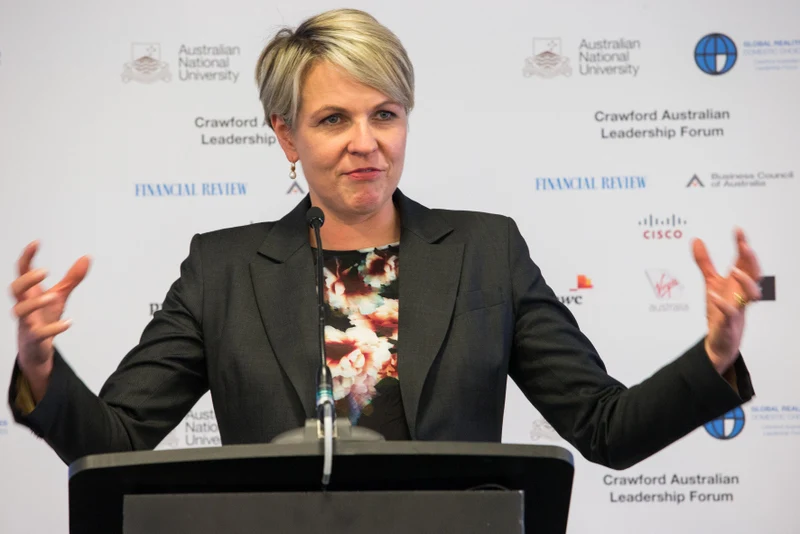
Social Services minister and federal member for SydneyTanya Plibersek has represented Sydney since 1998 and held ministries spanning housing, health, environment and social services. A former Labor deputy leader, she negotiated the 2023 rivers legislation and later returned to social policy in the second Albanese government.Read biographyQuick answers
Common questions
- Did this Act create the original Basin Plan?
- No. It amended the existing Water Act and Basin Plan framework.
- Did all provisions begin on assent?
- No. Assent was on 7 December 2023; main recovery schedules began the following day and some market measures were staged later.
- Were voluntary purchases the only recovery option?
- No. Infrastructure, other recovery measures and community-support arrangements also formed part of the approach.
- Does the 450 GL target prove the water was already delivered?
- No. A statutory target and delivery framework are not the same as completed recovery or demonstrated environmental outcomes.
Primary and institutional sources
How this history was checked
Selected original provisions establish assent, commencement and recovery changes. Parliamentary and departmental explanations supply structure; reporting and NSW material document disagreement. This is institutional history, not advice on an individual water entitlement. The photograph shows a 2015 forum, not the 2023 negotiations. This article was reviewed on 24 October 2026.
- Federal Register of LegislationWater Amendment (Restoring Our Rivers) Act 2023 as made: selected provisions
- Parliament of AustraliaWater Amendment (Restoring Our Rivers) Bill 2023: parliamentary progress
- Parliamentary LibraryRestoring Our Rivers: Bills Digest, selected recovery and stakeholder discussion
- Department of Climate Change, Energy, the Environment and Water2023 rivers bill: deadlines, recovery options and purchase-cap changes
- ABC NewsRivers legislation, crossbench negotiations and contested buybacks, 30 November 2023
- ABC NewsGovernment and Greens agreement on Basin legislation, 27 November 2023
- Department of Climate Change, Energy, the Environment and WaterFramework for delivering the 450 GL: principles and programs
- NSW Department of Climate Change, Energy, the Environment and WaterAlternatives to buybacks: NSW position and commissioned socioeconomic analysis
- Crawford Australian Leadership Forum / ANUTanya Plibersek at the 2015 Crawford Forum: Stuart Hay photograph, CC BY 2.0