
The short answer
The early Valaze business sold more than a pot of cream. It joined a branded preparation to personal advice, a carefully arranged setting and a story about expertise. Its Melbourne beginnings help explain how a local service business could generate an identity capable of travelling beyond its original premises.
Chronology
A timeline of the turning points
A salon in Melbourne
NPG and Australian biography accounts place the early salon in this year.
A business and public advertising
The Jewish Museum dates Helena Rubinstein & Co. to 1903; surviving advertising evidence establishes the developing brand.
Product promotion
Reproduced advertisements combine endorsements with a growing range of preparations.
The institute model
The Melbourne business presents an expanded treatment setting after Rubinstein’s European trip.
A travelling commercial identity
The brand expands into London rather than remaining one Melbourne service location.
Startup support mattered more than the solitary-founder legend
Australian accounts commonly date the first salon to 1902, while the Jewish Museum dates Helena Rubinstein & Co. to 1903. Neither description establishes a precise incorporation event by itself. The sound starting point is an emerging Melbourne enterprise in which a named product and personalised service were brought together.
The ADB identifies a lender and other practical collaborators around Rubinstein. Those contributions explain how a small venture could begin trading: an idea needed capital, a label, a way to reach customers and people to perform the work. The founder’s energy mattered, but it did not replace the commercial network that made the first transactions possible.
An exotic product story helped create distance from ordinary cream
Valaze was promoted through a story of European expertise and unusual ingredients. ABC’s account, drawing on Trumble’s research, contrasts that story with local manufacture and familiar materials. The important business question is not whether an exotic name changed the chemistry, but how it affected the customer’s interpretation of what was being offered.
A distinctive name made the preparation identifiable; the origin story supplied an explanation for why it should command attention and a premium. This is an interpretation of the selling strategy, not confirmation of the advertised therapeutic effects. The market could reward a persuasive account without independently verifying every part of it.
Sources for this section: [3]
The salon converted a transaction into an encounter with expertise
The NPG’s account emphasises costly presentation and well-staffed flagship salons. Consultation and treatment framed the product as part of a system rather than an isolated purchase. A customer could be advised about a routine, receive personal attention and associate the preparation with a sophisticated environment.
This helps explain why premises and staff were commercial assets rather than mere decoration. They supplied visible cues of expertise and reassurance. But the consultation format also borrowed the authority of professional care. A clinical-sounding description should not be mistaken for independently established medical training or proof that a particular remedy worked as promised.
Advertising connected the room to customers outside it
The historical material assembled by Cosmetics and Skin includes 1904–1905 endorsements associated with actress Nellie Stewart and advertisements for several Valaze preparations. The range extended beyond one face cream to products such as soap, powder and tonic. These reproductions document what was being promoted, not a modern assessment of safety or effectiveness.
An endorsement gave a potential buyer a familiar person through whom to imagine the result. A product range created repeated opportunities to purchase and helped organise a beauty routine around one commercial identity. The service business and the packaged goods could therefore reinforce each other: publicity could attract a salon visit, while the salon could give credibility to products bought elsewhere.
Sources for this section: [4]
Prestige could travel without reproducing every personal consultation
London expansion from 1908 demonstrates that the enterprise was becoming more than a single local room. The Metropolitan Museum’s account places Paris after London; the Jewish Museum describes an international salon identity that linked beauty, design and self-presentation. Expansion required organisation beyond the founder’s direct encounter with each customer.
The resulting model joined an identifiable product, an aspirational setting and repeatable messages. It offered some women a language of independence while also creating new pressures about appearance. Its historical importance is the combination of those effects. Neither the glamour of the premises nor later international scale resolves the accuracy of the early product mythology.
Continue the chronology
Related history guides
Mary Reibey’s business control
Compare women’s enterprise with the networks and legal circumstances behind a simplified founder story.
Read the timeline2017 onwardAn experience-business group
Compare the distinct roles of a consumer brand, service experience and an expanding organisation.
Read the timelineBiography context
Explore Melbourne, Victoria, Australia through connected lives
Connected biographies
The founder within a commercial network
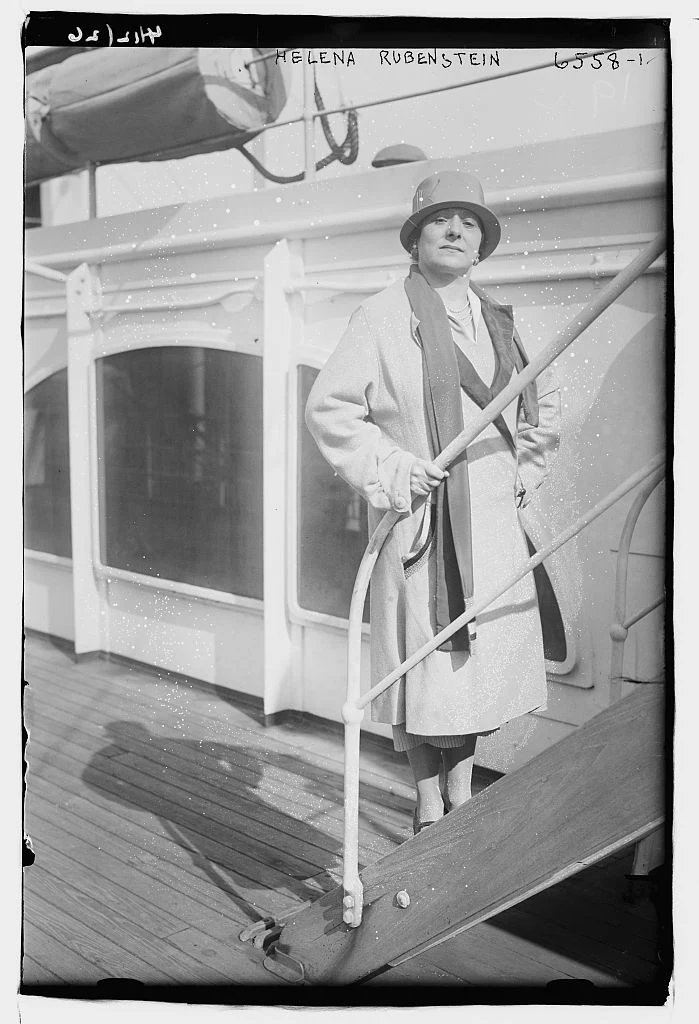
c. 1870–1965
Helena Rubinstein
Cosmetics entrepreneur, manufacturer and art patronHelena Rubinstein’s international cosmetics enterprise began in Melbourne, where products, personal consultation and carefully cultivated prestige became a business model. Expansion abroad brought manufacturing, retail distribution and art patronage onto a much larger stage. Her commercial skill belongs alongside scrutiny of the scientific-sounding claims and origin stories used to sell beauty.Read biographyQuick answers
Common questions
- Why does the route use 1902 when another account says 1903?
- 1902 follows Australian accounts of the first salon. The article separately preserves the Jewish Museum’s 1903 business date.
- Was Valaze simply a salon service?
- No. Packaged preparations, consultation and advertising were connected parts of the enterprise.
- Were the advertised remedies clinically established by these sources?
- No. Historical advertisements establish claims and sales methods, not modern clinical proof.
- Was the enterprise purely Australian throughout its life?
- No. Its Australian beginnings preceded international expansion and a much wider career.
Primary and institutional sources
How this history was checked
Australian institutional history and independent ABC reporting establish the early setting and critique the origin mythology. The ADB is used through indexed passages; no direct newspaper or trademark-file inspection is claimed. Selected reproduced advertisements and captions provide product-promotion evidence. Museum scholarship supplies the salon and international context; conflicting early dates and addresses are not silently harmonised. This article was reviewed on 24 October 2026.
- J. R. Poynter / Australian Dictionary of BiographySelected indexed passages: uncertain birth, Melbourne collaborators, foundation and death
- Angus Trumble / National Portrait Gallery2 October 2018 Study in Scarlet: selected Australian business and brand passages
- Louise Maher / ABC News8 August 2018: Australian origins and historian’s critique of the product mythology
- James Bennett / Cosmetics and SkinSelected 1903–1905 product, advertising and institute evidence; reproductions and captions, not a full newspaper review
- Rachel Boate / Metropolitan Museum of ArtModern Art Index Project: identity, international expansion and selected art-commission passages
- Mason Klein / The Jewish Museum2014–15 exhibition account: salon model, self-presentation and art collection
- Bain News Service / Library of Congress, Wikimedia Commons recordHelena Rubenstein LCCN2014719292.jpg: exact full-negative identity, provenance, assessment and two file versions
- Library of Congress, Prints & Photographs DivisionGeorge Grantham Bain Collection: collection-specific rights statement, revised November 2015