
The short answer
The map promises a destination, but the harder navigation is between convincing people and trustworthy ones. Stevenson’s adventure rewards attention to its narrators as well as its pirates. Spoilers are clearly marked below.
Chronology
A timeline of the turning points
A map and a story
The project developed during a Scottish family holiday, associated with Lloyd Osbourne.
Magazine publication
Young Folks serialised the adventure under Captain George North.
Book publication
Cassell published the revised novel in London.
A changing visual life
Illustrators and adaptations shaped images of the characters beyond the original serial.
Why the dates 1881 and 1883 both matter
Treasure Island did not begin its public life as an 1883 volume. Young Folks serialised it in 1881–1882 under the name Captain George North; Cassell then published a revised book in 1883. Distinguishing those stages prevents a common confusion between composition, first appearance and the edition that supplied its enduring title-page date.
The family setting also matters. Lloyd Osbourne, Stevenson’s stepson, was connected with the map-making that helped generate the story. Yet this was not merely a private entertainment later printed unchanged. The specialist Stevenson website traces negotiations about publication and illustration, showing a writer thinking about audiences and the commercial form his adventure would take.
The map is clear; the human evidence is not
Young Jim Hawkins’s discovery of papers connected with the old seaman Billy Bones sets a voyage in motion. Squire Trelawney, Dr Livesey and Captain Smollett bring different kinds of authority to the expedition. Jim tells most of the story retrospectively, while a central sequence passes to the doctor. The change reminds readers that no one observer occupies every place at once.
The adventure therefore gives practical importance to overhearing, partial information and mistaken confidence. Follow who knows about the map, who controls a space and who can move between groups. A reader can recognise danger before some adults do, but can also share Jim’s attraction to an engaging personality. Knowledge and social standing are not interchangeable.
Long John Silver and the education of judgement
Silver’s authority is built through sociability and competence as much as threat. In the apple-barrel episode, Jim overhears his plan for a mutiny and seizure of the treasure. Silver recruits another sailor with flattering language Jim recognises from their own encounters. The familiar voice is newly legible: what sounded like personal kindness can also be a method of persuasion.
That discovery does not make Silver dull or transparently predictable. His ability to negotiate helps explain his continuing power over other characters and over the reader’s attention. The useful question is not simply whether he belongs on the villain list. It is how charm, self-interest and adaptability make him effective, and how Jim learns to separate admiration from trust.
Spoilers: the treasure does not settle every account
The treasure has already been moved by Ben Gunn, making the chart less reliable than the hunters assume. Silver survives by changing his position and eventually escapes with money. The return is not a complete triumph of justice in which every crime receives a matching punishment and every danger is safely cancelled by a reward.
Jim’s closing account also remembers the violence behind the hoard. A useful interpretation is that possession and moral entitlement remain different questions. The book can deliver the excitement of finding treasure while making its accumulation and recovery troubling. Notice the distance between the pleasures of the quest and what its surviving narrator is willing to remember about its costs.
Choosing an edition without confusing its pictures with 1883
An unabridged edition lets readers follow the shifts in narrator, the nautical vocabulary and Silver’s changing language. Illustrations are valuable too, but their date matters: the Project Gutenberg transcription linked here includes later Louis Rhead illustrations, not a facsimile of the first Cassell edition. The original Young Folks serial’s visual presentation was much more limited.
For discussion, compare a character’s first impression with a later scene rather than reducing the novel to a pirate checklist. Jim’s judgements change, and the adult figures do not become infallible simply because they finance, command or narrate the voyage. That instability is part of the adventure’s continuing interest.
Continue the chronology
Related history guides
Biography context
Explore United Kingdom through connected lives
Robert Louis Stevenson
Place the novel within a career of travel, essays, Scottish fiction and Pacific writing.
Explore the biographiesPrimary readingSelected-text starting point
Read the opening, apple-barrel episode and closing chapters in an unabridged later transcription.
Explore the biographiesConnected biographies
Writers and narrated adventure
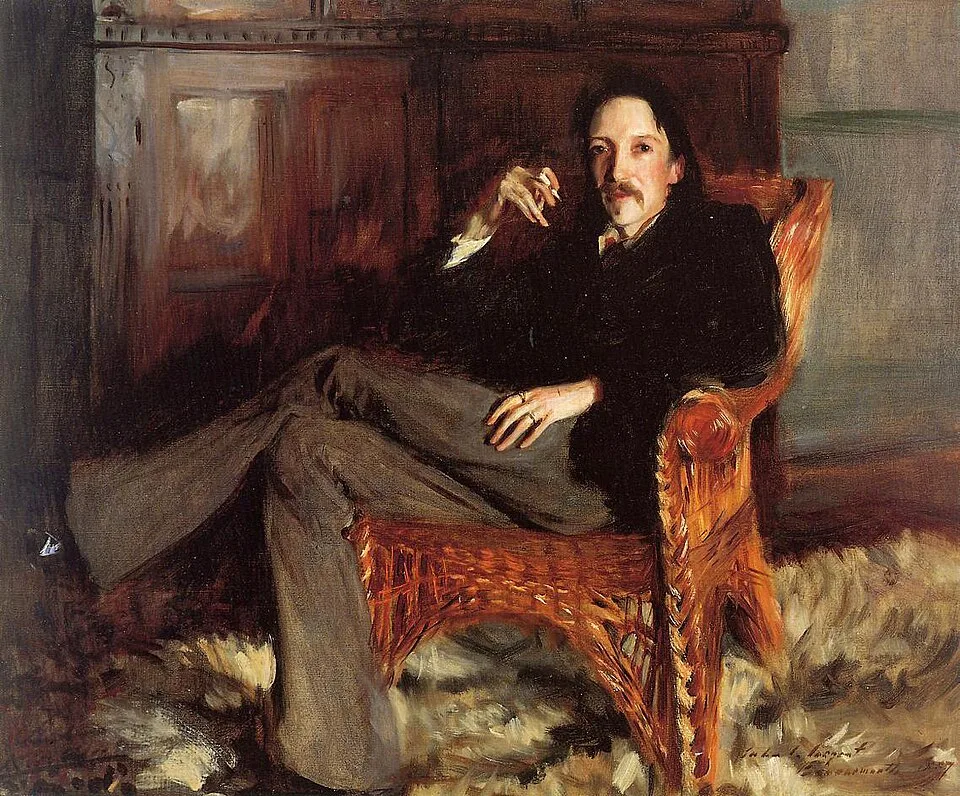
1850–1894
Robert Louis Stevenson
Novelist, essayist, poet and travel writerRobert Louis Stevenson was a Scottish writer whose adventures, Gothic fiction, essays and Pacific narratives tested how stories shape identity and moral judgement.Read biography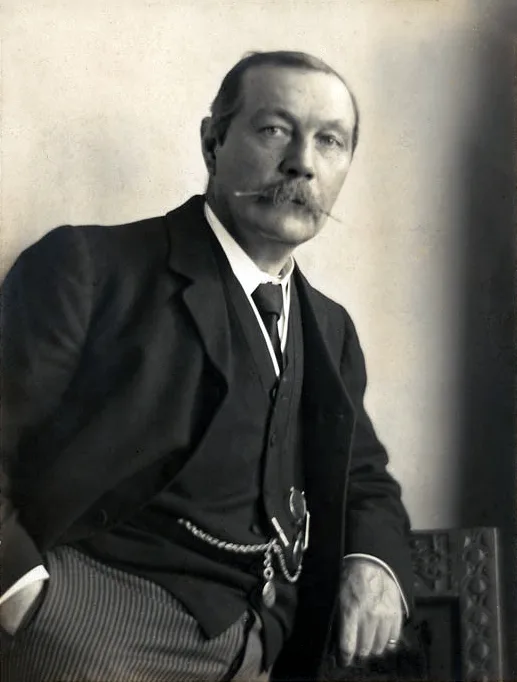
1859–1930
Arthur Conan Doyle
Writer, physician and public campaignerArthur Conan Doyle was a Scottish writer and physician whose Sherlock Holmes stories became international popular fiction within a much wider literary and public life.Read biographyQuick answers
Common questions
- Was Treasure Island first published in 1883?
- Its first book edition appeared in 1883, but the story had already run in Young Folks in 1881–1882.
- Does Jim Hawkins narrate the entire novel?
- No. He narrates most of it, but Dr Livesey takes over for a central sequence before Jim resumes.
- Is Long John Silver simply a trustworthy mentor?
- No. His apparent friendliness is entangled with manipulation and self-preservation. Jim has to learn how to judge him without confusing charisma with reliability.
Primary and institutional sources
How this history was checked
Publication history and selected passages support this guide. Contents, the opening, apple-barrel episode and closing passages were read in a later illustrated transcription; no complete first-edition collation or reading of every chapter is claimed. Interpretive questions are identified as readings, not Stevenson’s documented intentions. This article was reviewed on 23 October 2026.
- Robert Louis Stevenson WebsiteLife and publications: selected biographical sections
- Robert Louis Stevenson WebsiteWorks chronology: first publication and early republication
- Robert Louis Stevenson WebsiteFamily: Fanny, Lloyd Osbourne and collaborative writing
- Robert Louis Stevenson Website / Richard DurySamoa and Vailima: residence, writing and political context
- National Library of New ZealandStevenson, Robert Louis, 1850–1894: Samoan political involvement
- Robert Louis Stevenson WebsiteThe first illustrations for Treasure Island: serial and book context
- Robert Louis Stevenson / Project GutenbergTreasure Island: contents and selected chapters in a later Louis Rhead-illustrated transcription
- Robert Louis Stevenson / Project GutenbergJekyll and Hyde: opening, documentary transition and selected final narratives
- British LibraryStrange Case of Dr Jekyll and Mr Hyde: publication, narrative and duality
- John Singer Sargent / Wikimedia CommonsExact 1887 portrait, creator, public-domain basis and file history
- Wikimedia CommonsRecord-supplied complete 960 × 796 preview