
The short answer
The 1984–85 miners’ strike was a dispute about threatened jobs and pit closures, but also a struggle over union power, policing and the future of industrial communities. It ended without a negotiated settlement. Understanding it requires separating Margaret Thatcher’s government, the National Coal Board, union leaders and miners whose choices were not uniform.
Separate the actors
Who did what during the dispute?
Different institutions generated different decisions and records.
| Actor | Main role | Evidence to distinguish |
|---|---|---|
| Government | National policy and support for the Board. | Ministerial policy is not automatically a police operational order. |
| National Coal Board | Industry management, closures and negotiations. | An employer announcement is not the same as a completed closure. |
| NUM and area organisations | Industrial action, solidarity and bargaining. | National leadership positions did not represent identical local participation. |
| Police forces | Public-order operations and arrests. | Charges must be distinguished from convictions and later findings. |
Chronology
A timeline of the turning points
Closures prompted industrial action
Cortonwood and the wider Coal Board programme became immediate catalysts; local action and national announcements were separate steps.
The ballot dispute divided miners
The NUM did not hold a national membership ballot, while participation varied substantially between coalfields.
Police and pickets confronted one another at Orgreave
The coking plant confrontation produced injuries and arrests; subsequent prosecutions collapsed.
Families and support networks sustained the dispute
Food, money, clothing and political solidarity helped communities facing the loss of wages.
NUM delegates backed a return to work
The 98–91 vote ended the national dispute without an agreed settlement on the central closure questions.
Miners returned
Return dates and local decisions followed the national vote; this was not an agreement that all threatened pits would remain open.
A statutory Orgreave inquiry was launched
The Home Office announced an investigation into planning, events, prosecutions and impacts; launch is not a finding of responsibility.
Closures threatened more than one employer’s balance sheet
Coal was a nationalised industry run by the National Coal Board. In March 1984 closure plans and action around Cortonwood in Yorkshire helped turn local resistance into a wider dispute. Institutional summaries assign different dates to announcements and early walkouts, so a single day should not be made to stand for every stage of the strike’s beginning.
The announced programme was commonly described as involving twenty pits and about 20,000 jobs. For the Board and government, the argument concerned costs and the industry’s future. For affected communities, a pit also supported household incomes and local institutions. Those were not merely competing descriptions of profitability: they were different measures of what closure would remove.
The government, Coal Board and union had different responsibilities
Thatcher’s government supported the Board’s position. Ian MacGregor chaired the NCB, while Arthur Scargill led the NUM. Stockpiling coal, continued production and coordination between police forces reduced the possibility that picketing would force a national power crisis. The government’s preparation distinguished this confrontation from earlier disputes in which interruptions to fuel supply had increased pressure for settlement.
It is nevertheless misleading to label every operational decision a personal order from the prime minister. Bargaining involved the Board and union; policing involved chief officers and forces brought in through mutual aid. The Metropolitan Police’s file inventory identifies situation reports, deployments and recommendations, showing the institutional record available for research. An inventory identifies evidence to examine; it does not establish what every file proves.
The missing national ballot exposed existing regional divisions
No national membership ballot authorised the 1984 strike. The union instead relied on area action and its rules concerning support between coalfields. Research on Nottinghamshire shows why this was not a minor procedural detail: competing interpretations of union democracy and solidarity influenced whether miners considered continued work legitimate or betrayal.
Many Nottinghamshire miners remained at work, while participation was much stronger in several other areas. Regional experience, expectations about local pit survival and relationships inside the union mattered alongside national rhetoric. Calling all working miners government agents, or all strikers unquestioning followers of Scargill, removes individual and collective choices that the historical evidence requires readers to consider.
Support networks widened the political meaning of the strike
A prolonged stoppage meant families had to replace lost wages with other resources. The People’s History Museum describes a nationwide network collecting food, money and clothing. Women’s groups also organised practical support and campaigning, making the dispute a struggle conducted in kitchens, meeting rooms and fundraising events as well as at colliery gates.
The National Coal Mining Museum’s resource highlights women joining pickets and organising against closures. Such participation should not be presented as a decorative addition to a male industrial story. It affected how long communities could sustain action and whose experiences were preserved afterwards. At the same time, solidarity was never universal: the dispute strained relationships within families, workplaces and towns.
Orgreave’s prosecutions and later inquiry must be kept separate
At Orgreave coking plant on 18 June 1984, a major confrontation between police and pickets resulted in injuries and arrests. The Home Office’s later account records that those arrested faced riot and unlawful-assembly charges, which were dropped after police evidence was discredited. Arrests and charges therefore cannot be counted as findings of guilt.
On 26 March 2026 the government formally launched a statutory inquiry into planning, events, the immediate aftermath, prosecutions and effects on communities. That announcement supplies a dated accountability development, not the inquiry’s final conclusions. This guide does not infer an individual’s criminal responsibility from the existence of an investigation or repeat contested claims as already adjudicated findings.
Sources for this section: [8]
The return to work ended the stoppage, not its consequences
On 3 March 1985 NUM delegates voted 98–91 for an organised return without a negotiated settlement on closures and manpower reductions. Local returns followed. The Mining Heritage project reproduces both an NCB letter and contemporary Nottinghamshire records, allowing the end of the strike to be examined as more than a victory statement from either national leader.
The outcome strengthened the government and weakened the NUM’s bargaining position, but returning to work did not mean that mining communities had accepted every closure or that all pits shut immediately. The same contemporary collection records sharply different reactions among miners. Political outcomes, industrial restructuring and the loss of community livelihoods are related, but they are not interchangeable measures of what the year had meant.
Biography context
Explore United Kingdom through connected lives
Connected biographies
Read the political life behind the government’s position
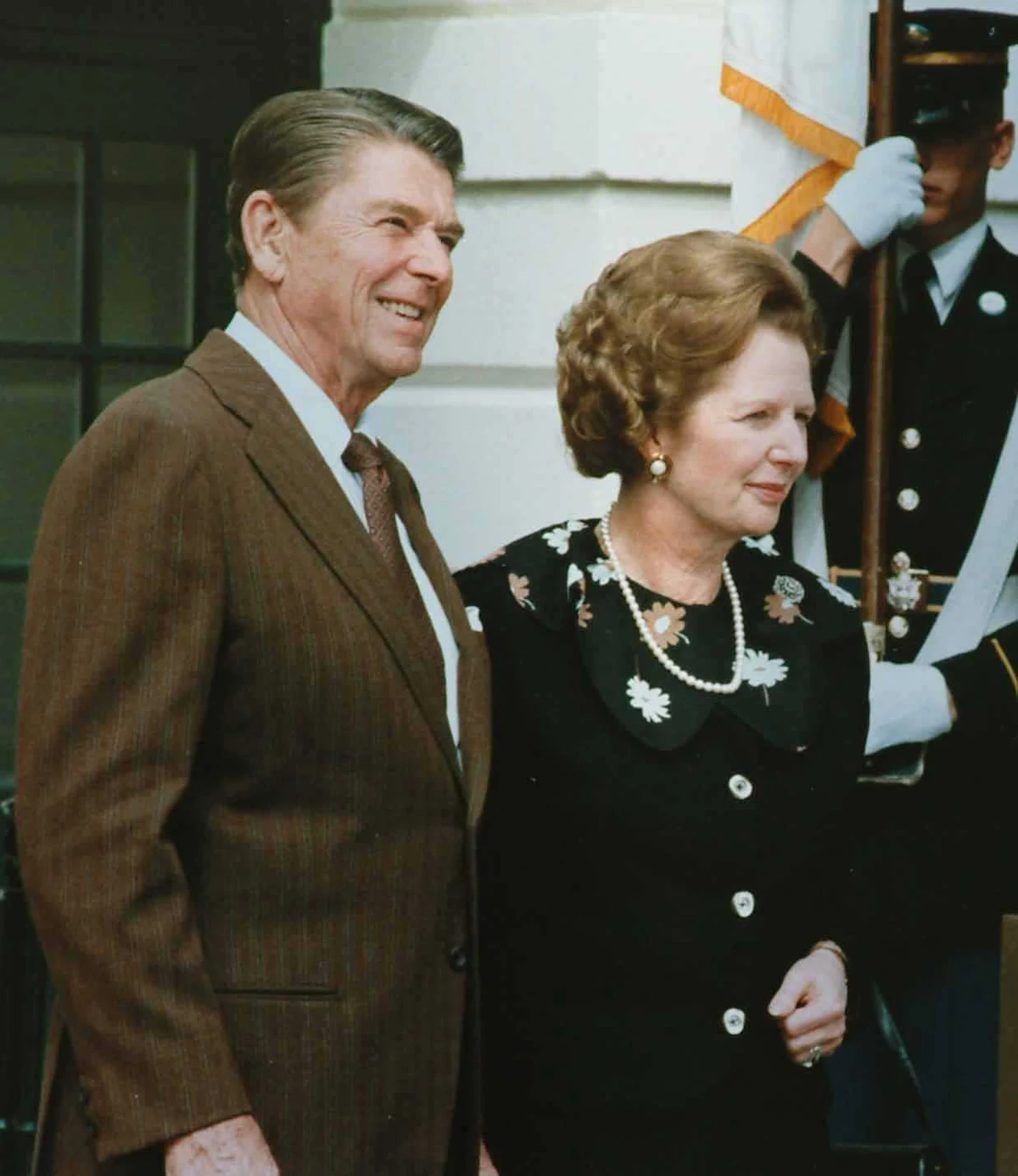
1925–2013
Margaret Thatcher
British prime minister, 1979–1990Margaret Thatcher was Britain’s first woman prime minister, serving from 1979 to 1990. Her governments changed public ownership, trade-union law and economic policy, winning three elections while provoking enduring conflict over inequality, industrial decline and state power.Read biographyQuick answers
Common questions
- Why did the 1984–85 miners’ strike begin?
- Pit closures and threatened job losses prompted action that spread across coalfields in March 1984. Cortonwood was a major catalyst within a wider struggle over the future of nationalised coal.
- Was there a national ballot of NUM members?
- No national membership ballot authorised this strike. The reliance on area action and union rules became a major source of internal division, especially in Nottinghamshire.
- When did the miners’ strike end?
- NUM delegates voted on 3 March 1985 for an organised return to work without an agreed settlement. Returns and local decisions followed that vote; they were not one uniform event at every pit.
- Did the Orgreave arrests prove the miners were guilty?
- No. The subsequent prosecutions collapsed after police evidence was discredited. The statutory inquiry launched in March 2026 is a separate investigation, not a retrospective conviction or a completed finding.
Primary and institutional sources
How this history was checked
Council and museum summaries were cross-checked with Mining Heritage’s contemporary records and the police file inventory. The museum resource’s indexed overview and the Nottingham doctoral research’s indexed ballot discussion were accessible; neither complete PDF is claimed as read. Summaries differ on which early-March announcement marks the beginning, so the chronology does not conflate local walkouts with the wider programme. The Home Office’s 26 March 2026 announcement is used for the inquiry’s launch and stated scope, not a claim that it has published final findings. This article was reviewed on 23 October 2026.
- UK Prime Minister’s OfficeHistory of Baroness Thatcher
- Sheffield City Council, Libraries and ArchivesMiners’ strike research guide
- People’s History MuseumMiners’ Strike 1984–1985: archival research guide
- National Coal Mining Museum for EnglandThe 1984–85 Miners’ Strike Resource: overview, indexed extract
- Mining Heritage / David Amos collectionEnd of the 1984–85 Miners’ Strike: records and contemporary reactions
- Metropolitan PoliceLocation of historical files relating to the 1984–85 dispute
- University of Nottingham repositoryNottinghamshire miners and the ballot issue: doctoral research, Chapter 4
- UK Home OfficeTruth for victims and families as Orgreave Inquiry launches, 26 March 2026