
The short answer
A studio needs a way to begin its next film and a way to sustain the people who make it. Ghibli’s first years show that founding a company and establishing a continuing workplace were different decisions.
Original organisational comparison
Founding and continuing require different commitments
Each arrangement solves one problem and creates another.
| Country | Arrangement | Commitment and question |
|---|---|---|
| Project before a new studio | Topcraft production of the 1984 Nausicaä film. | Which resources and relationships carry into a subsequent organisation? |
| Publisher-backed studio | Tokuma Shoten subsidiary begins in June 1985. | Who approves support and secures a viable route to distribution? |
| Production-specific staffing | Team assembled for an individual film. | How is risk distributed when the production finishes? |
| Regular staff and trainees | November 1989 change. | How are continuing pay and skill development financed between releases? |
| Own studio building | August 1992 move. | How does a permanent working base support continuity and add commitments? |
Chronology
A timeline of the turning points
Nausicaä opens
Miyazaki directed; Takahata produced; Topcraft made the animation.
A studio opens
Ghibli began activity as a Tokuma Shoten subsidiary in Kichijoji.
Second production base
A second studio supported two features being made simultaneously.
Employment changes
Regular, full-time staffing and a trainee system began.
A permanent building
The studio moved into its own building in Koganei.
The predecessor film was not made by an existing Ghibli
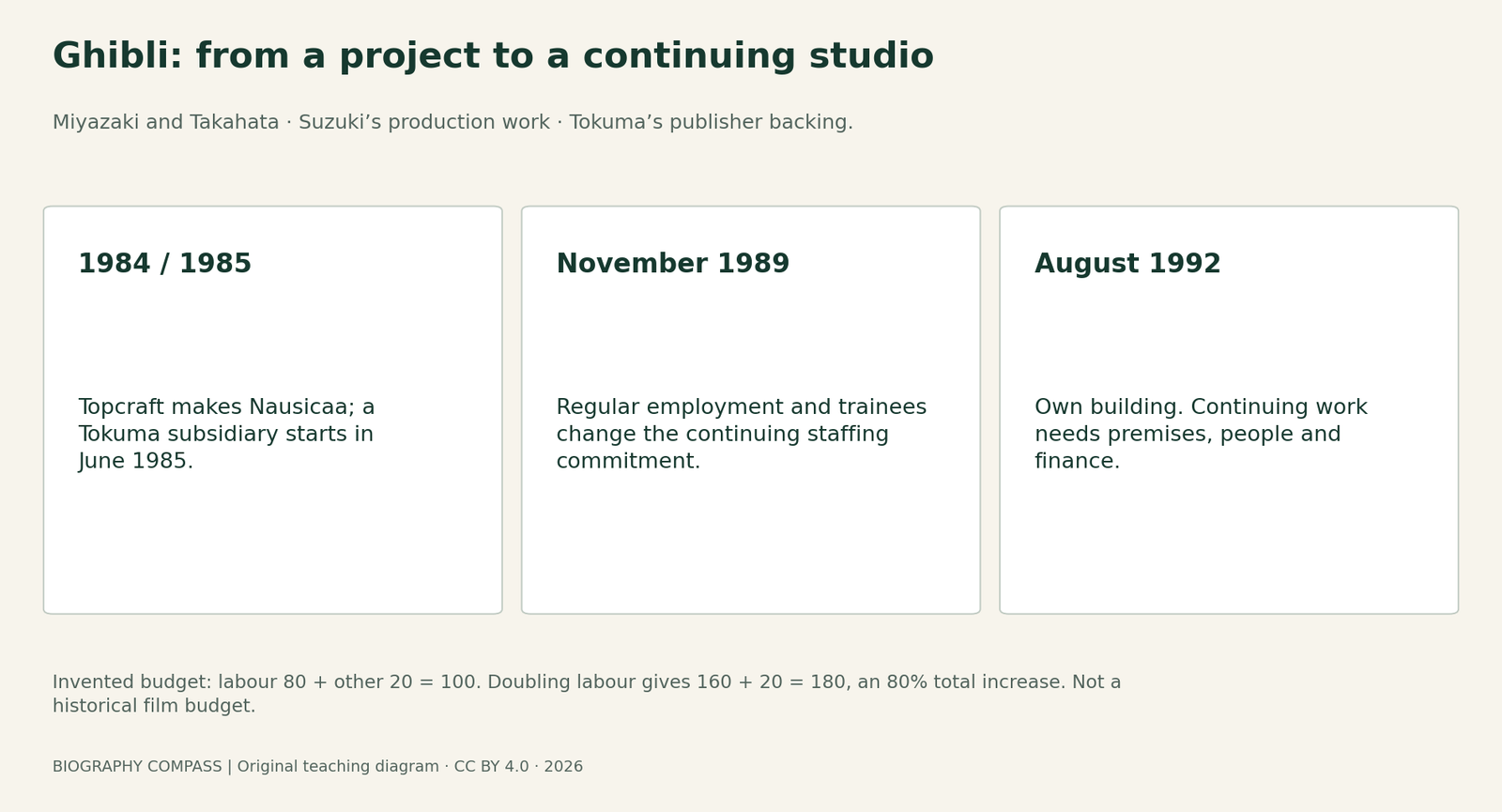
Nausicaä of the Valley of the Wind opened on 11 March 1984. Its official record identifies Miyazaki as original creator, screenwriter and director, Takahata as producer and Topcraft as the production studio. Ghibli’s company profile dates its own activity to June 1985 as a Tokuma Shoten subsidiary. The later catalogue can hold both records without making them contemporaneous. This distinction matters for the business question: a successful project can supply the case, relationships and skills for establishing a new organisation, while remaining a project made under an earlier arrangement.
A publisher supplied more than a cheque
Tokuma Shoten was a publisher with an animation magazine, Animage. The official Animage exhibition account describes editor Toshio Suzuki’s place in connecting readers, makers and film production. Ghibli’s history identifies Yasuyoshi Tokuma as the decision-maker who backed both the Nausicaä film and the studio’s establishment. Financing therefore belonged to a relationship involving editorial advocacy, production judgement and distribution contacts. It would be misleading to picture a completed artistic idea simply receiving money from a passive outsider. The available accounts establish support and decisions; they do not supply an audited 1985 financing ledger.
Early continuity was organised one film at a time
The studio’s retrospective describes assembling roughly seventy staff for an individual production and dispersing the team when it finished, an arrangement attributed to Takahata’s concern with risk. Its chronology shows the consequences of growing ambition: a second studio opened in April 1987 to support simultaneous features and closed after fulfilling that task in April 1988. The important comparison is between temporary production capacity and a permanent commitment. Both can make a film, but they place the interval before the next film differently on the company and on the people whose work it requires.
A producer had to make a project acceptable
In his 2013 interview with Yoichi Shibuya, Suzuki recalls difficulty obtaining support for Totoro’s Japanese setting and subject. He describes discussions with Miyazaki, Takahata and Tokuma colleagues, then an arrangement involving Shinchosha and two films released together. This is evidence of a producer negotiating what could be made and how a package could be presented. It also shows why neither artistic authority nor money alone explains production. The existing Grave of the Fireflies guide follows the resulting source and credit distinctions; here the question is how proposals became acceptable enough to proceed.
Sources for this section: [6]
Employment changed the next-film problem
Ghibli’s chronology dates regular, full-time employment, animation trainees and recurring recruitment to November 1989. The company history links the change to Miyazaki’s proposals for fixed salaries and better pay after Kiki’s Delivery Service. Suzuki became devoted to Ghibli full-time in 1989, a date also recorded by the BFI’s later interview. Sustaining a workforce changes what an interval between productions means: salaries continue and training becomes a continuing activity. By August 1992, the chronology records a move into the studio’s own building. A studio’s working arrangements developed after its legal beginning.
An original production-budget exercise
Consider a fictional film budget of 100 units: 80 for labour and 20 for other production costs. If labour pay doubles while working time and all other costs remain unchanged, calculate the new budget. Then identify what the calculation leaves out. These values form a deliberately simplified teaching model prompted by the studio history’s discussion of labour costs. They are not the actual budget of Kiki, Only Yesterday or any other film. Neither admissions nor gross box-office receipts should be substituted for money available to a producer without accounting for the relevant contractual shares and costs.
Sources for this section: [4]
A suggested answer: 180 units, with conditions
The labour component becomes 160 units; adding the unchanged 20 produces a 180-unit total, an 80% increase. It does not become exactly 200 because only part of the original budget doubled. The calculation assumes unchanged staffing, hours, schedule and non-labour costs. It omits financing charges, distribution terms, marketing, rights income and the timing of payments. A real plan must ask when bills fall due as well as whether eventual receipts exceed costs. This original exercise explains why a change in employment arrangements can require new planning even after a successful film.
Sources for this section: [4]
Read organisational ideals as statements, too
In the Ghibli Museum’s published interview about Animal Farm, Miyazaki describes a company as shared property of the people who work and live there. That is his expressed view of work and ownership, not a substitute for a company’s legal ownership record or proof that every employee had the same experience. Read alongside the dated changes, it adds a participant’s vocabulary to the institutional history. The resulting question is concrete: how did a publisher-supported series of productions acquire the people, routines and premises needed to continue? The answer requires producers and staff alongside celebrated directors.
Continue the chronology
Related history guides
Grave of the Fireflies: Source and Credits
Follow the different roles of the original story, producing company, animation studio and film crew.
Read the timeline1980–1993Game Boy: Screen, Power and Design
Compare how another creative organisation connected ambitions to component and budget constraints.
Read the timelineBiography context
Explore Japan through connected lives
Connected biographies
People behind the decisions
1941–present
Hayao Miyazaki
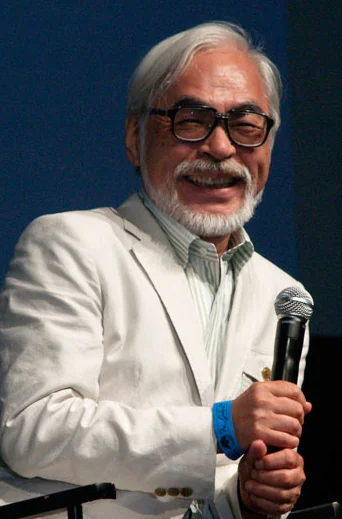
Animation director, screenwriter and manga artist; Studio Ghibli honorary chairmanHayao Miyazaki built a career across television, manga and animated features before co-founding Studio Ghibli. His films and production decisions developed through enduring collaborations with Isao Takahata, Toshio Suzuki and specialist artists.Read biography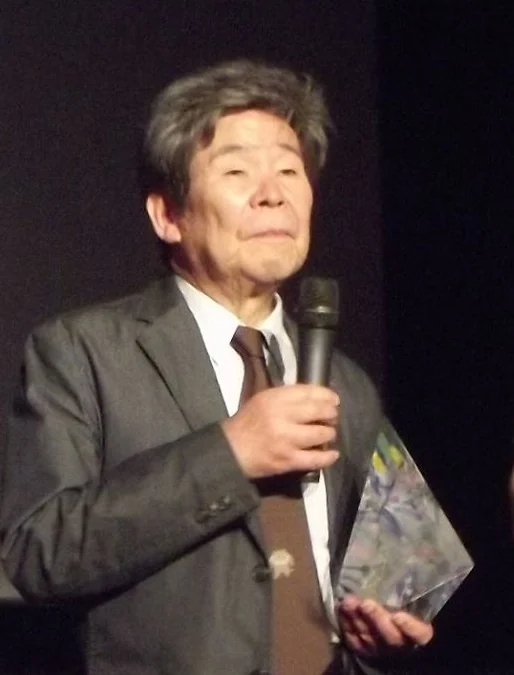
1935–2018
Isao Takahata
Animation director, screenwriter and producerIsao Takahata directed animated films and television series that examined everyday life, memory and social relationships. His career crossed Toei, literary television adaptations and the founding of Studio Ghibli.Read biographyQuick answers
Common questions
- Was Ghibli founded to make Nausicaä in 1984?
- No. The film predates the studio, and its official record names Topcraft. Ghibli began activity as a Tokuma Shoten subsidiary in June 1985.
- Why is November 1989 a separate milestone?
- Ghibli’s chronology records the move to regular, full-time staff and a trainee and recruitment system, changing the continuing workplace after the studio’s founding.
Primary and institutional sources
How this history was checked
Studio and museum records are compared with actual Suzuki interviews and an official exhibition account. The budget calculation, answer and comparison are original teaching material. This article was reviewed on 27 October 2026.
- Studio GhibliNausicaä of the Valley of the Wind: credits and production note
- Studio GhibliCompany profile, updated June 2026
- Animage and Ghibli ExhibitionAnimage and Toshio Suzuki: official exhibition account
- Studio GhibliStudio Ghibli history: beginnings and employment changes
- Studio GhibliStudio chronology
- Discuss Japan / Japan Policy ForumToshio Suzuki interview with Yoichi Shibuya, 11 October 2013
- Sight and Sound / British Film InstituteDrawing ahead: Toshio Suzuki interview, 24 March 2021
- Ghibli Museum, MitakaHayao Miyazaki interview and biographical profile