
The short answer
Why invest in a Russian bank and then sell the stake only a few years later? The Troika Dialog story concerns a partnership that changed form. It distinguishes minority ownership from control, a group-wide valuation from one seller’s receipt, and a sale agreement from its completed implementation.
Chronology
A timeline of the turning points
Alliance proposed
The initial release describes a 33% investment, subject to approvals.
Investment completed
The adviser records the combined cash and Russian-subsidiary contribution.
Sberbank agreement announced
The proposed buyer is to acquire both major shareholder interests.
Standard Bank confirms disposal
The seller announces receipt of approvals and successful closing.
Contingent consideration period
The contract links possible additional consideration to subsequent performance.
The 2009 alliance exchanged a business as well as cash
The initial Troika release proposed that Standard Bank contribute US$200 million and its wholly owned Russian bank in exchange for a minority interest. It described a strategic committee and representation on Troika’s board, subject to regulatory approvals. This was not a purchase of every Troika share.
Clifford Chance’s later transaction account confirms a September 2009 investment valued at US$300 million, combining cash with the Russian subsidiary’s net assets. The distinction matters: the investment’s total value was not identical to the amount of new cash paid. Transferring an existing operation was part of the bargain.
A strategic minority position was an explicit choice about risk
Maree explained in his 2010 interview that Standard Bank preferred a strategic minority position in Troika, seeing a local partner as a way to improve its risk profile and commercial prospects. That was management’s rationale, not independent proof that the risks had disappeared.
The original proposal referred to thirty-three per cent; later accounts and the disposal announcement describe approximately 36.4 per cent. These should not be presented as an unchanged percentage at every stage. More importantly, the majority remained with the other shareholder group: influence through a partnership did not equal sole operating control.
The whole-company price was not one seller’s receipt
In March 2011, Sberbank agreed to acquire both Standard Bank’s minority interest and the controlling interest held through TDM. The reported US$1 billion upfront valuation covered the whole company. Standard Bank’s announced initial receipt was US$372 million, with a separate performance-linked earn-out.
The financial statements described that receipt by reference to the stake’s carrying value. It should not be treated as a simple measure of lifetime investment profit: cash originally contributed, transferred assets, accounting values and contingent future consideration answer different questions. An earn-out provision also does not establish that the maximum amount was eventually paid.
The buyer changed the institutional setting in Russia
The Centre for Eastern Studies placed the proposed sale within the growing role of state-controlled banks in Russia. Its contemporary analysis described Sberbank’s acquisition as another expansion of state presence in finance and a way to strengthen its investment-banking position.
This context is different from simply saying that Standard Bank sold because the investment had failed. The transaction also served a buyer seeking capabilities and local scale. The analysis was written when completion was still expected; it cannot itself prove the eventual closing date or the payment of later bonuses.
Sources for this section: [7]
Disposal changed capital ownership without necessarily ending cooperation
Standard Bank’s January 2012 notice confirmed closing after the required approvals. Maree said that Russia remained important and envisaged cooperation with Sberbank and Troika, especially around African and natural-resource business. Selling the equity stake was therefore not the same announcement as terminating every commercial relationship.
There was nevertheless a wider strategic reversal. Reuters’ later assessment contrasted Standard Bank’s successful African expansion with costly ambitions in other emerging markets and its subsequent retrenchment. Both points belong in the account: a continuing relationship could coexist with withdrawal of ownership capital and a more selective international strategy.
Biography context
Explore South Africa and Russia through connected lives
Jacko Maree
Trace the broader banking career, international criticism and subsequent board roles.
Explore the biographiesCompare a different partnershipICBC’s Standard Bank investment
Distinguish the Chinese bank’s investment in Standard Bank from Standard Bank’s own Russian minority holding.
Explore the biographiesConnected biographies
The chief executive associated with the strategy
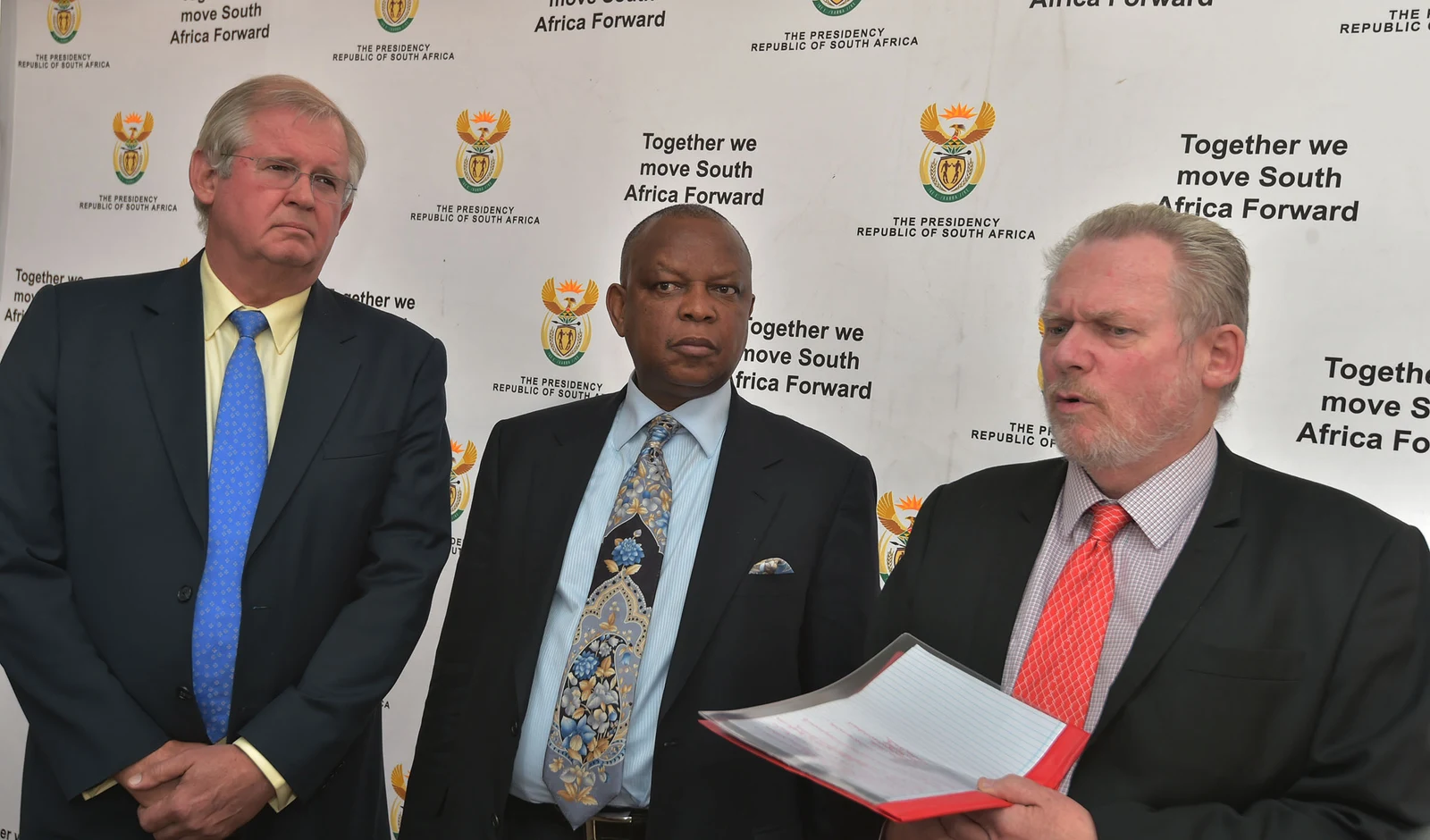
1955–
Jacko Maree
Former Standard Bank group CEO and deputy chairmanJacko Maree spent his banking career at Standard Bank, leading the group from 1999 to 2013. His record includes stronger African operations, the ICBC partnership and costly ambitions beyond Africa. He later returned to the board, but his group directorship ended in June 2026. His career is best understood through both growth and the decisions to retreat or change course.Read biographyQuick answers
Common questions
- Did Standard Bank buy all of Troika in 2009?
- No. It exchanged cash and its Russian subsidiary for a minority position.
- Did Standard Bank receive the entire US$1 billion?
- No. That was the whole-company upfront figure; its announced receipt was US$372 million.
- Does the earn-out prove that extra money was paid?
- No. A contractual possibility requires separate evidence of actual payment.
- Was this Maree’s personal investment?
- No. The buyer and seller were corporate entities; his role was group chief executive.
Primary and institutional sources
How this history was checked
The alliance release, adviser’s account, accounts and completion notice establish the sequence. Independent Russian-policy analysis and contemporary reporting distinguish management rationale from an external assessment. Notice mirrors share one pool. This article was reviewed on 24 October 2026.
- Troika Dialog / Kazakhstan Stock Exchange6 March 2009 strategic-alliance release, published 10 March
- Clifford Chance2012 annual review, selected Standard Bank transactions, printed page 10
- Michael Kloss and Vikas Sagar / McKinsey QuarterlyJune 2010 interview and biographical panel
- Standard Bank Group2011 financial statements, selected Troika passages, printed pages 104 and 136
- Standard Bank Group / Publicnow, MarketScreenerTroika transaction successfully concluded, 26 January 2012
- I-Net Bridge / News24Standard finalises Troika disposal, 26 January 2012
- Centre for Eastern Studies, OSWRussian Federation: Sbierbank takes over Troika Dialog, 16 March 2011
- Reuters / MoneywebStandard Bank CEO Jacko Maree retires, 7 March 2013
- Kopano Tlape / GCIS, GovernmentZA2015 GCIS meeting photograph
- Creative CommonsAttribution-NoDerivs 2.0 Generic
- Creative CommonsBY-ND 2.0 legal code, section 3