
The short answer
What business did SoftKey create in Toronto in 1986? It published and marketed personal-computer software, reaching buyers through a consumer-business approach rather than inventing every underlying programme. Later combinations, a US headquarters and acquisition of The Learning Company changed the organization substantially. This guide follows that Canadian origin into its consequences, distinguishing a publisher, an acquired brand, a legal name and a buyer’s subsequent results.
Chronology
A timeline of the turning points
Software publishing
O’Leary co-founds SoftKey Software Products in Toronto.
A combined organization
SoftKey, WordStar and Spinnaker become part of a broader group operating from Massachusetts.
Portfolio and name
An existing Learning Company is acquired before the group adopts its name.
Buyer and operating outcome
Mattel completes its merger and later reports substantial software losses.
The Toronto venture followed an earlier production business
O’Leary’s broadcaster biography dates SoftKey Software Products to 1986. In his Ivey interview he describes using money from his earlier television-production venture to begin the business in a Toronto basement. That account supplies a Canadian origin, not a claim that every later group company was founded in the same room.
The customer opportunity grew with household personal-computer use. Software could be developed, licensed, packaged and sold through channels familiar from consumer products. Publishing involved decisions about an audience and distribution as well as programming, so a marketing-led founder could contribute without personally writing every product.
A publisher and a software inventor were different roles
SoftKey’s later catalogue combined home and small-business products with educational and reference titles. The company-history account describes budget formats and distribution arrangements that reduced packaging and brought products to a wider set of shops. The economics included shelf space and price, not just technical features.
That approach depended on developers and rights acquired from others as well as the publisher’s own work. A brand on a disc does not establish that its most visible executive designed its contents. The distinction becomes especially important when familiar products enter a catalogue through the acquisition of another company.
Growth changed the corporate identity and management
A combination involving SoftKey, WordStar and Spinnaker created a broader organization in the early 1990s, with headquarters in Massachusetts. The company-history account identifies Michael Perik and O’Leary in its senior leadership. It was no longer adequately described as a lone founder’s small Toronto operation.
This is also why the group’s inherited corporate history can predate the 1986 venture. A legal predecessor, a consumer brand and an operating business need not have the same founding year. Treating every date as an error would obscure how combinations assembled the later company.
The Learning Company was acquired before its name was adopted
In October 1995 contemporary New York Times reporting described SoftKey’s hostile bid for The Learning Company, which had agreed to a Broderbund deal. The discussion concerned competition and pricing in educational software. O’Leary said the company planned lower-priced extensions of brands rather than simply cutting the price of every existing title.
The acquisition was followed by adoption of The Learning Company name in October 1996. Buying that publisher did not make O’Leary the original creator of its earlier educational works. Nor should a report that a bid began be mistaken for the date when all related transactions or the later name change were completed.
A large exit did not guarantee successful integration
Mattel completed its Learning Company merger in May 1999. Its annual report then described slowing CD-ROM sales, inventory difficulties and discounting, and recorded a substantial software-business loss. The buyer’s strategy had been to combine interactive products with its established consumer brands, but the anticipated benefits were not automatically realized.
The history therefore has two outcomes to explain: growth and a major ownership transaction, followed by poor results for the acquiring company. Neither establishes that the whole purchase price was a personal cash payment to one founder. SoftKey’s origin is useful as a case in software commercialization precisely because distribution, ownership and operating performance remain separate questions.
Continue the chronology
Related history guides
Biography context
Explore Canada through connected lives
Connected biographies
The entrepreneur’s broader career
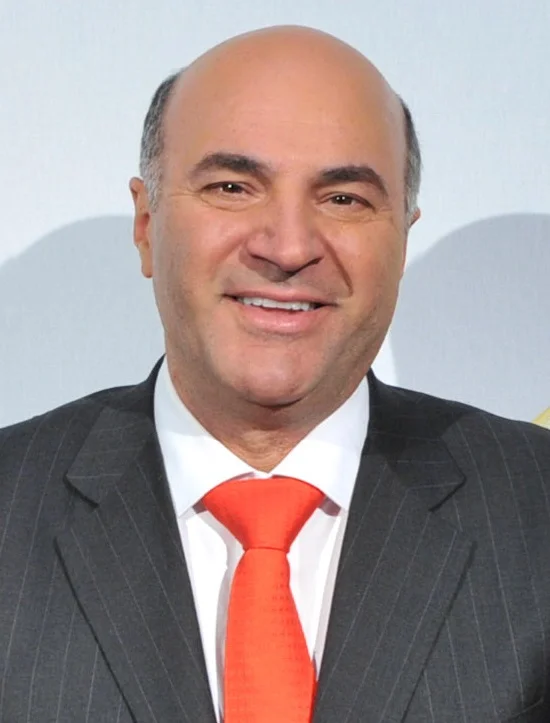
1954–present
Kevin O’Leary
Software entrepreneur, investor and television personalityKevin O’Leary is a Canadian entrepreneur and television investor whose software career began with SoftKey in Toronto in 1986. The later Learning Company was acquired by Mattel in 1999 and performed poorly after the deal. Television expanded his profile, while his paid FTX promotion brought renewed scrutiny after the exchange collapsed.Read biographyQuick answers
Common questions
- Was SoftKey founded in Canada?
- The SoftKey Software Products venture began in Toronto in 1986. The later combined group operated from Massachusetts.
- Was SoftKey the original Learning Company?
- No. It acquired an existing publisher and adopted The Learning Company name in 1996.
- Did the Mattel deal prove every software title was profitable?
- No. Mattel’s 1999 report records significant software losses after the merger, despite the large ownership transaction.
Primary and institutional sources
How this history was checked
The Canadian origin is supported by institutional and first-person accounts. Contemporary reporting checks the takeover debate; the buyer’s annual report provides the operating outcome rather than relying on celebratory sale headlines. This article was reviewed on 23 October 2026.
- ABC / Disney Entertainment Television PressKevin O’Leary: software, production and television career
- Ivey Business ReviewFounder interview: education, production, Toronto software venture and investing
- Electrical Generating Systems AssociationSpeaker biography: 9 July 1954, education and SoftKey co-founding
- International Directory of Company Histories / FundingUniverseSoftKey and The Learning Company: publishing, combinations, management and 1996 renaming
- New York Times / Roanoke Times / Virginia Tech archive31 October 1995: hostile bid, pricing debate and O’Leary response
- Mattel1999 Annual Report: completed May merger and software losses
- Wikimedia Commons / credited photographerExact photograph, subject identification and commercial-compatible licence
- Creative CommonsPhotograph licence terms