
The short answer
On 25 May 2012, SKA members chose a dual-site approach rather than a single winning location. The decision joined scientific assessment to national investments and international negotiation. It allocated different telescope technologies between host regions; it did not announce that a completed observatory was already operating.
Chronology
A timeline of the turning points
African bid develops
South Africa and partner countries work towards hosting the international project.
Two candidate regions
Southern Africa and Australia remain on the shortlist.
Final proposal submitted
The African team submits its final hosting proposal.
Members announce two sites
The meeting at Schiphol produces a dual-site approach.
Formal allocation resolution
Members record host/technology arrangements and implementation conditions.
Construction and early tests
Construction approval, site ceremonies and early signals are later milestones, not part of the 2012 completion record.
A technical preference was not the final hosting decision
Southern Africa and Australia emerged as the two shortlisted candidate regions. The site assessment considered more than remoteness: radio interference, infrastructure, data connections, operating conditions and the sustainability of a quiet environment all mattered.
The advisory committee preferred the African proposal while recognising that both locations were suitable. Final authority lay with the SKA Organisation’s members, informed by additional work on a dual-site option. Independent reporting recorded the non-bidding members’ majority decision. An expert recommendation therefore formed part of the process; it was not an instruction automatically binding every subsequent institutional choice.
The 2012 allocation separated technologies and phases
The announcement placed most first-phase dishes in South Africa, alongside MeerKAT, with additional dishes supplementing ASKAP in Australia. Low-frequency antennas were assigned to Australia. The second-phase plan allocated dishes and mid-frequency aperture arrays to southern Africa.
These are the terms of the historical decision, not a description of every later design or installation. A formal November resolution also made future construction dependent on design progress, financial viability and satisfactory technical performance. Reading the phases separately avoids turning a conditional development plan into a claim that every proposed component existed in 2012 or would necessarily be delivered unchanged.
Precursor telescopes changed the practical choices
Both bids had already invested in radio astronomy. South Africa’s MeerKAT and Australia’s ASKAP were not simply illustrations attached to proposals: their instruments and supporting infrastructure offered a starting point for further development. The two host-side statements emphasised making use of those investments.
This helps explain why the choice was more complicated than selecting the strongest location on an otherwise empty map. Incorporating existing capability could protect scientific work and institutional support. It did not remove all additional costs or coordination burdens. The contemporary Physics World report included an astronomer’s warning that splitting sites would add complexity and expense.
National responses revealed the compromise
Pandor’s statement called the split unexpected after the search for one site and the advisory preference for Africa. It nevertheless accepted the compromise in the interests of science and acknowledged the work of the wider project team.
The Australia–New Zealand response welcomed the result and stressed the strengths of the Western Australian infrastructure. Those statements are evidence of how bidding governments explained the outcome, not independent proof that every financial claim had been settled. Read together, they show why the event cannot be reduced either to an exclusive South African victory or to the rejection of the African bid.
Selection opened an implementation process rather than ending one
SKAO’s later construction account distinguishes council approval in 2021 from site commencement ceremonies in December 2022. Subsequent work involved delivery, assembly, commissioning and testing in stages. Early observations are milestones within that process, not synonyms for the completion of the entire design.
By January 2026, SKA-Mid had combined astronomical signals from two dishes to achieve its first interferometric fringes. The distance between the 2012 decision and that test illustrates the work separating an international agreement from an operating instrument. The enduring significance of the site choice is the framework it created for shared science, not an instantly fulfilled construction promise.
Sources for this section: [5]
Continue the chronology
Related history guides
Biography context
Explore Schiphol, Netherlands through connected lives
Connected biographies
A minister within a collective scientific project
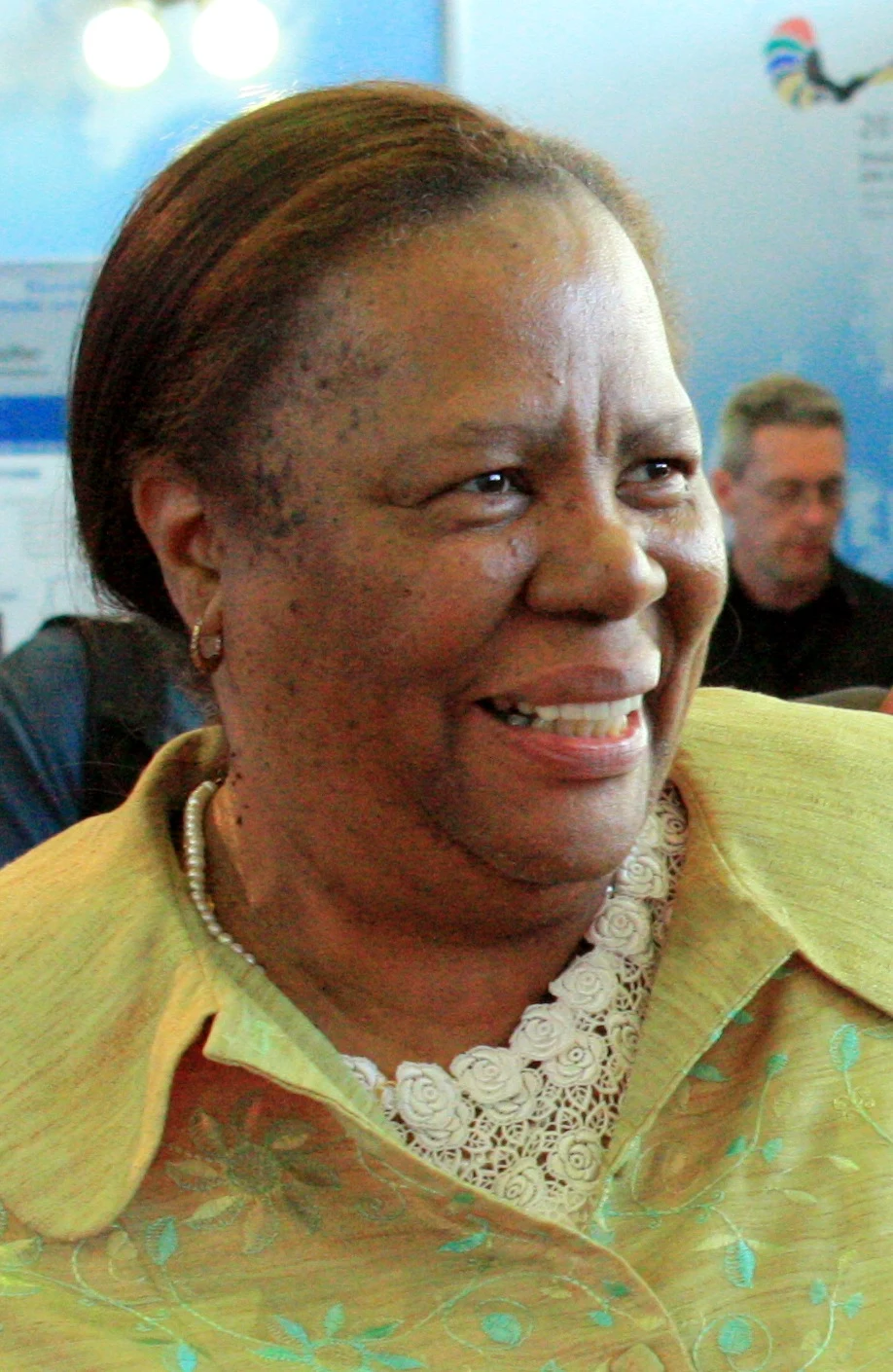
1953–
Naledi Pandor
Former cabinet minister, educator and institutional leaderNaledi Pandor’s career joins teaching and language scholarship to Parliament, education and science ministries, and foreign affairs. Her science portfolio included the 2012 SKA site decision. After leaving government in 2024, she took leadership roles at the Nelson Mandela Foundation and Nelson Mandela University.Read biographyQuick answers
Common questions
- Did South Africa become the only SKA host?
- No. The 2012 decision used sites in Africa and Australia.
- Did the advisory committee make the final decision alone?
- No. Its assessment informed a decision by the organisation’s members.
- Was the observatory complete in 2012?
- No. Design, funding, construction and commissioning continued afterwards.
- Were MeerKAT and ASKAP the same telescope?
- No. They were separate precursor investments associated with the two host regions.
Primary and institutional sources
How this history was checked
Host-government statements were compared with independent contemporary reporting, selected participant-history passages and the original members’ release reproduced there. The whole book was not read. Physics World was read through indexed text after direct access returned 403. Later SKAO milestones are kept separate from the historical allocation. Pandor’s photograph predates the decision by a month. This article was reviewed on Reviewed 24 October 2026.
- Naledi Pandor / Department of Science and Technology25 May 2012: South African response to the SKA site decision
- Richard T. Schilizzi and colleagues / SpringerSelected site-decision history and reproduced 2012 members’ release
- Tushna Commissariat / Physics World25 May 2012: independent reporting on the dual-site choice
- Steven Joyce / New Zealand Government26 May 2012: Australia–New Zealand response and precursor investment
- SKA ObservatoryConstruction journey: selected 2021–2026 milestones and staged delivery
- Markus Pössel / Wikimedia CommonsNaledi Pandor, Cape Town, 16 April 2012: own-work photograph