
The short answer
New Lanark tested whether an established cotton business could remain profitable while improving people’s surroundings and education. Owen’s changes were significant, but they rested on partners, inherited institutions and close employer authority—and on a global cotton supply linked to slavery.
Chronology
A timeline of the turning points
The existing village
David Dale and Richard Arkwright founded New Lanark; Dale developed it after their partnership ended.
Purchase and management
Owen and partners acquired the mills in 1799; he began managing them in January 1800.
Education takes built form
The Institute for the Formation of Character and School for Children became centrepieces of the programme.
A wider ambition
Owen pursued a different community experiment at New Harmony in Indiana, not at a second Scottish site.
Reforming an inherited enterprise
Owen did not found New Lanark. David Dale and Richard Arkwright began the cotton village in the 1780s, and Dale continued developing it after their partnership ended. By the time Owen and his partners bought the concern in 1799, buildings, housing, machinery and educational provision already existed. Assuming management in January 1800 meant inheriting a community, not starting with an empty landscape.
Nor did Owen control unlimited funds on his own. Partners expected returns and sometimes resisted his spending or educational principles. Changes in the partnership gave him greater room to pursue reforms, while later disagreements exposed continuing limits. The question was how an operating business could change its organisation and the treatment of its people—not whether benevolence alone could replace commercial calculation.
Efficiency and welfare worked together
Owen strengthened stock control, reporting and the organisation of production. This managerial competence helped sustain the profits from which reforms were financed. The mill was not an educational charity with manufacturing attached as an afterthought. Better housing, cleaner surroundings, provisions and health arrangements were connected to a plan for a more stable and productive population.
Continuing wages during a stoppage caused by an American cotton embargo helped overcome workers’ distrust. The episode also illustrates why trust cannot be assumed simply because a manager announces reforms. The sources disagree about the precise year and working-day reductions, so those numbers are not used here. The broader evidence supports a combination of commercial discipline and welfare, with benefits and employer interests intertwined.
Child labour and education were connected questions
Owen ended the recruitment of pauper apprentices and later excluded children under ten from mill work. These were related but not identical changes; they should not be compressed into a claim that all children immediately stopped working when he arrived. Older children’s employment and the length of industrial work remained subjects of reform and debate.
The Institute for the Formation of Character opened in 1816, followed by the School for Children in 1817. Music, dancing, nature study and visual teaching materials broadened the curriculum. Evening learning and communal activities also served older inhabitants. Education expressed Owen’s belief that circumstances formed character, but it was not neutral: he wanted to shape habits, relationships and conduct as well as provide skills and enjoyment.
The silent monitor reveals the paternalism
A small coloured block beside each worker made an assessment of conduct visible. White, yellow, blue and black indicated different grades, and records of behaviour were kept. This silent monitor offered an alternative to physical punishment, but it still exposed people to observation and judgment by their superiors. It measured moral behaviour as well as economic performance.
Rules also extended beyond the machines into drinking, household conduct and the responsibilities of parents and residents. The Open University discussion cautions that direct worker testimony is limited and that Owen’s own presentation could exaggerate the contrast with earlier management. Recognising paternalism does not erase improvements; it asks who defined the good life, who could disagree, and how much choice a mill employee actually had within a company village.
A local achievement with global boundaries
New Lanark attracted visitors and influenced debate about education, industrial welfare and planned communities. Its example showed that commercial success and improvements to workers’ surroundings could coexist. It did not establish that the workforce collectively owned the enterprise or that Owen’s model would transfer unchanged elsewhere. New Harmony, purchased in Indiana in 1825 with William Maclure, was a different experiment with different outcomes.
The cotton economy supplied another limit. The Robert Owen Museum’s essay describes the mills’ use of cotton produced by enslaved people in the United States, Brazil and the Caribbean. Welfare within the village therefore coexisted with coercion beyond it. The reforms deserve attention without calling the entire system emancipatory: the important distinction is between improving an employer-run factory community and overcoming every hierarchy that made its production possible.
Continue the chronology
Related history guides
Biography context
Explore United Kingdom through connected lives
Connected biographies
Factory development and reform
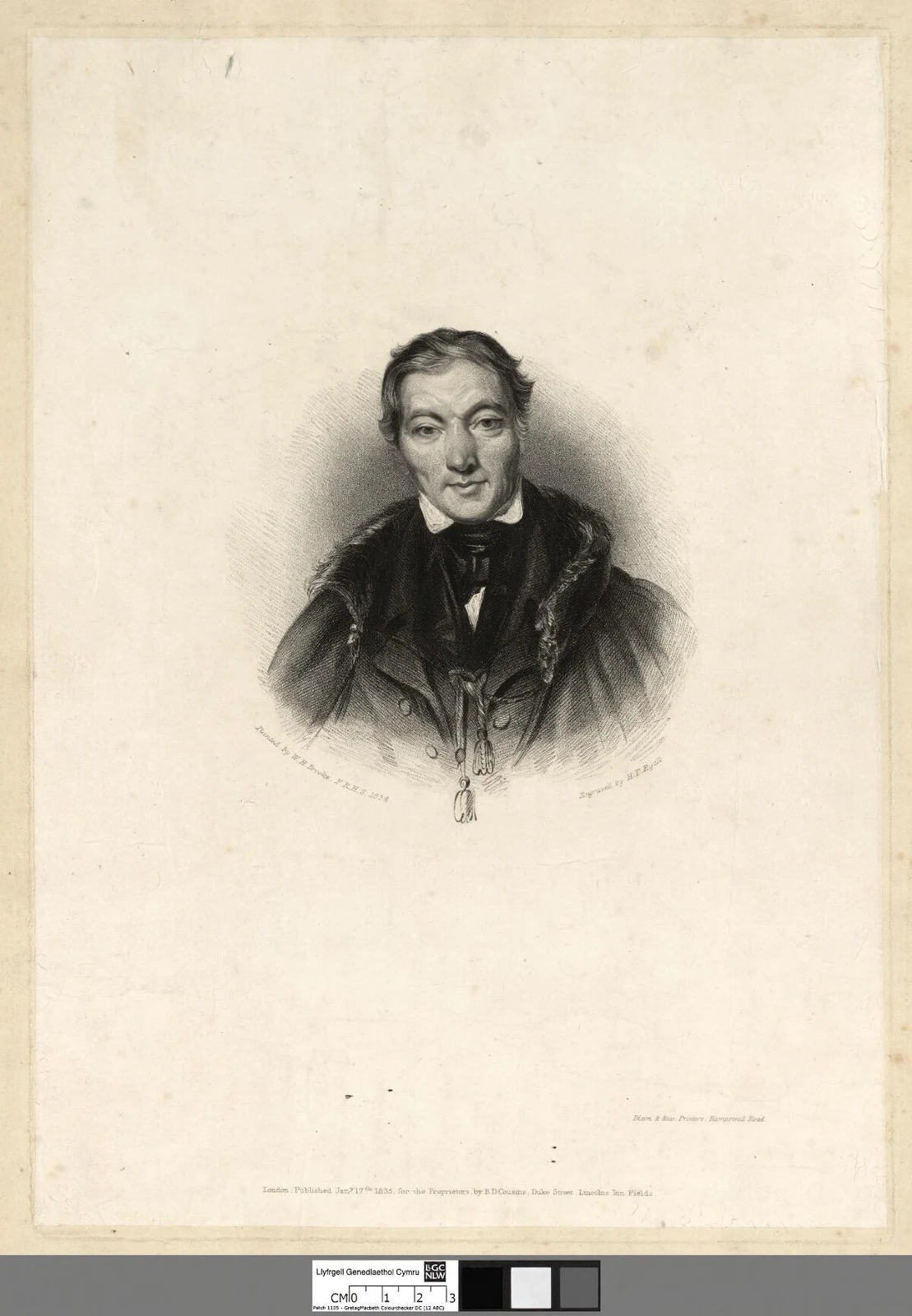
1771–1858
Robert Owen
Cotton manufacturer, social reformer and co-operative thinkerRobert Owen used success in cotton manufacturing to argue that people’s characters were shaped by their surroundings. At New Lanark he combined commercial management, education and welfare with close social supervision; later co-operative experiments exposed the limits of his model.Read biography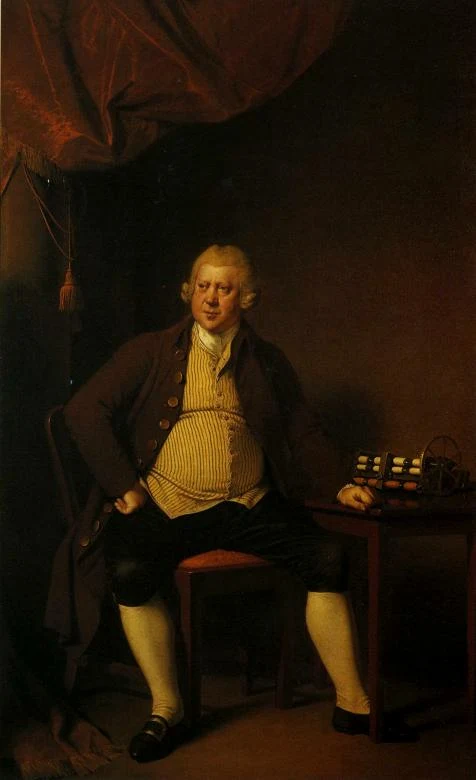
1732–1792
Richard Arkwright
Cotton manufacturer and factory organiserRichard Arkwright combined spinning machinery, water power, finance and supervised labour in an influential factory system. His mills transformed cotton manufacturing, while disputed patents, child labour and global cotton supplies complicate the image of a solitary self-made inventor.Read biographyQuick answers
Common questions
- Did Owen abolish all child labour at New Lanark in 1800?
- That is too broad. The sources distinguish ending pauper-apprentice recruitment from the later exclusion of children under ten. Older children continued to work, alongside educational provision.
- Was New Lanark a worker-owned co-operative?
- No. It remained an employer-run cotton business with partners and managerial authority. Its store and reforms influenced co-operative thinking without making the whole enterprise collectively owned.
- Can improved conditions and social control both be true?
- Yes. Education, welfare and alternatives to physical punishment could benefit workers while the silent monitor and village rules reinforced the employer’s authority over conduct.
Primary and institutional sources
How this history was checked
New Lanark’s institutional histories are compared with selected Open University discussions and published video transcripts, the Robert Owen Museum account and its four-page slavery essay. Exact working-day hours and embargo year are omitted where accounts conflict. No complete payroll, original company archive or full worker-testimony collection was examined. This article was reviewed on 23 October 2026.
- New Lanark TrustRobert Owen: business background, management, education and social reforms
- New Lanark TrustHistorical Timeline: Dale and Arkwright foundations, Owen and subsequent owners
- Robert Owen MuseumOverview of his life: selected career, education, co-operation and later-life passages
- Open University / Ian Donnachie and contributorsRobert Owen and New Lanark: selected workplace, social-control and reform passages, including video transcripts
- Robert Owen Museum / Colin LakerRobert Owen and Slavery: cotton supply and the limits of humanitarian rhetoric
- Historic Environment ScotlandNew Lanark: industrial village and World Heritage significance
- Indiana Archives and Records AdministrationNew Harmony Indiana: Owen–Maclure purchase in 1825
- National Library of Wales / Wikimedia CommonsRobert Owen by Henry Thomas Ryall, 1835: full scan, item 4674544
- National Portrait GalleryRobert Owen: extended catalogue, Ryall engraving published 17 January 1835
- Creative CommonsPublic Domain Mark 1.0