
The short answer
Rashomon poses two different problems for a film-history reader: how an adaptation organizes conflicting accounts, and how a film travels beyond its first release. Put the source-story credits, production record and dated awards beside one another. They explain more than treating the film as a sudden discovery of Japanese cinema.
Chronology comparison
Release year, festival year and awards year
An original reading aid for three dates that are regularly collapsed into one success story.
| Record | Date and scope | What it establishes |
|---|---|---|
| Japanese release | 26 August 1950 | The film’s original theatrical release. |
| Venice recognition | September 1951, Golden Lion | A festival award and a new international platform. |
| Academy eligibility year | 1951 United States release year | The calendar frame used in the Academy citation. |
| Academy presentation | 20 March 1952, honorary foreign-language film award | A separate honor presented at the 24th Academy Awards. |
Chronology
A timeline of the turning points
Japanese release
Daiei released Rashomon in Japan.
Venice Golden Lion
The film won the festival’s top award.
United States release year
The Academy’s later citation concerned foreign-language films released in the United States during 1951.
Honorary film award
The Academy honored Rashomon at its 24th ceremony.
Different national campaigns
NFAJ’s later exhibition catalogues show international posters and subsequent release histories.
Two source stories, rather than the title alone
The credits and edition record identify Ryūnosuke Akutagawa as the literary source and Kurosawa and Shinobu Hashimoto as the screenwriters. The two stories are In a Grove and Rashomon. The former supplies the central conflicting accounts of violence in a forest; the latter contributes the ruined-gate setting and moral atmosphere of the framing situation. A title match therefore does not mean the film simply retells the story called Rashomon. Adaptation involved combining materials and organizing a new screen structure around them. The accessible edition lists both stories; its complete supplementary texts were not read for this guide.
A production record makes collaboration visible
The National Film Archive of Japan’s collection record names Kazuo Miyagawa for cinematography and Fumio Hayasaka for music, alongside the writers and director. Its anniversary exhibition also discusses Takashi Matsuyama’s art department and the large gate set. Toshiro Mifune, Machiko Kyō, Masayuki Mori and Takashi Shimura supply the principal performances. These credits matter when explaining the effect: forest light, the gate, music and acting shape how an account is experienced. A director-centered summary can be a starting point, but the film itself resulted from several kinds of professional work.
The contradictory accounts are also images
Rashomon shows versions of a samurai’s death and the sexual assault of his wife through incompatible retellings. Viewers are not merely told that testimony differs: they see events staged again with altered actions and meanings. Stephen Prince’s essay connects this structure with visual movement and the film’s moral concerns. For a first viewing, distinguish what a character claims from what the camera presents within that claim. A vivid image can make an account persuasive without settling whether it is reliable. That is a more specific observation than the general assertion that truth does not exist.
Sources for this section: [5]
International recognition followed a Japanese release
The Japanese theatrical release was 26 August 1950. NFAJ’s exhibition account says the film attracted artistic attention without becoming a major domestic box-office hit. Jasper Sharp’s BFI account identifies Giuliana Stramigioli’s role in recommending it for Venice and rejects the idea that it had been uniformly dismissed by Japanese critics. The 1951 Golden Lion is independently confirmed by the festival’s own history. The sequence matters: a film already produced, released and discussed acquired a new international platform through people and institutions involved in festival selection and distribution.
Keep the two award dates and categories apart
Venice awarded its Golden Lion in September 1951. The Academy ceremony took place on 20 March 1952 and honored films released in the United States during 1951. Rashomon received an honorary foreign-language film award, before the later annual competitive foreign-language category. It did not win a competitive Best Picture or directing Oscar at that ceremony. The date 1951 in an Academy award-year database and 1952 in an account of the ceremony can consequently refer to the same recognition. Neither date changes the film’s original Japanese release year of 1950.
Use a viewing grid instead of solving it too soon
During a viewing, make four columns labeled speaker, claim, visible staging and unresolved question. Record one difference each time events are retold. Then add a separate line for the gate scenes: who is listening, what prompts another account, and what changes the conversation? Finally, compare your notes with the production credits. Select one instance where performance, camera position, setting or music influences your response. This exercise keeps interpretation tied to observable choices. It allows a viewer to disagree with a character without treating every frame as neutral evidence delivered outside the story.
Connected biographies
People behind the work
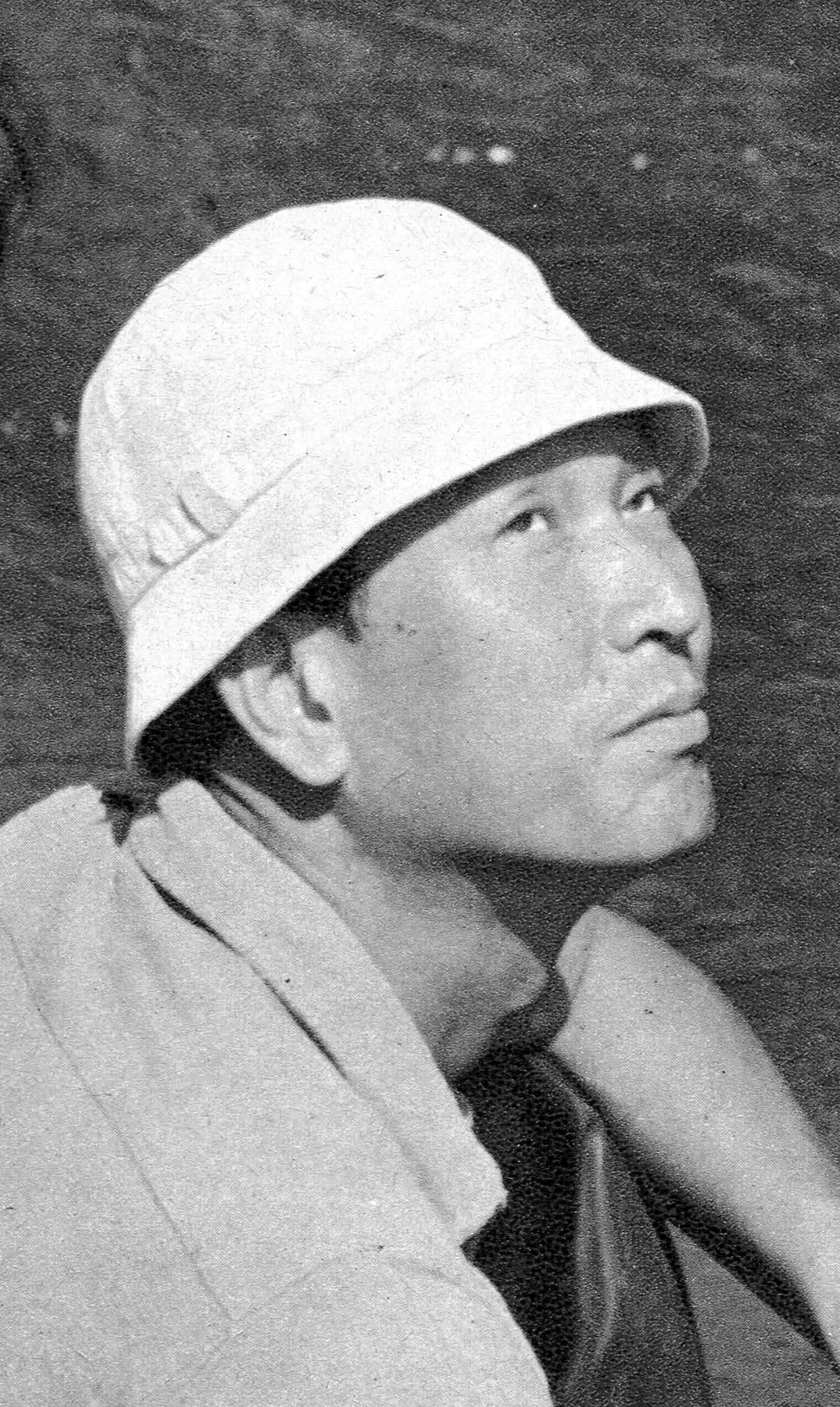
1910–1998
Akira Kurosawa
Film director and screenwriterAkira Kurosawa directed films across historical action, contemporary drama and literary adaptation. His work joined forceful visual storytelling with recurring questions about responsibility, social power and the stories people tell about themselves.Read biographyQuick answers
Common questions
- Is Rashomon based only on Akutagawa’s story Rashomon?
- No. It draws on Rashomon and In a Grove. The latter supplies the central conflicting accounts, while the gate setting helps frame them.
- Did Rashomon win an Oscar in 1951 or 1952?
- It was honored for the 1951 United States release year at the ceremony on 20 March 1952. The distinction explains the different dates.
- Was it a competitive Best International Feature Film win?
- No. It received an honorary foreign-language film award. The later competitive category should not be applied retroactively.
- Does the photograph show the making of Rashomon?
- No. The proposed image shows Kurosawa in 1953 on the Seven Samurai set. Its caption must preserve that later date and context.
Primary and institutional sources
How this history was checked
NFAJ supplies a collection-level film record and an exhibition account grounded in production materials. Venice and Academy records establish separate honors. Edition listings identify available supplementary material; listing those items does not mean the complete film, source stories, screenplay or supplements were viewed for this manuscript. This article was reviewed on 27 October 2026.
- National Film Archive of JapanRashomon (1950): collection film record, staff and cast
- The Criterion CollectionRashomon: film record, cast, credits and edition contents
- Jasper Sharp / British Film InstituteThe Rashomon effect: international reception and contemporary criticism
- National Film Archive of JapanRashomon at the 70th Anniversary (2020): production and reception
- Stephen Prince / The Criterion CollectionThe Rashomon Effect
- La Biennale di VeneziaHistory of the Venice Film Festival: 1951 Golden Lion
- Academy of Motion Picture Arts and SciencesThe 24th Academy Awards, 20 March 1952
- National Film Archive of JapanTraveling Akira Kurosawa: international poster exhibition (2018)