
The short answer
Queensland Nickel’s failure was both a local employment shock and a complex corporate insolvency. The refinery north of Townsville had an operator, joint-venture owners and connections with other Palmer businesses. Falling nickel prices help explain the pressure, but the administration, transaction disputes and eventual recoveries require attention to those separate entities and to what courts actually decided.
Chronology
A timeline of the turning points
The refinery changes ownership
BHP agrees to sell to Palmer-owned companies; FTI’s later history dates completion to 31 July.
Redundancies and administration
Job losses precede the appointment of FTI administrators.
Further employment losses
A new management arrangement does not immediately restore the lost jobs.
Liquidation chosen
Townsville creditors vote to wind up the operating company.
Examination-power challenge fails
High Court orders reject the constitutional challenge; reasons are published on 8 February 2017.
Civil judgment
The ruling addresses insolvency, transactions and which companies owned the relevant funds.
Recovery reported
FTI announces full settlement of creditor claims; ABC reports remaining court work.
An existing refinery changed hands in 2009
BHP’s 3 July 2009 release announced a signed agreement to sell Yabulu to companies wholly owned by Clive Palmer. The refinery was already an established industrial facility, not a plant he had just founded. Queensland’s government welcomed the transaction as a way to support its continued operation.
FTI’s later chronology dates completion to 31 July. The distinction between signing and completion matters, as does the difference between a government’s favourable expectations and a guarantee of future trading. The subsequent failure does not change what was announced in 2009, but it shows why an acquisition alone cannot demonstrate durable viability.
Asset ownership and refinery operation were not identical
QNI Resources and QNI Metals held the joint-venture interests in the refinery. Queensland Nickel was its operating manager. The Queensland Supreme Court case record identifies the agreement governing those functions and the questions about ownership of funds held in the operator’s bank accounts.
This structure became consequential when liquidators sought recovery. A payment passing through an operator’s account is not necessarily money owned beneficially by that operator. Likewise, closing or liquidating the employer does not automatically mean that every associated landholding, asset owner or related company has entered the same process. Corporate boundaries could not simply be replaced by Palmer’s public profile.
Weak prices became an immediate employment and funding crisis
The first creditors presentation identified weak nickel prices, ongoing trading losses and limited cash. Its figures were preliminary and its production and loss projections were forecasts, not completed full-year outcomes. FTI recorded its appointment by director resolution on 18 January 2016.
AAP’s contemporary timeline records 237 redundancies three days earlier and another large round in March. Changing the refinery’s management arrangements did not itself re-employ the dismissed workers. The crisis therefore reached beyond balance sheets to households and local suppliers. An enterprise may retain physical processing capacity while lacking the finance needed to pay people and continue operating it.
Liquidation enabled investigation, not an automatic finding of misconduct
Creditors voted in Townsville on 22 April to liquidate Queensland Nickel. Administrators had recommended that course and raised serious concerns about transactions and management. Palmer disputed their position. Those opposing accounts should be identified as claims at that stage rather than retrospectively treated as settled criminal findings.
Special-purpose liquidators also used statutory examination powers. Palmer and Ian Ferguson challenged the constitutional validity of the relevant power. The High Court rejected that challenge, with orders made in November 2016 and reasons published in February 2017. The decision upheld a mechanism for examining corporate affairs; it did not convict the examinees or determine every recovery claim.
The 2020 judgment made findings and rejected a major claim
The authoritative case record describes cash shortfalls, overdue debts and the absence of realistic committed financial support. ABC’s contemporaneous report gives the resulting insolvency date as 13 January 2016 and identifies the China First and Waratah transactions found uncommercial and voidable.
The same ruling rejected the Mineralogy loan claim because the funds were those of QNI Resources and QNI Metals rather than Queensland Nickel. This was not a finding that all disputed transfers had been proper, nor a ruling that Mineralogy owed every sum originally alleged. Reading the successful and unsuccessful parts together explains why a complicated recovery action cannot be summarized by one side’s declaration of victory.
Later payments did not make the original disruption disappear
FTI’s 2020 case study describes coordinating government-backed payments to former employees while pursuing recoveries. It is an account from the liquidator, not an independent assessment of every consequence. The process combined employee assistance, claims investigation and litigation over several years.
In July 2024 FTI said creditor claims had been paid in full, with ABC reporting A$300 million recovered and claims also settled, removed or reduced over time. The report identified Mineralogy as the source of the largest recovery and said proceedings remained before liquidation could conclude. Full settlement of admitted claims is not a statement that every original estimate was paid unchanged, that Palmer personally paid it all, or that lost employment and years of uncertainty had been reversed.
Continue the chronology
Related history guides
Why Dick Smith retail collapsed
Compare a different liquidity failure and an asset sale that left old liabilities behind.
Read the timeline2003–2008Fortescue’s first commercial ore shipment
Compare the financing and infrastructure required to turn resources into an operating export business.
Read the timelineBiography context
Explore Australia through connected lives
Connected biographies
The owner within a multi-company business
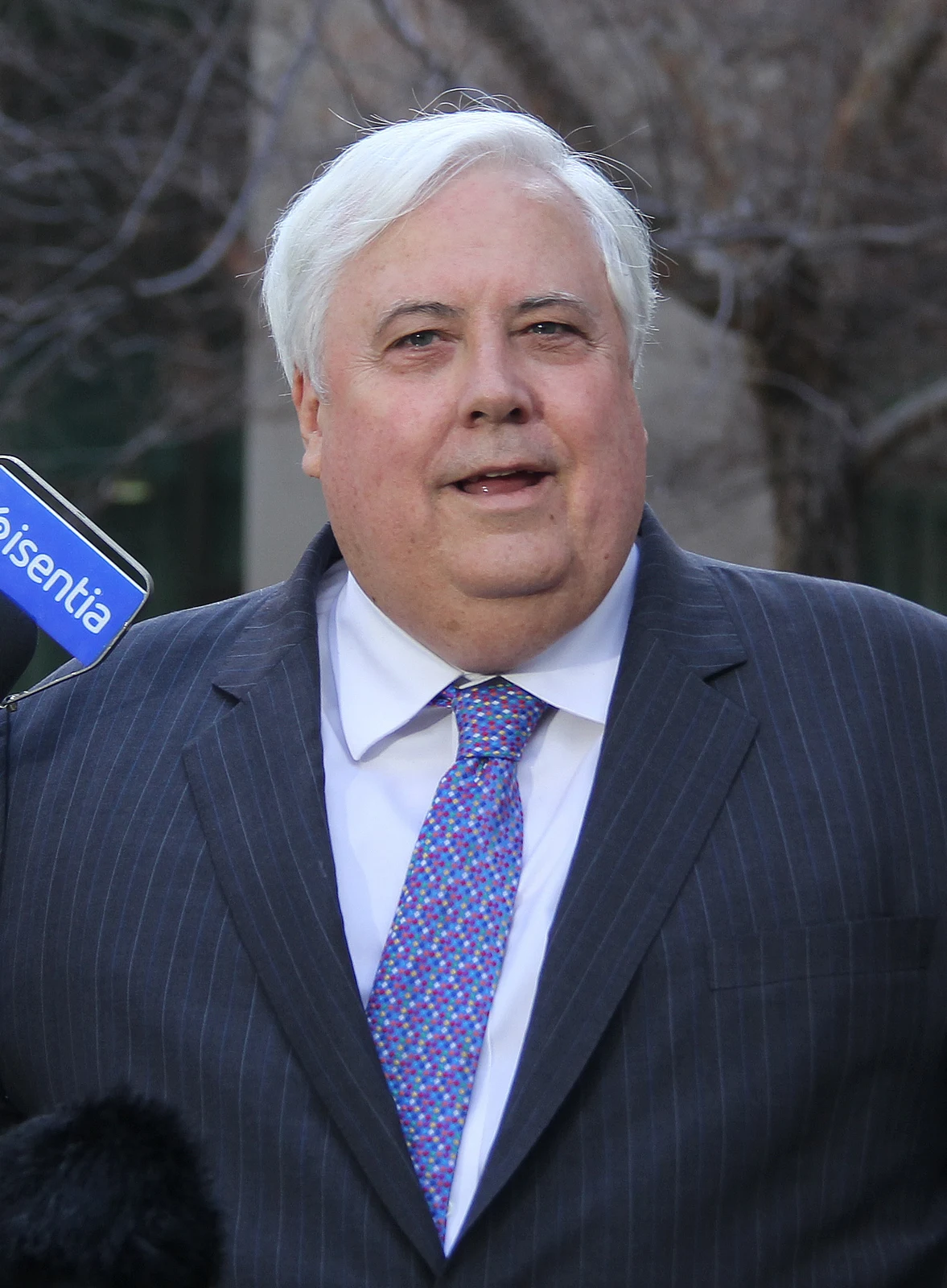
Born 1954
Clive Palmer
Mining entrepreneur and former federal MPClive Palmer’s business career centres on mineral rights, royalties and ownership of resource companies. Mineralogy’s relationship with the Sino Iron project differs from direct operation of a mine; the Yabulu refinery involved separate asset-owning and operating entities. Queensland Nickel’s 2016 failure and later creditor recoveries are material to his record, alongside parliamentary service and distinct legal proceedings.Read biographyQuick answers
Common questions
- When did Queensland Nickel enter administration?
- FTI’s first creditors presentation dates its appointment to 18 January 2016. Creditors voted for liquidation on 22 April.
- Was the operator identical to the refinery’s joint-venture owners?
- No. Queensland Nickel managed the operation; QNI Resources and QNI Metals were the joint-venture companies. Those boundaries mattered in litigation.
- Did the High Court examination case convict Palmer?
- No. It rejected a constitutional challenge to the statutory examination power. That is different from deciding criminal guilt or all creditor claims.
- Were all original debt estimates paid unchanged in 2024?
- No such conclusion follows. FTI reported full settlement of creditor claims, while explaining that claims had been reduced, removed or settled. Proceedings still remained at that reporting date.
Primary and institutional sources
How this history was checked
The original sale release and administrators’ selected presentation passages establish chronology and initial evidence limits. AAP and ABC corroborate the employment and creditor decisions. The Queensland case record supplies the legal structure and catchwords, while the independent 2020 report supplies the precise insolvency finding and rejected claim. Only the opening and orders of the High Court reasons are used. The 2024 recovery report is a dated statement, not a claim of completed liquidation or a personal criminal outcome. This article was reviewed on 23 October 2026.
- BHP Billiton / ASX3 July 2009: signed agreement to sell Yabulu to Palmer-owned companies
- Queensland Government3 July 2009: government welcomes the proposed Yabulu transaction
- FTI Consulting29 January 2016 first creditors meeting: appointment, history, employees and preliminary investigation
- Supreme Court of Queensland / Queensland JudgmentsParbery v QNI Metals Pty Ltd (No 15) [2020] QSC 143: authoritative case record and catchwords
- ABC Fact Check25 November 2013: selected Mineralogy and refinery ownership passages, not current wealth
- Australian Associated Press / SBS News22 April 2016: Queensland Nickel timeline, redundancies and administration
- ABC News22 April 2016: creditors vote for liquidation; Palmer disputes administrators’ position
- High Court of AustraliaPalmer v Ayres; Ferguson v Ayres [2017] HCA 5: examination power upheld
- Kate McKenna, Chloe Chomicki and staff / ABC News3 June 2020: insolvency finding, voidable transactions and rejected Mineralogy claim
- FTI Consulting9 October 2020: Queensland Nickel liquidation case study and employee payments
- Georgia Loney / ABC North Qld25 July 2024: liquidator reports full settlement of creditor claims, with proceedings remaining
- Jwmcdonald81 / Wikimedia CommonsClive Palmer Press Conference 19AUG2015.jpg: full original and CC BY-SA 4.0 release
- Creative CommonsAttribution-ShareAlike 4.0 International licence